Journalisten engagieren

Verlage & Sender Content-Marketing-Teams PR- & Kommunikationsteams Risiko- & Intelligence-Teams Journalisten finden Medienbeobachtung Preise

Für Journalisten

Stellenangebote im Journalismus Honorare und Tarife Kostenloses Profil erstellen

Über Mekonnen

Mekonnen Teshome Tollera ist Journalist mit Sitz in Addis Abeba, Äthiopien. Mekonnen hat seinen ersten Abschluss in Foreign Language and Literature an der Addis Ababa University (AAU) und seinen Masters in English Language an derselben Universität, AAU. Er wurde zur Ethiopian Press Agency (EPA) versetzt, als Senior Reporter für die Ethiopian Herald, die National English Daily ist, und stieg in seiner beruflichen Laufbahn im redaktionellen Bereich bis zur Position des news room Coordinator auf. Anschließend arbeitete er beim National TV, der Ethiopian Television, als Redakteur und Programmproduzent und wurde danach Website-News-Redakteur für Walta Information Center. Als Wissenschaftsjournalist schreibt er für lokale und internationale Medienhäuser mit Schwerpunkt auf Biotechnologie, Klimawandel, Gesundheit und Landwirtschaft. Er hat Tausende von Zeitungs-, Magazin- und Online-Artikeln veröffentlicht. Mekonnen ist der Gründer von Äthiopiens erster “Science Journalists Association (SJA)”. Er ist ein vielgereister und mehrfach ausgezeichneter Wissenschaftsjournalist, der verschiedene Medienpreise und internationale Fellowships erhalten hat, darunter – die World Federation of Science Journalists (WFSJ) und “1st Rank in Print and Online Category Award of the Open Forum on Agricultural Biotechnology in Africa (OFAB 2020). Derzeit arbeitet Mekonnen als resident correspondent und als freier Journalist für verschiedene internationale Medien, darunter IMS, American Geophysical Union (Eos), the sub-Saharan branch of

Sprachen
Englisch
Gesehen in
Downtoearth

Arbeiten 6

Africa making strides in energy transition, but grappling with huge existential problems: Experts

Down To Earth 22. Okt. 2025 English

African nations are making significant progress in transitioning to renewable energy but face challenges related to energy security and infrastructure. The APRA Investment Forum, held in Sierra Leone, highlighted the need for financial reforms and investment to bridge the gap between Africa's renewable potential and actual deployment. Despite having vast renewable resources, Africa struggles with high costs of capital and limited access to technology and financing. Experts emphasize the importance of addressing energy poverty and infrastructure inefficiencies to achieve sustainable development and meet future energy demands.
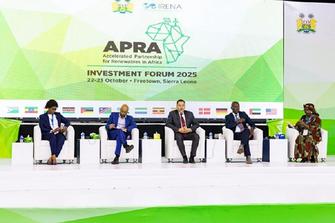
Energy Transition Renewable Energy Energy Security Africa Sierra Leone Zimbabwe International Renewable Energy Agency Government of Sierra Leone International Energy Forum Francesco La Camera Kandeh Yumkella Gloria Magombo
BerichtsstilAusgewogen

The article presents a mix of factual information and expert opinions on Africa's energy transition challenges.
Saharan Emissions and Vulnerability

Down To Earth 1. Okt. 2025 English

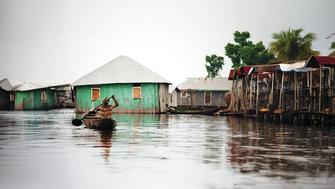
Sub-Saharan Africa, despite contributing minimally to global emissions, is highly vulnerable to climate change, with seven of the ten most climate-vulnerable countries located in the region. The continent faces severe economic challenges, exacerbated by climate impacts, with significant debt burdens hindering investment in climate resilience. The Climate Policy Initiative estimates that implementing Africa's climate action plans will cost $2.8 trillion by 2030, with adaptation measures accounting for a small portion of this cost. African nations are adopting strategies to mitigate and adapt to climate change, despite financial constraints.

Climate Change African Climate Vulnerability Economic Challenges Africa Sub-Saharan Africa South Africa Brookings Institution Intergovernmental Panel on Climate Change World Meteorological Organization Climate Policy Initiative UN Department of Economic and Social Affairs UN Conference on Trade and Development
BerichtsstilInformativ

The article presents factual data and analysis on climate change impacts and economic challenges in Africa.

Africa’s 2nd UN climate week uplifts continent’s climate priorities into global agenda

Down To Earth 1. Sept. 2025 English

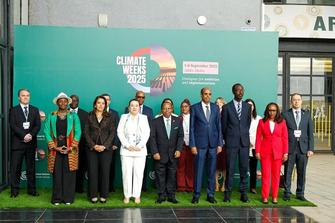
The United Nations Framework Convention on Climate Change and the Ethiopian government are collaborating to elevate Africa's climate priorities during the second Climate Week of 2025 in Addis Ababa. The event aims to address finance in climate adaptation, enhance forest climate action, and facilitate public-private finance dialogue. The upcoming Africa Climate Summit will focus on Africa's climate priorities in global arenas, including COP30. Key objectives include mobilizing climate finance tailored to Africa's development context and channeling capital towards clean energy projects. Various organizations and stakeholders are participating in discussions to ensure Africa's climate priorities are integrated into the global agenda.

Climate Change Africa Climate Summit Climate Finance Africa Ethiopia Brazil United Nations Framework Convention on Climate Change Ethiopian government Ministry of Planning and Development Ethiopian Environmental Protection Authority Global Green Growth Institute Least Developed Countries Group
BerichtsstilInformativ

The article presents factual information about the events and objectives of the Africa Climate Week and Summit, with some expert opinions.

Will Africa meet its sanitation target?

Down To Earth 21. Aug. 2018 English

Several African countries are struggling to meet sanitation-related Sustainable Development Goals as drought, inadequate infrastructure, population pressures and limited funding undermine progress. Djibouti faces severe sanitation and water scarcity that fuels disease outbreaks, while Nigeria’s improvements remain insufficient despite investments and community-based strategies. Ethiopia has dramatically reduced open defecation but still suffers from poor-quality sanitation facilities and associated health burdens. Tanzania, despite rising toilet coverage, continues to grapple with water contamination, cholera and poor-quality latrines. Kenya’s ambitions for universal water and sanitation access are constrained by major funding gaps and limited acceptance of ecological sanitation technologies. Across the region, community-led programmes, government initiatives and international support have improved coverage but remain far from ensuring safe, sustainable sanitation for all.

Sanitation Public Health Sustainable Development Goals Water Supply Africa Djibouti Nigeria UNICEF World Bank European Union National Council on Water Resources Sokoto State Rural Water Supply and Sanitation Agency
BerichtsstilInformativ

Evidence-based reporting with occasional interpretive framing

Melting Pots

Down To Earth 15. Aug. 2018 English

Hundreds of millions of Africans lack access to safe sanitation, causing widespread disease, economic losses and stalled development. Despite political commitments and regional initiatives such as AfricaSan and the Ngor Declaration, progress remains slow due to inadequate funding, weak institutional coordination, poor infrastructure and low prioritization of sanitation. Country case studies from Djibouti, Nigeria, Ethiopia, Tanzania and Kenya reveal common challenges including unsafe pit toilets, ineffective sewage systems, rapid urbanization, climate impacts and cultural resistance. While community-led total sanitation and behaviour-change strategies have shown gains in reducing open defecation, most improvements rely on unimproved facilities that pose continued health risks. Experts call for integrated approaches linking water and sanitation, increased investment, adoption of low-cost technologies, stronger monitoring and use of local data. Lessons from India’s sanitation drive highlight the importance of political prioritization, community engagement and sustained public communication. Sustainable progress will require coordinated policies, adequate financing and technologies that enable safe waste management across Africa’s rapidly growing urban and rural populations.

Sanitation Public Health Sustainable Development Goals Africa Sub-Saharan Africa India United Nations World Health Organization UNICEF World Bank African Union AfricaSan
BerichtsstilAusgewogen

Mix of factual reporting with analytical and interpretive commentary

Climate change, overutilisation dry up Ethiopian lakes

Down To Earth 29. Mai 2018 English

Rising temperatures, evaporation and heavy water extraction for farming and industry are rapidly shrinking Ethiopia’s lakes, especially in the Rift Valley. Lake Ziway, Lake Abijata and others face severe declines, with Lake Haramaya already vanished due to overuse, erosion and poor governance. Experts warn that climate change is accelerating water loss, altering hydrological balances and threatening biodiversity, local livelihoods and nearby cities. Ethiopian authorities and environmental programmes urge stronger conservation, sustainable water use and improved resource governance to build resilience and prevent further ecological collapse.

Climate Change Water Resources Environmental Degradation Africa Ethiopia East Africa Kenya Ministry of Environment, Forest and Climate Change of Ethiopia Sustainable Development of the Protected Area System in Ethiopia Zewudu Molla Zinabu Gebre-Mariam Debasu Bayleyegn Eyasu
BerichtsstilInformativ

Mostly factual reporting with some expert interpretations

Weitere Journalisten in Addis Abeba

Engagieren Nachricht
×

Registrieren Sie sich, um Mekonnen Teshome eine Nachricht zu senden

Haben Sie bereits ein Konto? Anmelden
Suchen Sie Arbeit? Als Journalist registrieren
Verifizieren Sie Ihre E-Mail, um die Registrierung abzuschließen
Wir haben gerade eine E-Mail gesendet an . Bitte prüfen Sie Ihren Posteingang und klicken Sie auf den Link, um Ihre E-Mail-Adresse zu verifizieren und Ihre Registrierung abzuschließen. Falls Sie die E-Mail nicht sehen, prüfen Sie unbedingt Ihren Spam- oder Junk-Ordner.
E-Mail nicht erhalten?

Registrieren Sie sich, um Profile freizuschalten

Haben Sie bereits ein Konto? Anmelden
Suchen Sie Arbeit? Als Journalist registrieren
Verifizieren Sie Ihre E-Mail, um die Registrierung abzuschließen
Wir haben gerade eine E-Mail gesendet an . Bitte prüfen Sie Ihren Posteingang und klicken Sie auf den Link, um Ihre E-Mail-Adresse zu verifizieren und Ihre Registrierung abzuschließen. Falls Sie die E-Mail nicht sehen, prüfen Sie unbedingt Ihren Spam- oder Junk-Ordner.
E-Mail nicht erhalten?