Balkan InsightThe New York TimesBostonGlobe.comThe AgeThe Sydney Morning HeraldWAtodayCestovanieIndianexpressSpectatorBrisbanetimes
Trabajo 110
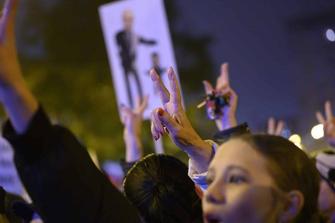
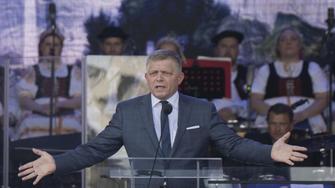
35 Years of Slovak Democracy: The Struggle Goes On
Balkan Insight20 nov 2024English
The article reflects on the 35th anniversary of the Velvet Revolution in Slovakia, highlighting ongoing political struggles and societal divisions. It contrasts a protest led by opposition parties advocating for democracy with a celebratory event by the ruling Smer party, which faces criticism for undermining democratic institutions. Public sentiment is divided, with many Slovaks concerned about threats to democracy, corruption, and disinformation. Despite challenges, there is optimism about the resilience of civil society and the potential for democratic renewal.
The article contains subjective statements and opinions about the political situation in Slovakia.
De opiniónFactual
Contexto políticoIzquierda
The article discusses political polarization and critiques the current government, which is associated with leftist policies.
Extrema izquierdaExtrema derecha
Slovakia’s New Period of ‘Normalisation’: Attacks on Freedoms and Rights
Balkan Insight3 sept 2024English
Slovakia is experiencing a troubling period marked by authoritarian actions, censorship, and political intimidation under Robert Fico's nationalist-populist government. Key developments include the government's takeover of the public broadcaster, the release of a convicted former prosecutor, and the dismissal of cultural institution directors. Legislative proposals aim to limit freedom of speech, expression, and public access to information. Experts warn of deeper systemic changes, including government control over law enforcement and judicial institutions. Public protests have erupted, but the government is pushing for new regulations to limit public gatherings. The situation is compared to the 'normalisation' period following the 1968 Warsaw Pact invasion, characterized by persecution, censorship, and intimidation.
AuthoritarianismCensorshipPolitical IntimidationSlovakiaBratislavaCzech RepublicSmerHlasSNSSTVRRTVSJudicial Council
Estilo periodísticoDe opinión
Complete opinion: The text is highly subjective, filled with personal beliefs and persuasive language.
De opiniónFactual
Contexto políticoIzquierda
The text criticizes the current government for authoritarian actions and limiting freedoms, aligning with a left-leaning perspective.
Extrema izquierdaExtrema derecha
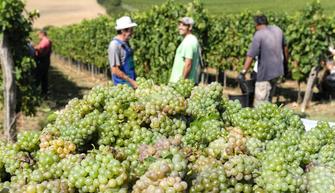
Devín, Dunaj, Milia. Slovak wine is making its mark in the world
SME1 oct 2023Slovak
Slovak wine, with a history dating back to the 6th-7th century BCE, is gaining international recognition. Despite most of its production being consumed domestically, recent years have seen a rise in its reputation, evidenced by successes in global competitions. Slovakia, identified as an emerging wine producer alongside countries like Chile and New Zealand, boasts six main wine regions. The country is known for its high-quality white wines, with unique varieties such as Devín, Dunaj, and Milia, which are not produced elsewhere. The article highlights the efforts of Slovak winemakers to cultivate new varieties suited to the local climate and soil, and the increasing trend of planting these unique grapes. The piece also emphasizes the blend of traditional and modern elements in Slovak winemaking, the significance of regional specialties, and the cultural importance of wine tasting and wine-related events in Slovakia.
Wine IndustrySlovak WineInternational CompetitionsSlovakiaBratislavaTokajZväz vinohradníkov a vinárov SlovenskaNárodný salón vín Slovenskej republikyConcours Mondial de BruxellesBaudouin HavauxJaroslava Kaňuchová-PátkováĽudmila Miškovičová
Estilo periodísticoInformativo
Mostly factual with some subjective statements about the quality and uniqueness of Slovak wines.
De opiniónFactual
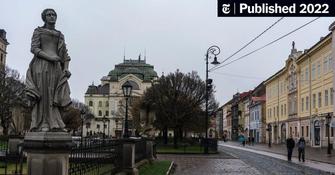
He Was a Penniless Donor to the Far Right. He Was Also a Russian Spy.
The New York Times20 abr 2022English
Bohus Garbar, a Slovak man with no clear income, donated thousands of euros to far-right political parties and contributed to a website spreading Russian propaganda. His activities were part of a broader Russian effort to influence politics in Eastern Europe. Garbar was arrested and charged with espionage and bribe-taking, and is cooperating with investigators. The Russian spy he worked with, Sergei Solomasov, was expelled from Slovakia. The case highlights the extensive clandestine network Russia has developed to sway political dynamics in the region.
EspionageInternational RelationsPolitical InfluenceSlovakiaRussiaUkraineRussian military intelligenceEast European Cultural InitiativeMain NewsBohus GarbarSergei SolomasovVladimir V. Putin
Estilo periodísticoInformativo
Primarily factual reporting with some analysis
De opiniónFactual
Contexto políticoExtrema derecha
The text discusses the involvement of far-right parties and individuals with Russian espionage activities
Extrema izquierdaExtrema derecha
Far-Right Extremism in Slovakia: Hate, Guns and Friends from Russia
Balkan Insight20 ene 2021English
Far-right extremism in Slovakia is characterized by the activities of groups like LSNS, Slovak Revival Movement, and Slovak Conscripts. These groups, often supported by disinformation networks and pro-Russian narratives, work to destabilize public trust in liberal democracy and human rights. LSNS, led by Marian Kotleba, has faced legal challenges for promoting neo-Nazi ideology, while the Slovak Revival Movement and Slovak Conscripts engage in nationalist and paramilitary activities. The Supreme Court and other state institutions have struggled to effectively counter these groups, leading to ongoing political and social tensions.
The article contains a mix of factual reporting and subjective analysis, particularly in the portrayal of far-right groups and their activities.
De opiniónFactual
Contexto políticoExtrema derecha
The article discusses far-right extremism and neo-Nazi activities in Slovakia.
Extrema izquierdaExtrema derecha
Slovakia’s New Prosecutor General Vows to be “Lion” in Criminal Jungle
Balkan Insight28 dic 2020English
Maros Zilinka, Slovakia's new prosecutor general, aims to restore public trust in the justice system by tackling corruption and ensuring equality before the law. His appointment follows a series of scandals involving high-profile figures like Marian Kocner, who was linked to the murder of journalist Jan Kuciak. Zilinka, known for his work on financial fraud cases, has vowed to act decisively against criminals while protecting honest prosecutors. The Slovak government has implemented public hearings to increase transparency in the selection process, reflecting a broader effort to reform the prosecution service and combat entrenched corruption.
Corruption in SlovakiaJudicial ReformPolitical ScandalsSlovakiaOffice of Special ProsecutionSlovak GovernmentOLANOMaros ZilinkaMarian KocnerZuzana CaputovaDobroslav TrnkaJaroslav Ciznar
Estilo periodísticoEquilibrado
Balanced between factual reporting and subjective interpretation
De opiniónFactual
Contexto políticoCentro
Focus on judicial reform and anti-corruption measures
Extrema izquierdaExtrema derecha
Vaccine Approval Can’t Come Soon Enough for Region
Balkan Insight18 dic 2020English
The article discusses the challenges and plans for COVID-19 vaccination in Central European countries, including the Czech Republic, Poland, Slovakia, and Hungary. It highlights logistical issues, public skepticism, and government responses to the pandemic. The Czech Republic faces criticism for low public willingness to vaccinate, while Slovakia struggles with rising cases and ineffective measures. Poland is preparing mass vaccination points, and Hungary is negotiating vaccine supplies with Russia and China, sparking controversy. The article underscores the urgency of vaccination amid rising infection rates and fatalities.
The article presents a mix of factual reporting and subjective commentary, particularly in the criticism of government actions.
De opiniónFactual
Contexto políticoCentro
The article discusses government actions and policies without a clear political bias.
Extrema izquierdaExtrema derecha
Democracy Digest: Battle of the Budget Has Poland and Hungary Claiming Victory
Balkan Insight11 dic 2020English
The European Council reached a compromise on the EU budget and recovery package, delaying the implementation of the rule-of-law mechanism until Hungary and Poland can challenge its legality. This deal is seen as a victory by the Polish and Hungarian governments, while opposition figures criticize it as a means to preserve power. The article also covers reactions from other EU member states, including the Czech Republic and Slovakia, and highlights ongoing judicial reforms in Slovakia aimed at combating corruption and increasing transparency.
EU BudgetRule of LawEuropean UnionPolandHungaryEuropean CouncilEuropean CommissionCourt of Justice of the European UnionLaw and Justice (PiS)FideszEuropean People’s PartyGreenpeace Slovakia
Estilo periodísticoEquilibrado
Balanced mix of factual reporting and subjective statements from various stakeholders.
De opiniónFactual
Contexto políticoCentroderecha
The article discusses actions and statements from center-right political figures and parties, with a focus on EU budget negotiations and rule-of-law mechanisms.
Extrema izquierdaExtrema derecha
Jury’s Out on V4 Comparative Law Institute
Balkan Insight26 nov 2020English
The V4 Institute of Comparative Law, proposed by Hungarian Justice Minister Judit Varga and Polish counterpart Zbigniew Ziobro, aims to support nationalist-populist governments in Central Europe by providing legal arguments for their policies. Critics argue it will serve as a propaganda tool rather than fostering genuine professional debate. The initiative has faced regional opposition, particularly from Slovakia, and lukewarm support from Poland. The Hungarian government plans to proceed with the project, including establishing a V4+ Professors Network and a PhD program, despite criticism and limited regional backing.
European LawRule of LawPolitical PRHungaryPolandCentral EuropeHungarian GovernmentEuropean ParliamentEUJudit VargaZbigniew ZiobroDavid Szabo
Estilo periodísticoInterpretativo
The article contains subjective statements and opinions from various stakeholders, indicating a mix of fact and opinion.
De opiniónFactual
Contexto políticoDerecha
The article discusses nationalist-populist governments and their initiatives, which are generally associated with right-wing politics.
Extrema izquierdaExtrema derecha
Pandemic Disrupts Southeast Europe Labour Flows
Balkan Insight25 nov 2020English
The COVID-19 pandemic has significantly disrupted labour flows in Southeast Europe, affecting both the import and export of workers. Countries like the Czech Republic and Hungary, which rely on foreign labour, have seen a decline in migrant workers, while nations such as Croatia and Bulgaria have experienced a return of their citizens from Western Europe. The pandemic has led to increased unemployment and reduced remittances, impacting local economies. Experts predict that the situation will continue to evolve, with potential long-term consequences for labour mobility and economic stability in the region.
PandemicLabour MobilityEconomic ImpactSoutheast EuropeWestern EuropeCzech RepublicSarajevo UniversityRomania’s Labour MinistryCzech Labour OfficeCaritasHungarian governmentCroatian Employers’ Association
Estilo periodísticoInformativo
Mostly factual with some expert opinions and predictions.
Respetamos su privacidad y utilizamos un número limitado de cookies para ofrecer funciones esenciales y mejorar su visita. No se utilizan cookies publicitarias de terceros. Para más detalles, lea nuestra Política de cookies.