Yayıncılar ve yayın kuruluşları İçerik pazarlama ekipleri Halkla ilişkiler ve iletişim ekipleri Risk ve istihbarat ekipleri Gazeteciler ve haber profesyonelleri Medya İzleme Fiyatlandırma

Mohammad hakkında

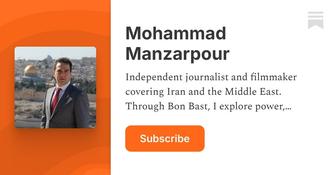
Mohammad Manzarpour, uluslararası yayıncılık, siyaset haberciliği ve multimedya gazeteciliğinde yirmi yılı aşkın deneyime sahip Britanya-İranlı bir gazeteci, editör ve medya yöneticisidir. O, dünya çapında Farsça konuşan izleyiciler için dijital haber ve siyasi analiz üreten Washington merkezli bir medya prodüksiyon şirketi olan Persis Media LLC'nin kurucusu ve CEO'sudur. Manzarpour daha önce Voice of America Persian'de Executive Editor olarak görev yaptı (2013–2017); burada televizyon, dijital ve sosyal medya platformları genelinde günlük editoryal operasyonlara nezaret etti ve İran nükleer müzakereleri ile 2013 İran cumhurbaşkanlığı seçimi de dahil olmak üzere önemli küresel olayların kapsamını denetledi. VOA'dan önce BBC Persian Television için Washington Büro Şefi olarak görev yaptı (2011–2013), 2012 ABD başkanlık seçimi ve diğer önemli siyasi gelişmeler de dahil olmak üzere ABD siyaseti ve uluslararası ilişkiler haberlerinin takibini yönetti. 2008'den 2011'e kadar Manzarpour, BBC Persian için Middle East Correspondent olarak görev yaptı; Gazze savaşı, Arap Baharı ve Mısır devrimi gibi büyük olaylar sırasında Kudüs'ten ve bölge genelinden haber yaptı. Kariyerinin erken dönemlerinde Londra'da BBC Persian için Kıdemli Yapımcı ve Radyo Yapımcısı olarak çalıştı ve İran'da Tehran Times'ın Ekonomi Editörü olarak görev yaptı. Kariyeri boyunca Orta Doğu siyaseti, İran meseleleri ve uluslararası diplomasi konularında uzmanlaştı; saha haberciliğini televizyon, radyo ve dijital platformlarda editoryal liderlikle birleştirdi. Bugün çalışmaları multimedya gazeteciliği, siyasi röportajlar ve İran ile bölgesel jeopolitiğin analizine odaklanıyor. Manzarpour, Tahran'daki Azad University'den Master’s degree in Psychology sahibidir ve Farsça ve İngilizce dillerinde akıcıdır.

Diller
İngilizce Farsça
Görüldüğü yerler
Manzarpour BBC

Çalışmalar 11

When a State Becomes Its Rival's Prophecy

Substack (Mohammad Manzarpour) 28 Haz 2026 English

Examines how Iran’s leadership increasingly adopted apocalyptic and Mahdist language that, according to scholar Kianoush Rezaghi, unintentionally reinforced existing Christian Zionist eschatological narratives. Traces the development of Shiite intellectual traditions, the rise of the Tafkik movement, institutional shifts under Ali Khamenei, and the parallel evolution of Dispensationalism and Christian Zionism in the United States. Argues that both sides’ symbolic frameworks began to mirror and validate each other, creating a cycle of narrative self‑entrapment that shaped foreign policy perceptions and constrained strategic flexibility.

Iran–Israel relations Political theology Christian Zionism Shiite eschatology International politics Iran Israel United States Islamic Republic of Iran Christian Zionist movement Hojjatieh Society School of Tafkik
Haber tarzıYorumlayıcı

Analytical but interpretive; presents a subjective theoretical framework rather than purely factual reporting.

Siyasi bağlamMerkez

Analytical discussion of political theology without partisan alignment.
“The Ceasefire Was Never Real”: Faramarz Dadras on the Return of War Between Iran and Israel

Substack 8 Haz 2026 English

Iran’s missile strikes on northern Israel occurred during a live interview with military analyst Faramarz Dadras, who argued that the supposed ceasefire had never been genuine. He emphasized that Iran, Israel, and the United States remain locked in an ongoing war of attrition defined by sustained pressure rather than rapid battlefield outcomes. Dadras dismissed reports of deep disagreements between Donald Trump and Benjamin Netanyahu, characterizing them as political theater masking shared strategic objectives. He argued that Iran’s retaliation was driven by the need to preserve deterrence after public threats of response to Israeli actions in Lebanon. The conversation also addressed intelligence friction between Israel and the United States and the growing risk of uncontrolled escalation even as diplomatic signals continue. Dadras concluded that the region is not in a post-war phase but entering a new, unstable stage where the endpoint of rising tensions is uncertain.

Iran–Israel conflict Middle East tensions Military escalation Iran Israel United States Iranian government Israeli government United States government U.S. intelligence agencies Israeli intelligence Faramarz Dadras
Haber tarzıDengeli

Analysis with interpretive commentary from a military analyst.

Siyasi bağlamMerkez

Focuses on geopolitical analysis without explicit ideological framing.

The Shamkhani Enigma: How Did Iran’s Security State Fail to See the War Coming?

Substack 4 Haz 2026 English

Iran’s pre-war security failures are examined through the career of Ali Shamkhani, whose long-standing influence across military, intelligence and political networks reflects broader structural weaknesses within the Islamic Republic. Interviews highlight how a system focused on internal control and ideological loyalty struggled with external strategic threats. Sanctions-era economic interests, factional rivalries and a loyalty-based leadership culture shaped decision-making and may have contributed to the regime’s inability to anticipate conflict. The transition following Ali Khamenei’s death exposes unresolved power struggles and institutional vulnerabilities that continue to influence Iran’s political trajectory.

Iran politics Intelligence failure War and security Iran United States Israel Islamic Revolutionary Guard Corps Islamic Republic of Iran Supreme National Security Council Ali Shamkhani Hossein Alaei Ali Khamenei
Haber tarzıYorumlayıcı

Analytical discussion with interpretive arguments about Iran’s security system

Siyasi bağlamMerkez

Analytical assessment of Iranian state structures without partisan framing

“I Want Iran to Remain”: Hossein Lajvardi on Iran’s Identity Crisis, Social Fragmentation, and the Search for a New National Contract

Substack 28 May 2026 English

Iranian sociologist Hossein Lajvardi warns that Iran faces a deep structural rupture involving identity, trust, governance, demographics, and environmental collapse that threatens national cohesion beyond political change alone. He argues for “smart decentralization” to balance unity and local autonomy, highlights environmental degradation as a national security danger, and emphasizes the transformative potential of younger generations and Iran’s human capital. Lajvardi proposes a permanent “Parliament of Ideas” to preserve institutional memory and suggests the Woman, Life, Freedom movement could evolve into a foundational constitutional principle. He contends that Iran’s survival depends on forming a new social contract before fragmentation undermines the state.

Iranian politics National identity Environmental crisis Social fragmentation Iran Middle East Association of Iranian Researchers Hossein Lajvardi Mohammad Manzarpour Substack I Want Iran to Remain
Haber tarzıDengeli

Interview format presenting analysis and interpretation with some subjective framing but grounded in expertise

Siyasi bağlamMerkez

Analytical discussion of governance, identity, and national policy without partisan framing

Iran After the War: A Regime Fracturing — or an Opposition Collapsing?

Substack 27 May 2026 English

Analysts and commentators debate whether Iran’s post-war landscape reflects a fracturing regime or a sharply weakened opposition. Internal power struggles, a diminished role for Ali Khamenei, and competing factions within state institutions suggest instability, while theories about an engineered rise of a militarized strongman point to strategic coherence within the ruling establishment. The opposition abroad is described as fragmented and disconnected, with societal shifts toward individualism further eroding organized political alternatives. Disagreement persists over public willingness to mobilize and the viability of monarchy-centered movements. With potential US-Iran de-escalation on the horizon, questions remain about the regime’s capacity to regain legitimacy and whether any opposition force is prepared to shape Iran’s future amid widespread political exhaustion.

Iranian politics Opposition movements Post-war regional dynamics Iran United States Middle East Islamic Republic of Iran Revolutionary Guards Iranian Parliament Iranian Judiciary US Government Ali Khamenei
Haber tarzıYorumlayıcı

Analytical but interpretive discussion with subjective political assessments.

Siyasi bağlamMerkez

Analytical discussion of political dynamics without advocating a partisan stance.

Trump Says “No Sanctions Relief, No Money”: Is the Iran Deal Already Dead?

Substack 27 May 2026 English

An interview with analyst Mehrdad Farahmand examines Donald Trump’s statements on Iran, arguing that rejecting sanctions relief leaves negotiations effectively hollow. Farahmand contends that Tehran cannot accept any deal lacking economic benefits and that regional actors oppose steps that might revive Iran’s economy. He describes Iran’s internal politics as fragmented among competing power centers, making consensus difficult and weakening prospects for a strategic shift. Trump’s unpredictable decision-making and the influence of his inner circle raise concerns about post-election escalation, especially if Trump emerges politically weakened. Farahmand concludes that both Washington and Tehran missed earlier opportunities for pragmatic engagement, increasing the risk of another regional crisis.

US-Iran relations Sanctions Diplomacy Middle East politics Iran United States Middle East Islamic Republic of Iran U.S. government Israel IRGC U.S. Congress
Haber tarzıYorumlayıcı

Analysis with strong interpretive and subjective assessments of political motives and consequences

Siyasi bağlamMerkez

Analytical discussion of U.S. and Iranian political dynamics without advocating a partisan position

Civil War Inside Iran’s Opposition?

Substack 13 May 2026 English

Debate among Iranian opposition commentators highlights widening fractures within monarchist and broader anti‑regime movements. Criticism centers on the perceived radicalization of monarchist circles, the revival of SAVAK‑related symbolism, and the adoption of strongly pro‑Israel identity markers. Some argue that these shifts undermine pluralism and alienate Iranians, while defenders frame them as part of a wider national reassessment and support for Reza Pahlavi as a unifying figure. Participants warn of fragmentation, unrealistic expectations about regime collapse, and the potential for violent transition, underscoring the opposition’s struggle to form a coherent post‑Islamic Republic strategy.

Iranian opposition politics Monarchism Iran–Israel relations Iran Israel Europe Islamic Republic of Iran SAVAK Reza Pahlavi Mohammad Manzarpour Abdol Sattar Doshouki Ryan Abbaszadeh
Haber tarzıYorumlayıcı

Analytical but includes subjective interpretations and debate framing

Siyasi bağlamMerkez

Focuses on internal opposition dynamics without advocating a partisan ideological position

The Diaspora’s Dark Turn

Substack 13 May 2026 English

Segments of the Iranian diaspora opposition have adopted increasingly far‑right aesthetics and narratives, influenced by selective media environments, identity politics, and geopolitical interests. Interviewee Kianoush Boostani links these trends to global far‑right movements, Israeli political networks seeking diaspora allies in information campaigns, and identity anxieties among exiles. He argues that radicalized groups participate in pro‑war activism and confrontations with pro‑Palestinian movements, while some asylum seekers are incentivized into visible political activity. This dynamic, he warns, ultimately reinforces the Islamic Republic’s propaganda by portraying opposition groups as extreme or foreign‑aligned, deepening fragmentation at a moment when Iranians seek democratic alternatives.

Iranian diaspora politics Far-right movements Israel–Iran information conflict Iran Europe Israel Islamic Republic of Iran Israeli government Netanyahu coalition Kianoush Boostani Mohammad Manzarpour Benjamin Netanyahu
Haber tarzıDengeli

Contains analysis and interpretation but grounded in reported interview content

Siyasi bağlamMerkez sol

Critical of far-right politics and geopolitical manipulation

Iran’s Nuclear Game: Khamenei’s Insurance Policy and Its Unraveling

Substack (Manzarpour) 24 Eyl 2025 English

Iran’s nuclear program evolved into a political tool under Supreme Leader Ali Khamenei, who advanced enrichment capabilities while publicly prohibiting nuclear weapons through a religious decree. This contradiction functioned as an insurance policy, making Khamenei appear indispensable to preventing weaponization. The strategy peaked with the 2015 nuclear deal, which relied on his perceived restraint. Subsequent events—including the U.S. withdrawal from the JCPOA under Donald Trump, Israeli exposure of Iran’s past weapons research, and geopolitical instability amplified by the Epstein scandal—undermined the system that had protected Iran’s leadership. As Iran expands its enrichment activities beyond JCPOA limits, the previous balance no longer deters foreign adversaries, increasing the likelihood of confrontation.

Iran nuclear program JCPOA negotiations Middle East geopolitics Iran United States Israel Government of Iran United States Government Israeli Government Ali Khamenei Akbar Hashemi Rafsanjani Ayatollah Khomeini
Haber tarzıYorumlayıcı

The text contains substantial analysis and interpretation of political strategy, presenting subjective assessments alongside factual history.

Siyasi bağlamMerkez

Analytical tone assessing geopolitical actions without advocating for ideological positions.

Iran soul-searching over murder in the streets

BBC News 16 Ara 2010 English

A public murder in northwest Tehran, captured on mobile phones, triggered widespread shock as bystanders and police officers failed to intervene for 45 minutes, leading to the victim’s death. A second video of a similar murder further intensified scrutiny of Iran’s police, who were criticized for prioritizing state security over public safety. The incidents prompted public debate and embarrassment for the authorities, who accelerated prosecution of the Tehran attacker amid growing criticism across Iranian media and online platforms.

Public safety Crime Iranian society Police response Iran Tehran Karaj Iranian police Islamic state Yazdan Yacoub
Haber tarzıDengeli

Contains factual reporting with some interpretive commentary and societal analysis.

Siyasi bağlamMerkez

Discusses governance and state authority critically but without endorsing a specific political ideology.

11 çalışmanın tümünü görmek için ücretsiz kaydolun

İşe al Mesaj
×

Mohammad kişisine mesaj göndermek için kaydolun

Zaten bir hesabınız var mı? Giriş yap
İş mi arıyorsunuz? Gazeteci olarak kaydolun
Kaydı tamamlamak için e-postanızı doğrulayın
Az önce şu adrese bir e-posta gönderdik: . E-posta adresinizi doğrulamak ve kaydınızı tamamlamak için gelen kutunuzu kontrol edin ve bağlantıya tıklayın. E-postayı görmüyorsanız, spam veya gereksiz klasörünüzü kontrol etmeyi unutmayın.
E-postayı almadınız mı?

Profilleri açmak için kaydolun

Zaten bir hesabınız var mı? Giriş yap
İş mi arıyorsunuz? Gazeteci olarak kaydolun
Kaydı tamamlamak için e-postanızı doğrulayın
Az önce şu adrese bir e-posta gönderdik: . E-posta adresinizi doğrulamak ve kaydınızı tamamlamak için gelen kutunuzu kontrol edin ve bağlantıya tıklayın. E-postayı görmüyorsanız, spam veya gereksiz klasörünüzü kontrol etmeyi unutmayın.
E-postayı almadınız mı?