Hire journalists

Publishers & Broadcasters Content Marketing Teams PR & Comms Teams Risk & Intelligence Teams Find journalists Media Monitoring Pricing

For journalists

Journalism jobs Pay rates Create your free profile

About Nathalie

Nathalie Bertrams is a freelance journalist, photographer, and National Geographic Explorer known for her in-depth reporting on environmental conflicts, human rights and social justice issues, mainly across Africa. Her work has been featured in prominent media outlets, including The Guardian, Süddeutsche Zeitung, Al Jazeera, El Pais, BBC, and De Groene Amsterdammer. In addition, Bertrams produces TV documentaries for ZDF/Arte. She exhibits internationally and has received multiple grants and awards for her storytelling, including from the Pulitzer Center on Crisis Reporting, IWMF, Fonds BJP, IJ4EU and Journalismfund Europe. Nathalie studied Fine Arts in the Netherlands, the United States, and Germany and has a master’s degree from the Kunstakademie Düsseldorf, Germany.

Languages
German English Dutch French
Seen in
Groene The Mail & Guardian Al Jazeera Tages-Anzeiger Basler Zeitung Mongabay Newlinesmag Derbund Sueddeutsche ARTE BBC Berner Oberländer Daily Maverick Der Landbote El País Henry Nxumalo Foundation Langenthaler Tagblatt MO* The Guardian Thuner Tagblatt Vreme Zürcher Unterländer Bernerzeitung

Work 47

The Multibillion-Rand Industry Profiting from Primate Pain

Daily Maverick 27 Aug 2026 English

Charles River Laboratories and other companies supply endangered long-tailed macaques from Mauritius to biomedical laboratories, where the animals are used in testing and ultimately killed. The industry claims macaques are invasive pests and that their capture can benefit conservation, but the article reports that Mauritius lacks a coordinated population-control policy and that commercial activity itself helps sustain macaque populations. Researchers describe alternatives—including organ-on-a-chip systems, computer modelling and virtual control groups—while regulators in the United States, Europe and India move toward reducing or ending animal testing. The piece argues that the industry’s ethical and conservation justifications are undermined by the animals’ suffering, the species’ declining numbers and the availability of alternative methods.

Animal Testing Endangered Species Primate Trade Animal Welfare Conservation in Mauritius Alternatives to Animal Testing Mauritius Spain United States International Union for Conservation of Nature National Association for Biomedical Research University of Mauritius
Reporting styleInterpretive

Investigative reporting includes factual evidence and expert views, but uses forceful, critical language arguing that the macaque trade is ethically unjustified and environmentally misleading.
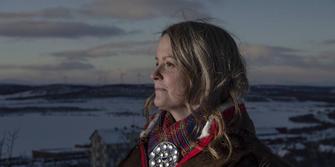
Animal Testing: Why Mauritius Sells Its Sacred Monkeys

Süddeutsche Zeitung 3 Jul 2026 German

The article examines how Mauritius became the world’s largest exporter of primates for laboratory research, despite monkeys being considered sacred by the island’s Hindu community. Its opening describes a wire cage near a resident named Arya’s home. The available text does not provide further details about the trade or the article’s conclusions.

Animal Testing Animal Rights Wildlife Trade Primate Research Mauritius Nathalie Bertrams Tristen Taylor Arya
Reporting styleInformative

Mostly factual explanatory reporting; the visible text offers little explicit opinion.

What Remains of South Africa’s Industrial Dream

New Lines Magazine 2 Jun 2026 English

The Vaal Triangle, once a hub of steel and petrochemical production, is facing deepening deindustrialization, with factory closures, high electricity costs, deteriorating infrastructure, and weak public services compounding unemployment and poverty. Residents describe lost jobs, shrinking incomes, unaffordable health care, drug use, and growing strain on families and schools. Unions across political divides warn that steelmaking is nearing collapse and fault government inaction, while companies and industries contend with market pressures and uncertainty. Disillusionment with the governing ANC and established political promises is widespread, though many residents continue to vote, holding onto the possibility of a better future.

Deindustrialization Manufacturing Decline Unemployment Infrastructure South African Politics Apartheid and Its Legacy Poverty and Social Issues Vaal Triangle, South Africa Gauteng, South Africa Free State, South Africa African National Congress National Union of Metalworkers of South Africa
Reporting styleInterpretive

Reported with extensive evidence and interviews, but uses critical framing of government policy, privatization, industrial decline, and their social consequences.

Political contextCentre-left

Critical of market-led liberalization and privatization and emphasizes worker protections, public investment, and social consequences, while presenting varied political perspectives.

The Sami’s Last Reindeer Route

De Groene Amsterdammer 7 Jan 2026 Dutch

Mining expansion in northern Sweden is threatening the last continuous reindeer migration route of the Gabna Sami community near Kiruna. LKAB’s proposed Per Geijer mine would extract iron ore and rare earth metals needed for European steel, electric vehicles, wind turbines and defense technology, but Sami herders warn it would divide their grazing lands and undermine their culture. The Talga graphite project near Vittangi has generated similar opposition over water, biodiversity and alleged attempts to avoid stricter environmental scrutiny. Sweden and the EU defend expanded domestic mining as necessary to reduce dependence on China and support the green transition, while critics argue that accelerated permitting ignores Sami consent and repeats a long history of colonial dispossession. Mining, infrastructure, climate change and industrial disruption are already reducing reindeer herds and increasing psychological pressure on herders, raising doubts about whether the green transition can be considered sustainable if it destroys Indigenous land and livelihoods.

Sami Indigenous Rights Reindeer Herding Mining and Critical Raw Materials Green Transition Rare Earth Metals Environmental Conflicts Climate Change Land Rights Kiruna, Sweden Norrbotten, Sweden Sápmi LKAB
Reporting styleBalanced

Fact-based investigative reporting with a clear critical framing of mining expansion and its effects on Sami rights and the environment.

Political contextCentre-left

Supports Indigenous land rights, environmental protection and skepticism toward extractive industry, while acknowledging the strategic and climate-transition arguments for mining.

Kiruna: Mining threatens Sami future in northern Scandinavia

Tages-Anzeiger 25 Oct 2025 German

Sweden’s state-owned miner LKAB plans a new rare earths mine near Kiruna to support Europe’s energy transition, a move that threatens the last major reindeer migration route of the indigenous Sami. Local summaries indicate the Sami community’s traditional pathways would be disrupted, and the municipality of Kiruna sees limited financial gains despite valuable deposits.

Energy Transition Indigenous Rights Mining and Metals Environmental Protection Local Economics Kiruna Sweden Northern Scandinavia Sami Municipality of Kiruna Nathalie Bertrams Ingrid Gercama
Reporting styleInformative

Mostly factual reporting with a critical framing of mining impacts and brief quotes.

Kiruna: Mining threatens Sami future in Northern Scandinavia

Berner Zeitung 25 Oct 2025 German

Plans by the state-owned mining company LKAB to develop a new rare earths mine near Kiruna threaten the last remaining reindeer migration route of the indigenous Sami, raising concerns about cultural survival and environmental impact. Despite the economic value of the resources, the local community reportedly benefits little from the mining revenues, intensifying tensions between development goals and indigenous rights in northern Sweden.

Mining conflict Indigenous rights Energy transition Kiruna Sweden Europe Sami community LKAB
Reporting styleInformative

Primarily factual reporting with mild interpretive framing about threats to Sami livelihoods.

Political contextCentre-left

Focus on indigenous rights, environmental impacts, and critique of industrial expansion

Reindeer or raw materials: A mine threatens the Indigenous Sámi in Sweden

Süddeutsche Zeitung 10 Oct 2025 German

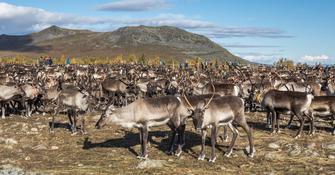
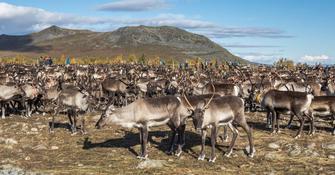
A large herd of reindeer is gathered near Rensjön in Sweden’s northernmost province of Norrbotten, where the Sámi rely on reindeer herding for orientation and survival in harsh Arctic conditions. The passage describes the scene as tension grows over a proposed mining project that threatens Sámi lands and traditional practices.

Indigenous rights Mining conflict Environmental impact Norrbotten Sweden Kiruna Sámi
Reporting styleInformative

Mostly factual descriptive reporting with minimal subjective language.

Reindeer or raw materials: A mine threatens the Indigenous Sámi in Sweden

Süddeutsche Zeitung 10 Oct 2025 German

A reindeer herd moves tightly within an enclosure near Rensjön in Sweden’s northern Norrbotten region, illustrating the deep connection between the Sámi people and their traditional herding practices in a landscape threatened by proposed mining activity.

Indigenous rights Mining conflict Environment Norrbotten Sweden Rensjön Sámi
Reporting styleInformative

Mostly descriptive environmental and cultural reporting with minimal subjective language

Belgium’s Broken Prisons

New Lines Magazine 30 Jul 2025 English

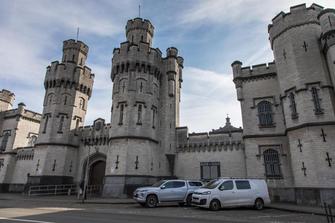
Belgium’s prison system is overwhelmed by overcrowding, understaffing and deteriorating infrastructure, resulting in widespread violence, inhumane conditions and unchecked organized crime activity. Guards, detainees and watchdogs describe rampant drug trafficking, severe mental health neglect, collapsing safety protocols and the mixing of convicted prisoners, pretrial detainees and psychiatric internees. Union officials and prison workers argue that recent political decisions, including stricter sentencing and immigration crackdowns, have intensified pressures on already failing facilities. Despite international warnings, government responses remain focused on expanding capacity through temporary fixes rather than structural reforms. Teachers and staff working toward rehabilitation describe programs collapsing due to chronic understaffing, while experts emphasize that successful models exist but lack political will. The crisis continues to deepen, with detainees facing degrading conditions and workers confronting rising threats and burnout.

Belgium prison crisis Overcrowding and understaffing Criminal justice reform Organized crime Belgium Brussels Antwerp ACOD Council of Europe Belgian Ministry of Justice Mario Heylen Agnès Piessevaux
Reporting styleInterpretive

Contains substantial reported facts but also includes strong subjective assessments, emotional testimonies and evaluative language about policy and prison conditions.

Political contextCentre-left

Critiques punitive right-wing criminal justice policies and argues for social investment, rehabilitation and structural reform.

How the crucial Antarctic krill are being doomed by geopolitics and overfishing

Daily Maverick 15 Apr 2025 English

Antarctic krill, crucial to the marine ecosystem, are threatened by overfishing and geopolitical tensions. The Convention for the Conservation of Antarctic Marine Living Resources (CCAMLR) has failed to renew critical conservation measures, allowing unrestricted krill fishing in certain areas. Major players like Norway's Aker BioMarine and China's fishing industry are heavily involved, despite financial losses and environmental concerns. The article highlights the need for better scientific data and stricter regulations to prevent further ecological damage.

Antarctic Krill Geopolitics Overfishing Antarctica Norway China Convention for the Conservation of Antarctic Marine Living Resources (CCAMLR) South Korean government China National Agricultural Development Group Eun-hee Kim Ryan Reisinger Matthew Savoca
Reporting styleInterpretive

The article contains subjective statements and opinions about the impact of krill fishing and geopolitical influences.

Political contextCentre-left

The article discusses environmental concerns and critiques geopolitical influences on krill fishing.

See all 47 pieces of work with a free account

Hire Message
×

Sign up to message Nathalie

Already have an account? Log in
Looking for work? Register as a Journalist
Verify your email to complete registration
We’ve just sent an email to . Please check your inbox and click the link to verify your email address and complete your registration. If you don’t see the email, be sure to check your spam or junk folder.
Didn’t receive the email?

Sign up to unlock profiles

Already have an account? Log in
Looking for work? Register as a Journalist
Verify your email to complete registration
We’ve just sent an email to . Please check your inbox and click the link to verify your email address and complete your registration. If you don’t see the email, be sure to check your spam or junk folder.
Didn’t receive the email?