Verlage & Sender Content-Marketing-Teams PR- & Kommunikationsteams Risiko- & Intelligence-Teams Journalisten & Medienschaffende Medienbeobachtung Preise

Über Naufal

Naufal Rofi Indriansyah ist Journalist mit Sitz in Jawa Barat, Indonesien.

Sprachen
Englisch Indonesisch
Gesehen in
Kompasiana Whiteboard Journal

Arbeiten 8

Temporary Urbanism

Whiteboardjournal 24. Jan. 2019 Indonesian

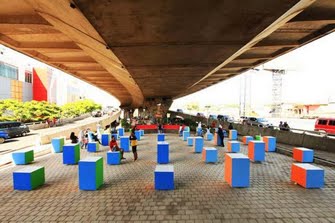
The article discusses the phenomenon of temporary markets in Bandung, Indonesia, which emerge during festive seasons like Ramadan. These markets offer affordable clothing and have become popular among the youth, reflecting a consumer culture that thrives outside formal retail establishments. The article explores the implications of such informal economies and the concept of 'temporary urbanism', suggesting that these markets are a response to demand and represent an organic power structure that is decentralized and dispersed. It highlights the need for creative urban planning that accommodates the evolving needs and behaviors of contemporary society.

Urban Development Consumerism Economy Bandung Indonesia Megumi Koyama Charles Landry Appadurai
BerichtsstilInformativ

The text contains analysis and interpretation of urban trends.
Temporary Urbanism

Whiteboardjournal 24. Jan. 2019 Indonesian

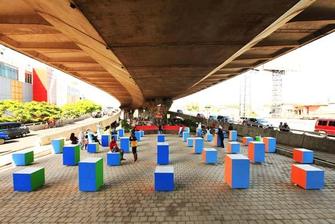
The article discusses the phenomenon of temporary markets in Bandung, Indonesia, which emerge during festive seasons like Ramadan. These markets offer affordable clothing and have become popular among the youth, reflecting a consumer culture that thrives outside formal retail establishments. The article explores the implications of such informal economies and the concept of 'temporary urbanism', suggesting that these markets are a response to demand and represent an organic power structure that is decentralized and dispersed. It highlights the need for creative urban planning that accommodates the evolving needs and behaviors of contemporary society.

Urban Development Consumerism Economy Bandung Indonesia Megumi Koyama Charles Landry Appadurai

The Human Dimension in Planning: Which Humans Are Planning?

Kompasiana 27. Juni 2016 Indonesian

Indonesia needs many qualified planners to prepare spatial plans for provinces, cities, districts, villages, and even smaller communities, yet becoming a certified and capable planner requires extensive education and training. Drawing on a visit to Kertasari in Bandung Regency, the author highlights the Institut Gunung Wayang and its community-based activities, including a village planning school. The experience prompts a broader argument that local residents should participate as subjects—not merely objects—of development because they possess essential knowledge of local conditions and culture. However, limited education, resources, and experience often concentrate planning authority among government officials. The article argues that participatory planning is necessary in both rural and urban areas to balance economic and technological development with local values, social needs, and equitable access to infrastructure and opportunity.

Spatial Planning Rural Development Urban Development Community Participation Local Knowledge Education and Capacity Building Indonesia Bandung Regency Bandung Institut Gunung Wayang Perkumpulan Inisiatif Institut Teknologi Bandung
BerichtsstilInterpretierend

A strongly reflective and argumentative essay that combines personal experience with observations about planning and development, though it also includes factual context.

Human Dimension in Planning, Which Humans Do the Planning

Kompasiana 27. Juni 2016 Indonesian

The text reflects on Indonesia’s high demand for professional planners and the difficulty of producing enough qualified experts through formal education alone. A visit to Kertasari in Bandung highlights a local youth group, Institut Gunung Wayang, which conducts community initiatives including spatial planning education through the support of Perkumpulan Inisiatif. The experience prompts reflection on whether small-scale spatial planning must always rely on certified professionals and underscores the essential role of villages in national development and the preservation of local wisdom.

Urban Planning Rural Development Education Indonesia Bandung Kertasari Institut Gunung Wayang Perkumpulan Inisiatif ITB Naufal Rofi Indriansyah
BerichtsstilAusgewogen

Contains personal reflections mixed with descriptive observations

Structuring Human Interaction in Public Housing

Kompasiana 10. Mai 2016 Indonesian

Vertical housing is presented as a potential response to Indonesia's housing shortage and rapid urbanization, particularly in expensive and space-constrained cities such as Bandung and Jakarta. However, the article argues that high-rise developments can neglect social and cultural needs by separating residents from street life, weakening chance encounters and community networks, reducing public space and social capital, and creating an inhuman scale. It also warns of possible vertical sprawl, including speculative construction and vacant buildings, and calls for housing designs that better support public interaction and community life.

Public Housing Vertical Housing Urbanization Urban Planning Social Capital Public Space Community Interaction Indonesia Bandung Jakarta Bandung City Government Jakarta Provincial Government
BerichtsstilInterpretierend

Predominantly analytical and argumentative, presenting the author's critical assessment of vertical housing and its social consequences.

Arranging Human Interaction in Apartment Housing

Kompasiana 10. Mai 2016 Indonesian

Rapid urbanization and high housing costs in Indonesia have driven the expansion of vertical housing, yet these developments often fail to resolve core issues of livability and social cohesion. High-rise buildings tend to isolate residents from street life, weaken inter-community networks, limit human-scale interaction, and reduce opportunities for spontaneous social encounters. Urban thinkers argue that these environments can feel dehumanizing and hinder the formation of social capital, suggesting that cultural and social considerations remain overlooked in housing policy.

Urban planning Housing policy Social interaction Indonesia Bandung Jakarta Pemkot Bandung DKI Jakarta government Jan Gehl Michael Buxton Taz Loomans
BerichtsstilAusgewogen

Mix of analysis and subjective interpretation about social impacts of high-rise housing

Dioscuri and the Overdose of Public Space in Bandung

Kompasiana 3. Mai 2016 Indonesian

The article discusses the concept of Dioscuri, the twin sons of Zeus, Castor and Pollux, and their association with the Gemini constellation, symbolizing duality and communication. It then connects this mythological concept to the public spaces in Bandung, drawing parallels with Walter Benjamin's critique of Parisian arcades as both a space for interaction and a symbol of consumerism. The proliferation of thematic parks in Bandung is seen as both a remedy for the lack of recreational spaces and a cause of new issues such as inadequate infrastructure and traffic congestion. The article suggests that the abundance of parks in Bandung has led to an overdose of public space, resulting in a form of consumerism similar to that of the Parisian era.

Public Spaces Urban Development Cultural Commentary Bandung Walter Benjamin
BerichtsstilAusgewogen

The text contains a mix of factual reporting on public spaces and cultural references, with some interpretive commentary.

Dioscuri and the Overdose of Public Space in Bandung

Kompasiana 3. Mai 2016 Indonesian

The article discusses the concept of Dioscuri, the twin sons of Zeus, Castor and Pollux, and their association with the Gemini constellation, symbolizing duality and communication. It then connects this mythological concept to the public spaces in Bandung, drawing parallels with Walter Benjamin's critique of Parisian arcades as both a space for interaction and a symbol of consumerism. The proliferation of thematic parks in Bandung is seen as both a remedy for the lack of recreational spaces and a cause of new issues such as inadequate infrastructure and traffic congestion. The article suggests that the abundance of parks in Bandung has led to an overdose of public space, resulting in a form of consumerism similar to that of the Parisian era.

Public Spaces Urban Development Cultural Commentary Bandung Walter Benjamin
Engagieren Nachricht
×

Registrieren Sie sich, um Naufal eine Nachricht zu senden

Haben Sie bereits ein Konto? Anmelden
Suchen Sie Arbeit? Als Journalist registrieren
Verifizieren Sie Ihre E-Mail, um die Registrierung abzuschließen
Wir haben gerade eine E-Mail gesendet an . Bitte prüfen Sie Ihren Posteingang und klicken Sie auf den Link, um Ihre E-Mail-Adresse zu verifizieren und Ihre Registrierung abzuschließen. Falls Sie die E-Mail nicht sehen, prüfen Sie unbedingt Ihren Spam- oder Junk-Ordner.
E-Mail nicht erhalten?

Registrieren Sie sich, um Profile freizuschalten

Haben Sie bereits ein Konto? Anmelden
Suchen Sie Arbeit? Als Journalist registrieren
Verifizieren Sie Ihre E-Mail, um die Registrierung abzuschließen
Wir haben gerade eine E-Mail gesendet an . Bitte prüfen Sie Ihren Posteingang und klicken Sie auf den Link, um Ihre E-Mail-Adresse zu verifizieren und Ihre Registrierung abzuschließen. Falls Sie die E-Mail nicht sehen, prüfen Sie unbedingt Ihren Spam- oder Junk-Ordner.
E-Mail nicht erhalten?