Hire journalists

Publishers & Broadcasters Content Marketing Teams PR & Comms Teams Risk & Intelligence Teams Find journalists Media Monitoring Pricing

For journalists

Journalism jobs Pay rates Create your free profile

About Nneoma

Nneoma Omeje is an internationally trained journalist based in Abuja, the Federal Capital Territory of Nigeria, with over seven years of experience in journalism and communications. She has worked with local, national and international media organisations and has received mentorship and training from internationally recognised journalists in Nigeria and abroad. She has published more than 50 investigative stories on drug trafficking, money laundering, cybercrime, human trafficking, corruption and other organised crime issues in Nigeria and internationally. Her work combines investigative reporting, research, fact-checking and storytelling to shed light on complex issues and make them accessible to wider audiences.

Languages
English
Seen in
Occrp

Work 3

U.S. Blocks Records on Nigerian President’s Alleged Drug Ties

OCCRP 26 Nov 2024 English

In a recent court filing, the agencies argued that confirming or denying the existence of records could compromise privacy interests and national security, as they responded to multiple Freedom of Information Act (FOIA) requests from plaintiff Aaron Greenspan.

Freedom of Information National Security Alleged Drug Trafficking Government Transparency Nigeria United States Chicago Central Intelligence Agency (CIA) Federal Bureau of Investigation (FBI) Drug Enforcement Administration (DEA) U.S. federal agencies Bola Tinubu
Reporting styleFactual

Primarily factual reporting that presents agency arguments and public responses, with limited evaluative language.

Political contextCentre

The report presents the agencies’ national security rationale, calls for transparency, and Tinubu’s denial without endorsing a political position.

Counterfeit Medicines Surge in Africa Amid Regulatory Gaps

OCCRP 8 Aug 2024 English

Research indicates that as many as 22.6% of medicines circulating in Africa are counterfeit or substandard, while 34.6% may be unregistered. Weak oversight, inadequate registration, high demand, free-trade zones, and poor import practices contribute to the problem. A UN estimate links falsified and substandard medicines to as many as 500,000 deaths annually in sub-Saharan Africa. In Nigeria, authorities reported a 16% prevalence rate in 2019 and aim to bring it below the global average of 10% by 2025; the national regulator regularly issues warnings and reports seizures.

Counterfeit Medicines Medicine Regulation Public Health Drug Safety Africa Nigeria Sub-Saharan Africa National Agency for Food and Drug Administration and Control (NAFDAC) United Nations Office on Drugs and Crime Bahir Dar University United States National Library of Medicine Michael Omoke
Reporting styleInformative

Mostly factual reporting based on research, statistics, and expert comments, with some evaluative language about the public health risk.

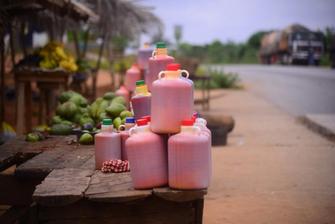
Adulterated Cooking Oil Flooding Nigerian Markets

OCCRP 26 Jun 2024

Most diseases that Nigerians face are due to the consumption of these adulterated food products found in tomatoes, onions, and even palm oil. I am calling on all government agencies to work together to deal with the situation," Ambassador Alphonso Inyang, the National President of the National Palm Produce Association of Nigeria (NPPAN), told OCCRP.

Hire Message
×

Sign up to message Nneoma

Already have an account? Log in
Looking for work? Register as a Journalist
Verify your email to complete registration
We’ve just sent an email to . Please check your inbox and click the link to verify your email address and complete your registration. If you don’t see the email, be sure to check your spam or junk folder.
Didn’t receive the email?

Sign up to unlock profiles

Already have an account? Log in
Looking for work? Register as a Journalist
Verify your email to complete registration
We’ve just sent an email to . Please check your inbox and click the link to verify your email address and complete your registration. If you don’t see the email, be sure to check your spam or junk folder.
Didn’t receive the email?