Hire journalists

Publishers & Broadcasters Content Marketing Teams PR & Comms Teams Risk & Intelligence Teams Find journalists Media Monitoring Pricing

For journalists

Journalism jobs Pay rates Create your free profile

About Ola

I am a science journalist and editor based in Cairo, Egypt. I am working as a freelance science journalist since 2008. I am writing interesting science stories in both English and Arabic covering, medicine, environment, and science-based topics for international online outlets such as Nature Middle East, Scientific American-Arabic version, SciDev.net both the global and MENA portals. I am also the founder of Planet X initiative to train young Arab people who would like to become science journalists.

Languages
Arabic English
Seen in
Natureasia Scientificamerican Scidev

Work 7

Vast economic gaps and conflicts are behind large inequities in vaccine distribution among Arab populations.

Natureasia 14 Feb 2021 English

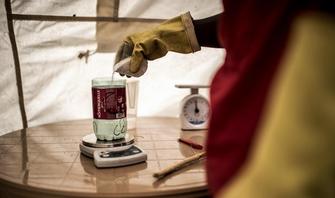
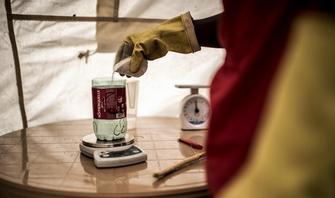
The article discusses the disparities in COVID-19 vaccine distribution among Arab populations, highlighting the economic and conflict-related challenges that contribute to these inequities. While countries like the United Arab Emirates and Bahrain have made significant progress in their vaccination campaigns due to early bilateral deals with manufacturers and strong supply chain capabilities, others like Egypt lag behind. The WHO's discouragement of bilateral deals was ignored by many developed countries, leading to a situation where the global supply of vaccines is dominated by wealthier nations. The COVAX initiative aims to provide vaccines to low- and middle-income countries, but challenges persist, especially in conflict zones. The article also mentions successful strategies in countries like Morocco and suggests that comprehensive planning and international support are crucial for overcoming the challenges in vaccine distribution.
COVID-19 vaccine distribution Vaccine inequity Global health Arab countries Middle East Morocco Saint George Hospital University Medical Center UNICEF World Health Organization (WHO) Ain Shams University Médecins Sans Frontières Gavi COVID-19 Vaccines Global Access (COVAX) Facility Advance Market Commitment (AMC)

Discovery, against all odds

Nature Middle East 17 Nov 2020 English

Lebanese researcher Nathalie Khoueiry-Zgheib is recognized for studying links between genetics and drug reactions. Despite the COVID-19 pandemic, mass protests, economic crisis, and the Beirut port explosion, Lebanese scientists continue producing high-quality research.

Scientific Research Pharmacogenetics Genetics and Drug Reactions Lebanese Science Lebanon Beirut Nathalie Khoueiry-Zgheib Ola Al-Ghazawy
Reporting styleInformative

Primarily factual reporting, with a positive framing of Lebanese scientists’ persistence.

Transforming bitter saltwater into sweet Euphrates under the cover of darkness

Scidev 23 Aug 2020 Arabic

A research team has successfully desalinated water using a new technique that exploits the properties of synthetic materials with metal-organic frameworks known for their fluid adsorption capabilities. The compound PSP-MIL-53, developed by the researchers, desalinated saltwater in less than half an hour, offering a more sustainable, environmentally friendly, and cost-effective method compared to current technologies. The study's lead researcher, Wan-Ting Wang from Monash University's Department of Chemical Engineering, highlights the material's high adsorption capacity and renewability with just four minutes of sunlight exposure. The technique aligns with the World Health Organization's standards for potable water and is seen as promising, especially for water-scarce regions in the Middle East and North Africa. However, challenges related to adsorption capacity and the stability of the metal-organic frameworks during regeneration cycles need to be addressed for commercial application.

Science & Technology Environment Innovation Middle East North Africa Australia Monash University World Health Organization (WHO) UNICEF Wan-Ting Wang Mohamed El-Kurdi
Reporting styleInformative

Mostly factual reporting with some expert opinions

Transforming bitter saltwater into sweet Euphrates under the cover of darkness

Scidev 23 Aug 2020 Arabic

A research team has successfully desalinated water using a new technique that exploits the properties of synthetic materials with metal-organic frameworks known for their fluid adsorption capabilities. The compound PSP-MIL-53, developed by the researchers, desalinated saltwater in less than half an hour, offering a more sustainable, environmentally friendly, and cost-effective method compared to current technologies. The study's lead researcher, Wan-Ting Wang from Monash University's Department of Chemical Engineering, highlights the material's high adsorption capacity and renewability with just four minutes of sunlight exposure. The technique aligns with the World Health Organization's standards for potable water and is seen as promising, especially for water-scarce regions in the Middle East and North Africa. However, challenges related to adsorption capacity and the stability of the metal-organic frameworks during regeneration cycles need to be addressed for commercial application.

Science & Technology Environment Innovation Middle East North Africa Australia Monash University World Health Organization (WHO) UNICEF Wan-Ting Wang Mohamed El-Kurdi

Computer system identifies cattle from nose prints

SciDev.Net 24 Jul 2015 English

Egyptian scientists at Beni-Suef University developed a computer-based technique that identifies cattle using nose prints. Algorithms analyze distinctive features in images of cattle muzzles to classify individual animals.

Cattle identification Agricultural technology Egypt Beni-Suef University Ola Al-Ghazawy
Reporting styleFactual

Factual report describing a research development.

Features

Natureasia English

Nathalie Khoueiry-Zgheib, a pharmacogeneticist at the American University in Beirut, has been awarded the 2020 Arab Researchers Award in medical and health sciences by the Abdulhameed Shoman Foundation. Despite Lebanon's multiple crises, she has established a pharmacogenetics laboratory at AUB, focusing on genetic and epigenetic influences on diseases like breast cancer and acute lymphocytic leukaemia. Her research aims to personalize therapy for children with cancer and investigate cardiovascular disease links to air pollution. Khoueiry-Zgheib is dedicated to putting Lebanon on the pharmacogenetics map and advancing personalized medicine in the Arabic-speaking Middle East.

Medical Research Pharmacogenetics Health Sciences Lebanon Middle East United States Abdulhameed Shoman Foundation American University in Beirut

New HIV infections have risen sharply in the past decade across the Middle East and North Africa, despite falling numbers at the global level.

Natureasia English

The article discusses the alarming rise in new HIV infections in the Middle East and North Africa (MENA) region, despite a global decline. The UNAIDS Data 2020 report shows a 22% increase in new cases since 2010, with only 38% of those with HIV in MENA accessing antiretroviral therapy. Factors contributing to this rise include humanitarian crises, constraints on civil society organizations, and the stigmatization of high-risk groups. Hiam Chemaitelly from Weill Cornell Medicine College in Qatar emphasizes the failure of current HIV programs to reach these groups. The article also highlights the challenges in HIV research and funding in the region, the low rates of HIV testing among at-risk populations, and the need for a human rights-based approach to combat the epidemic, as advocated by UNAIDS executive director Winnie Byanyima.

HIV/AIDS epidemic Healthcare in the Middle East and North Africa Humanitarian crises and their impact on health HIV/AIDS research Human rights and healthcare Middle East North Africa UNAIDS Weill Cornell Medicine College in Qatar
Hire Message
×

Sign up to message Ola

Already have an account? Log in
Looking for work? Register as a Journalist
Verify your email to complete registration
We’ve just sent an email to . Please check your inbox and click the link to verify your email address and complete your registration. If you don’t see the email, be sure to check your spam or junk folder.
Didn’t receive the email?

Sign up to unlock profiles

Already have an account? Log in
Looking for work? Register as a Journalist
Verify your email to complete registration
We’ve just sent an email to . Please check your inbox and click the link to verify your email address and complete your registration. If you don’t see the email, be sure to check your spam or junk folder.
Didn’t receive the email?