Contratar jornalistas

Editoras e emissoras Equipes de marketing de conteúdo Equipes de RP e comunicação Equipes de risco e inteligência Encontrar jornalistas Monitoramento de mídia Preços

Para jornalistas

Vagas de jornalismo Tarifas Crie seu perfil gratuito

Sobre Orly

Orly Halpern é jornalista da imprensa escrita, repórter na televisão e no rádio, produtora de campo e pesquisadora baseada em Jerusalém, Israel. Orly Halpern cresceu em Orange County, California e Tucson, Arizona. Uma visita ao Oriente Médio quando era adolescente a incentivou a regressar como adulta. Desde que se mudou para Jerusalém e se tornou jornalista, suas reportagens têm se concentrado no conflito árabe-israelense. Mas, em 2003, ela viajou por uma série de táxis até Bagdá, onde passou um ano vivendo e reportando do Iraque, atuando como correspondente em Bagdá do Canada's Globe and Mail. (Durante esse período ela e uma colega foram sequestradas por insurgentes perto de Faluja, mas, graças ao seu conhecimento de árabe e à sua familiaridade com a cultura árabe, ela conseguiu negociar a libertação delas.) Desde então, ela viajou por todo o mundo árabe e muçulmano para conhecer e reportar sobre seu povo e sua política. Hoje a Sra. Halpern continua a reportar na região como jornalista freelance. Seus trabalhos foram publicados em muitos jornais e revistas e no rádio e na televisão, incluindo TIME magazine, the Washington Post, Rotary International, US News and World Report, Haaretz newspaper (Israel), The Jerusalem Post, France24, Euronews, CBC e outros. Ela foi produtora de campo para Sky News (UK), serviu como produtora do escritório de Jerusalém da Australian Broadcasting Corporation e produziu inúmeros documentários. Durante a Segunda Guerra do Líbano ela reportou para US News e foi analista na Fox News. Ela reportou da África, incluindo Ruanda, Etiópia, Tunísia, Gana e Egito, e do Afeganistão, Catar, Bahrein, Turquia, Jordânia, Egito, Iraque, os Territórios Palestinos e Israel. Desde a Guerra de Gaza, ela tem reportado para ABC Australia e TIME magazine.

Idiomas
árabe inglês hebraico espanhol
Visto em
The Forward Al Jazeera Time Jewish Telegraphic Agency Rotary St. Louis Jewish Light Jewishjournal Foreign Policy The Jerusalem Post | JPost.com ABC Cleveland Jewish News France 24 Jewish Press of Tampa - Lewiston Sun Journal Marketplace RNZ Religion Dispatches The Christian Science Monitor The Times of Israel Haaretz News Themuslimtimes Transcripts Weekendamerica Aol Crescentcityjewishnews Fijivillage Indianpolitics Rsn Sfgate
Trabalhos 65

What We Do and Don’t Know About the U.S.-Iran Peace Deal

Foreign Policy 15 jun. 2026 English

The United States and Iran have agreed to a preliminary memorandum of understanding aimed at ending their months-long war and reopening the Strait of Hormuz, with a 60-day cease-fire planned to facilitate nuclear negotiations. The deal, mediated by Pakistan and Qatar, includes lifting the U.S. blockade on Iranian ports and halting fighting between Hezbollah and Israel, though details remain unresolved. U.S. and Iranian interpretations of key commitments diverge, particularly regarding sanctions relief and control of commercial shipping. Israeli leaders oppose the agreement and ongoing Israeli-Hezbollah clashes threaten progress. Major disputes over Iran’s nuclear program and implementation sequencing pose significant challenges to achieving a final accord.

U.S.-Iran relations Middle East conflict Nuclear negotiations International diplomacy United States Iran Middle East United States government Iranian government Israeli government Hezbollah Pakistan government
Estilo de reportagemInformativo

Primarily factual reporting with minor interpretive analysis.

Contexto políticoCentro

Covers political actions and diplomacy without taking an ideological stance.

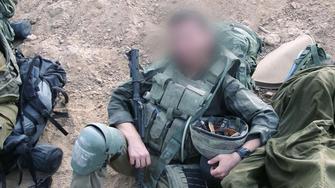
Israeli soldier describes arbitrary killing of civilians in Gaza

Sky News 6 jul. 2025 English

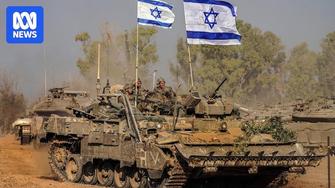
An Israeli reservist described inconsistent and permissive rules of engagement in Gaza, alleging that his unit was ordered to shoot anyone entering areas designated as no-go zones regardless of threat level. He recounted incidents in which unarmed civilians were killed and said commanders’ decisions on whether to shoot or capture people shifted arbitrarily. The soldier criticized widespread attitudes among troops portraying all Gazans as terrorists and expressed remorse for his participation. He said he feared social ostracism but felt compelled to speak out. The Israel Defence Forces rejected the allegations, stating that it adheres to international law, targets only military objectives, and investigates reported violations while emphasizing its procedures to minimize civilian harm.

Israel–Hamas War Military Conduct Human Rights Violations Gaza Israel Middle East Israel Defence Forces Hamas Unnamed Israeli reservist Israeli commanders Palestinian civilians
Estilo de reportagemEquilibrado

Contains factual reporting supported by testimony but includes subjective statements from an interviewee and contextual interpretations.

Contexto políticoCentro-esquerda

Focuses on human rights concerns, military accountability, and critical examination of state actions.

Ordinary Israelis React to the Attack on Iran

TIME 18 jun. 2025 English

Israelis faced widespread disruption, empty shops and repeated trips to shelters after Israel launched a surprise attack on Iran on June 13, 2025. Residents viewed Iran’s ballistic missiles as far more dangerous than earlier attacks from Hamas or Hezbollah, while vulnerable Bedouin and Palestinian communities lacked adequate shelters. Iranian strikes killed at least 24 Israelis, including four women in Tamra, while Israeli attacks reportedly killed hundreds of Iranian civilians. Some Israelis celebrated the offensive and hoped for regime change, but others feared the war’s consequences and accused Prime Minister Benjamin Netanyahu of diverting attention from Israeli hostages still held in Gaza.

Israel-Iran War Missile Attacks Civilian Protection Israeli Public Opinion Gaza Hostages Israel Iran Gaza Strip Government of Israel Home Front Command Shin Bet Hamas
Estilo de reportagemInformativo

Predominantly factual reporting, with eyewitness accounts and quotations conveying both supportive and critical perspectives on the war.

Contexto políticoCentro

A largely reported account that includes Israeli support for military action alongside criticism of the government, civilian casualties and the sidelining of Gaza hostages.

Israeli forces accused of killing their own citizens under the 'Hannibal Directive' during October 7 chaos

ABC News 7 set. 2024 English

The article investigates the controversial use of the 'Hannibal Directive' by the Israeli Defense Forces (IDF) during the chaos of the October 7 Hamas attacks. The directive, originally intended to prevent the capture of Israeli soldiers, allegedly led to Israeli forces firing on their own citizens, resulting in civilian casualties. Survivors and relatives question the military's actions, while the IDF maintains that the directive's application is under investigation. The report highlights testimonies from military personnel and civilians, revealing the complexity and ethical dilemmas faced during the incident. Despite an operational review clearing the IDF of wrongdoing, many remain dissatisfied with the findings, calling for further investigation.

Hannibal Directive Hamas Attack Israeli Military Actions Israel Gaza Israel Defense Forces Hamas Asa Kasher Gilad Shalit Yahya Sinwar Nof Erez Bar Zonshein
Estilo de reportagemInterpretativo

The article contains subjective statements and interpretations about military actions and ethical considerations.

Contexto políticoCentro

The article presents a balanced view of the events, focusing on factual reporting and multiple perspectives.

Israeli forces accused of killing their own citizens under the ‘Hannibal Directive’ during October 7 chaos

ABC News 7 set. 2024 English

The article investigates the controversial actions of the Israeli Defense Forces (IDF) during the October 7 Hamas attacks, focusing on the alleged use of the 'Hannibal Directive' which may have led to Israeli forces killing their own citizens. The directive, originally intended to prevent the capture of soldiers, is scrutinized for its application during the chaos, with testimonies and reports suggesting it was enacted despite being officially rescinded. Survivors and relatives of victims express outrage and demand accountability, while the IDF maintains its focus on countering Hamas threats. The article highlights the moral and ethical dilemmas faced by the military and the ongoing investigations into the events.

War in Israel Hannibal Directive Hamas Attack Israel Gaza Be'eri Israel Defense Forces Hamas Asa Kasher Gilad Shalit Yahya Sinwar Nof Erez
Estilo de reportagemInterpretativo

The article contains subjective statements and interpretations about the actions of the Israeli military.

Contexto políticoEsquerda

Criticism of military actions and focus on human rights implications.

Australian serving with Israeli army killed inside Gaza

Fiji Village 19 dez. 2023 English

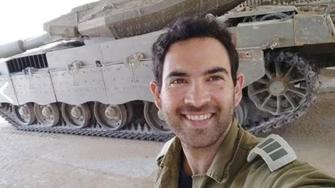
An Australian man, Captain Lior Sivan, serving with the Israeli Defense Forces, was killed in an ambush by Gaza militants. Sivan, a tank commander, was noted for his bravery, having saved fellow soldiers during the attack. He was the first Australian to die fighting for Israel against Hamas in Gaza. His family, including his wife Liav and brother Gabriel, expressed deep sorrow and pride in his actions. Sivan was also recognized for his inventive contributions as a mechanical engineer. The Australian Department of Foreign Affairs and Trade has been contacted for comment.

War in Gaza Military International Relations Gaza Israel Australia Israeli Defense Forces Hamas Australian Department of Foreign Affairs and Trade Lior Sivan Dan Sivan Liav Sivan
Estilo de reportagemInformativo

Mostly factual with some subjective statements from family members.

Bennett’s neighbors finally getting their driveways back

The Jerusalem Post 1 out. 2023 English

Israeli Prime Minister Naftali Bennett's decision to dissolve his government has brought relief to his neighbors in Ra’anana, who endured a year of loud protests and stringent security measures. The neighborhood was heavily fortified, causing significant disruptions to residents' daily lives. Bennett's refusal to move into the official Prime Minister's residence in Jerusalem, citing the need for renovations, left the house vacant and symbolized ongoing political turmoil. Yair Lapid, the incoming interim prime minister, also faces challenges as renovations continue, preventing him from moving into the official residence. Despite the hardships, some neighbors prefer the current situation over the return of former Prime Minister Benjamin Netanyahu.

Israeli Politics Protests Prime Minister Ra’anana Jerusalem Israel Israeli security services Shin Bet Likud party Naftali Bennett Benjamin Netanyahu Yair Lapid
Estilo de reportagemEquilibrado

The article contains a mix of factual reporting and subjective statements from neighbors and political figures.

Contexto políticoCentro-direita

The article discusses the political dynamics and challenges faced by right-wing leaders and their neighbors.

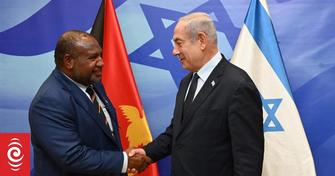
PM James Marape says Israel to fund PNG embassy in the contested city of Jerusalem

RNZ 1 out. 2023 English

Papua New Guinea has opened an embassy in Jerusalem, funded by Israel for the first three years, marking it as one of the few countries to recognize Jerusalem as Israel's capital. Prime Minister James Marape emphasized the religious significance and potential economic benefits of the move. Critics, including former Israeli diplomat Alon Liel, have condemned the financial arrangement as unprecedented and morally questionable. The decision aligns with pro-Israel sentiments within PNG and follows similar diplomatic gestures by other nations, such as Fiji.

Diplomacy International Relations Middle East Conflict Jerusalem Papua New Guinea Israel Government of Israel United Nations Israeli Foreign Ministry Fijian government James Marape Alon Liel
Estilo de reportagemInterpretativo

Contains subjective statements and opinions from various stakeholders.

Contexto políticoCentro

Discusses international diplomacy and financial incentives without strong political bias.

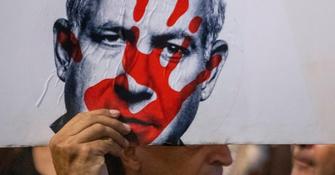
Israeli Protesters Blame Netanyahu for Hostages’ Deaths

Time 2 set. 2023 English

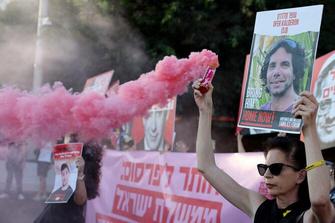
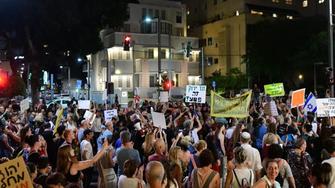
Israeli protesters have accused Prime Minister Benjamin Netanyahu of being responsible for the deaths of six hostages in Gaza, who were found executed shortly before their bodies were discovered. The protests, which are among the largest since October 7, have seen half a million people take to the streets, with the largest union, Histadrut, declaring a strike. Critics, including Ido Bruno and Einav Zangauker, argue that Netanyahu's refusal to negotiate with Hamas for the hostages' release is politically motivated to maintain his coalition government. The deaths have intensified the divide in Israeli society between those advocating for continued military operations in Gaza and those prioritizing the hostages' return. The situation has sparked widespread outrage and calls for significant political change.

Israeli Protests Hostage Crisis Benjamin Netanyahu Israel Gaza West Bank Hamas Israeli Army Histadrut Hersh Goldberg-Polin Eden Yerushalmi Ori Danino
Estilo de reportagemInterpretativo

The article contains subjective statements and opinions from various individuals blaming Netanyahu for the deaths of hostages.

Contexto políticoCentro-esquerda

Criticism of Netanyahu's policies and handling of the hostage situation, with emphasis on negotiation and humanitarian concerns.

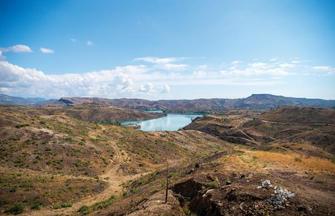
A warming world adds peril for a way of life

Rotary 1 abr. 2023 English

The Yörük people of southern Turkey, who have traditionally migrated between the Taurus Mountains and coastal plains, face increasing challenges due to climate change. The devastating wildfires of 2021, exacerbated by extreme heat and drought, destroyed homes, livestock, and livelihoods. Rotary clubs in Turkey, supported by The Rotary Foundation and international partners, have been instrumental in aiding recovery efforts, providing essential supplies and livestock to affected families. Despite the ongoing challenges, including slow forest regeneration and economic pressures, the Yörük community remains resilient, with hopes of preserving their cultural heritage and traditional way of life.

Climate Change Wildfires Indigenous Cultures Turkey Taurus Mountains Manavgat Rotary The Rotary Foundation Turkish Government Mehmet Bodur Gulsen Bodur Can Bodur
Estilo de reportagemEquilibrado

The article contains a mix of factual reporting and subjective statements, particularly in the personal accounts and emotional descriptions.

Veja todos os 65 trabalhos com uma conta gratuita

Contratar Mensagem
×

Cadastre-se para enviar uma mensagem para Orly

Já tem uma conta? Entrar
Procurando trabalho? Cadastre-se como jornalista
Verifique seu e-mail para concluir o cadastro
Acabamos de enviar um e-mail para . Verifique sua caixa de entrada e clique no link para verificar seu endereço de e-mail e concluir seu cadastro. Se não vir o e-mail, não deixe de checar sua pasta de spam ou lixo eletrônico.
Não recebeu o e-mail?

Cadastre-se para desbloquear perfis

Já tem uma conta? Entrar
Procurando trabalho? Cadastre-se como jornalista
Verifique seu e-mail para concluir o cadastro
Acabamos de enviar um e-mail para . Verifique sua caixa de entrada e clique no link para verificar seu endereço de e-mail e concluir seu cadastro. Se não vir o e-mail, não deixe de checar sua pasta de spam ou lixo eletrônico.
Não recebeu o e-mail?