Hire journalists

Publishers & Broadcasters Content Marketing Teams PR & Comms Teams Risk & Intelligence Teams Find journalists Media Monitoring Pricing

For journalists

Journalism jobs Pay rates Create your free profile

About Patrick

Work 19

What Ending the Military Draft Cost America

Foreign Policy 29 Jun 2026 English

Ending the U.S. military draft reduced the political cost of waging wars by insulating most families from the consequences of military action, giving presidents greater freedom to deploy force abroad. The article traces the evolution of conscription from World War II through the Vietnam era and details political pressures that led Richard Nixon to eliminate the draft in 1973. It highlights arguments about inequality, public dissent, and administrative flaws in the Selective Service System, along with economic critiques favoring an all-volunteer force. The shift reshaped presidential war-making dynamics, lowering domestic resistance to military engagements such as the later conflict in Iran and weakening the direct public connection to U.S. military decisions.

U.S. military policy Vietnam War War in Iran Presidential powers United States Iran Vietnam U.S. military Selective Service System U.S. Congress Nixon administration Johnson administration
Reporting styleBalanced

Analytical historical narrative with some interpretive judgments

Political contextCentre

Historical analysis of U.S. civil-military policy without explicit ideological advocacy
U.S. Strikes Iran Over Attack on Ever Lovely in Strait of Hormuz

Foreign Policy 26 Jun 2026 English

U.S. forces conducted strikes on Iranian targets after an Iranian drone attacked the Singapore-flagged Ever Lovely near Oman, with Washington declaring the action a cease-fire violation. Iran insists it controls navigation through the Strait of Hormuz, while U.S. officials argue the cease-fire agreement’s vague terms necessitate clearer maritime arrangements. The dispute complicates ongoing peace negotiations as both sides face a 60‑day window to clarify the memorandum of understanding. The International Maritime Organization halted evacuations of stranded vessels amid escalating risks. Additional global updates include rising casualties from Venezuela’s earthquakes, a plane crash into Beijing’s Citic Tower, and Ukraine’s major drone assault on Russia targeting infrastructure across multiple regions.

U.S.-Iran tensions Strait of Hormuz Middle East security Global shipping Iran United States U.S. Central Command Gulf Cooperation Council Persian Gulf Strait Authority International Maritime Organization Russia’s Defense Ministry U.N. Office for the Coordination of Humanitarian Affairs
Reporting styleInformative

Primarily factual reporting with limited analysis

Political contextCentre

Covers geopolitical developments without clear ideological framing

The War Has Shifted Iran’s Relationship With Hezbollah and Other Proxies

Foreign Policy 26 Jun 2026 English

Iran’s reliance on Hezbollah and other proxy groups has diminished as Tehran increasingly uses threats to global energy markets and attacks on vulnerable U.S. partners to exert leverage more effectively than proxy warfare. Hezbollah, Hamas, and the Houthis have been weakened by recent conflicts, with Hezbollah suffering major losses to Israeli strikes and showing limited willingness or ability to escalate during the 2026 war. The fall of Assad’s government further reduced Iran’s proxy infrastructure. Tehran now finds itself supporting these groups rather than depending on them, as proxies have become costly obligations amid Iran’s growing ability to pressure adversaries directly through actions affecting regional security and energy flows.

Iran-Israel conflict Middle Eastern proxy warfare Hezbollah Iran Israel Lebanon Iranian government United States Hamas Houthis Kataib Hezbollah Syrian government
Reporting styleInformative

Analytical but fact‑based assessment of geopolitical developments

Political contextCentre

Geopolitical analysis without partisan framing

The British East India Company and the Art That Created Colonialism

Foreign Policy 26 Jun 2026 English

British and Indian artistic exchanges under the British East India Company reveal how art supported and obscured colonial expansion. A Yale exhibition reconstructs networks of European and local painters who documented landscapes, trade, and diplomacy while omitting the violence, famine, and exploitation that underpinned imperial commerce. Indian artists adapted European styles while maintaining their own traditions, producing hybrid works shaped by unequal power but also collaboration. The show highlights how artistic networks paralleled corporate ones, revealing the company’s influence on visual culture across India and China while its imperial motives drove conquest, economic control, and cultural distortion.

Colonialism Art History British Empire India Britain China British East India Company Yale Center for British Art Maratha Empire Nawab Mubarak al-Daula Mihr Chand Tilly Kettle
Reporting styleBalanced

Mix of factual history with interpretive cultural analysis

Colombia Election and Starmer Resignation: Foreign Policy's Weekly International News Quiz

Foreign Policy 26 Jun 2026 English

A global news quiz reviews major developments including Colombia’s presidential election, Keir Starmer’s resignation, South Sudan’s election timeline, China–Taiwan tensions, NATO diplomacy, Bangladesh–China relations, Nigerian security reforms, Australian social media policy, and key World Cup results and records.

Elections International Affairs World News Politics Sports Colombia United Kingdom China NATO Abelardo de la Espriella Donald Trump Luiz Inácio Lula da Silva
Reporting styleFactual

Straightforward factual quiz questions with no opinion expressed

As the Tide Turns Against Putin, Beware the Drowning Man

Foreign Policy 25 Jun 2026 English

Russia faces mounting military failures, heavy casualties, and severe economic strain as Ukrainian long-range drone strikes increasingly hit critical infrastructure deep inside its territory. Domestic discontent grows among elites, bloggers, and citizens as fuel shortages, inflation, and labor deficits worsen. Putin’s political position weakens, prompting heightened paranoia, internal repression, and escalatory rhetoric toward Ukraine and the West. Russia conducts nuclear-related exercises with Belarus, while Kremlin officials issue renewed threats against NATO countries. With war costs rising and no viable exit strategy, Putin is increasingly likely to expand hybrid attacks abroad and tighten control at home, raising the risk of dangerous escalations in the coming months.

Russia-Ukraine War Russian politics European security NATO Russia Ukraine Europe Russian government GCHQ Russian Ministry of Defense Belarusian military Vladimir Putin
Reporting styleInterpretive

Analytical but includes subjective assessments of Putin’s decisions and future risks

Political contextCentre-left

Critical of authoritarianism and supportive of Western democratic security frameworks

China’s De-Dollarization Drive Has Hit a Wall

Foreign Policy 24 Jun 2026 English

China’s efforts to promote the yuan globally, expand its CIPS payment system, and scale digital yuan usage have stalled due to limited foreign demand, capital controls, and reliance on small networks of participating banks. Adoption of Chinese financial tools remains low outside of China, while dollar‑pegged stablecoins continue to grow rapidly, especially in developing economies. Without external shocks such as major sanctions, China’s financial alternatives are unlikely to gain broad international traction.

China economy Global finance De-dollarization China United States Emerging Markets People’s Bank of China BRICS CIPS SWIFT Bank for International Settlements IMF
Reporting styleInformative

Mostly factual analysis with some interpretive commentary

Political contextCentre

Analytical discussion of geopolitics and financial systems without partisan framing

Trump's Iran Deal Ended the War but Won't Bring Peace

Foreign Policy 22 Jun 2026 English

The U.S.-Iran truce deal faces major structural weaknesses, as unresolved issues surrounding Iran’s nuclear program, financial relief, and proxy activities create incentives for continued low-level conflict rather than a lasting settlement. Iran’s new leadership is more confrontational, negotiations are constrained by internal uncertainty and distrust of Washington, and Tehran’s leverage through threats to the Strait of Hormuz complicates U.S. and allied interests. Israel’s expanding military posture and domestic politics increase the likelihood of spoiler actions, while Gulf states and other allies question U.S. reliability after the war and recent diplomatic decisions. Divergent priorities, minimal trust, and vague agreement language make sustained stability unlikely, setting the stage for prolonged, intermittent conflict rather than peace.

U.S. foreign policy Iran nuclear negotiations Middle East conflicts Israel–Iran tensions Iran United States Israel United States government Israeli government Hezbollah Hamas Palestinian Authority
Reporting styleBalanced

Analytical piece with interpretation but grounded in factual assessment

Political contextCentre

Foreign‑policy analysis without clear partisan advocacy

Peru Awaits Election Results in Fujimori-Sánchez Presidential Runoff

Foreign Policy 11 Jun 2026 English

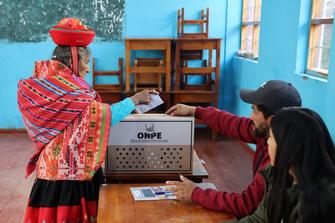
Peru’s presidential runoff remains unsettled as an extremely narrow vote margin separates Keiko Fujimori and Roberto Sánchez, with both campaigns alleging irregularities. The outcome carries implications for Peru’s political stability as the next president will face a fragmented congress and operate under a restored bicameral legislature that complicates impeachment. Fujimori’s potential win would reinforce a regional rightward shift, while Sánchez’s strong showing underscores voter skepticism of right-wing leadership. Additional regional developments include the World Cup’s opening in Mexico City, Brazil’s plans for a yuan-denominated bond, and Delcy Rodríguez’s diplomatic outreach to India and Turkey amid shifting oil relations influenced by U.S. policy.

Peru presidential election Latin American politics Elections Peru Latin America Colombia Peruvian government Venezuelan government Organization of American States Keiko Fujimori Roberto Sánchez Alberto Fujimori
Reporting styleInformative

Primarily factual reporting with some analytical context

Political contextCentre

Balances perspectives across political spectrum without partisan advocacy

Trump Juggles Iran, the World Cup, and a White House UFC Fight

Foreign Policy 11 Jun 2026 English

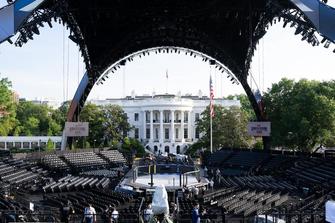
U.S. President Donald Trump oscillates between escalating and de-escalating conflict with Iran while preparing to host a UFC event at the White House and managing the kickoff of the 2026 FIFA World Cup. After signaling major strikes on Iran, he abruptly canceled them, claiming progress toward a multilateral agreement, which Iran and Israel disputed. The World Cup begins amid immigration controversies as several officials and athletes from Somalia, Iraq, and Iran were denied U.S. entry. The administration also faces developments such as new U.S. and EU sanctions on Russia and Iran and the Taiwan opposition leader’s outreach in Washington.

Iran War U.S. Politics World Cup 2026 Immigration Policy Sanctions United States Iran Middle East U.S. Government Iranian Foreign Ministry European Union U.S. Treasury Department
Reporting styleInformative

Mostly factual reporting with limited analytical tone

Political contextCentre

Covers political actions and international affairs without endorsing a political stance

See all 19 pieces of work with a free account

Other journalists in Yangon

Hire Message
×

Sign up to message Patrick

Already have an account? Log in
Looking for work? Register as a Journalist
Verify your email to complete registration
We’ve just sent an email to . Please check your inbox and click the link to verify your email address and complete your registration. If you don’t see the email, be sure to check your spam or junk folder.
Didn’t receive the email?

Sign up to unlock profiles

Already have an account? Log in
Looking for work? Register as a Journalist
Verify your email to complete registration
We’ve just sent an email to . Please check your inbox and click the link to verify your email address and complete your registration. If you don’t see the email, be sure to check your spam or junk folder.
Didn’t receive the email?