Éditeurs et diffuseurs Équipes de marketing de contenu Équipes RP et communication Équipes risques et renseignement Journalistes et professionnels des médias Veille médias Tarifs

> Trouver des journalistes > Journalistes par pays > Photographes en Arménie

Atteignez les meilleurs journalistes en Arménie
Connectez-vous rapidement avec des professionnels des médias expérimentés en Arménie, prêts à couvrir votre sujet ou à fournir un reportage d'expert. Des actualités de dernière minute aux reportages approfondis, trouvez le talent dont vous avez besoin.
Lancez votre projet
×
Étape 1/2

Lancez votre projet

Connectez-vous avec des professionnels des médias locaux en quelques minutes.
Décrivez votre projet pour commencer.
Rima Grigoryan
Stepan Poghosyan
Karen Tovmasyan
9 journalistes à Armenia verront votre réservation !
Armenia
Vous avez déjà un compte ? Se connecter
Vous cherchez du travail ? S'inscrire en tant que journaliste
Vérifiez votre e-mail pour finaliser l'inscription
Nous venons d'envoyer un e-mail à . Veuillez consulter votre boîte de réception et cliquer sur le lien pour vérifier votre adresse e-mail et finaliser votre inscription. Si vous ne voyez pas l'e-mail, pensez à vérifier votre dossier spam ou courrier indésirable.
Vous n'avez pas reçu l'e-mail ?
Trouvez un photographe freelance en Arménie
Voir

Trouvez un photographe freelance en Arménie

Journalist.net compte 9 photographes en Arménie. Leurs travaux récents ont paru dans OC Media, Eurasianet, EVN Report, CIVILNET, Deutsche Welle.

Sujets couverts : Politique et gouvernement, Fact-checking et vérification, Arts et culture, Enquêtes, Société et démographie.

Ensemble, ils travaillent en arménien, russe, espagnol, géorgien, grec.

Nos meilleurs photographes en Arménie

  1. Rima Grigoryan
  2. Stepan Poghosyan
  3. Karen Tovmasyan
  4. Ani Avetisyan
  5. Davit Nor-Paronyan

Utilisez notre rechercher pour trouver exactement ce que vous cherchez.

Nous avons des photographes à Erevan.

Photographes en Arménie

Rima Grigoryan

Yerevan, Arménie

Répond habituellement
Dans l'heure

Rima Grigoryan est une journaliste primée basée à Erevan, Arménie. Avec seven ans d'expérience, elle se spécialise dans le journalisme d'investigation et le reportage multimédia. Ces dernières années, son travail s'est c…

Vu dans Hetq.am, Meduza, OC Media

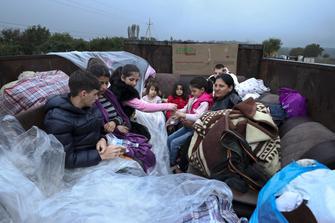
Gohar’s second goodbye: forced to leave Armenia after losing Nagorno-Karabakh

OC Media 20 déc. 2025 English

Style rédactionnel, Interprétatif: Primarily factual but with strong emotional and personal narrative elements.

A displaced Armenian singer from Nagorno-Karabakh, Gohar Aleksanyan struggles to rebuild her life in Yerevan while supporting four generations of her family. Unable to survive financially after government rent subsidies were cut, she prepares to leave for Russia to work and join her sister’s music studio. She reflects on her loss of homeland, the emotional burden of displacement, and her attempts to reconnect with her artistic identity by teaching children through a cultural centre preserving Nagorno-Karabakh heritage. Surrounded by loved ones, she bids farewell while holding onto a faint hope of returning to Stepanakert, even as her father passes away in exile.
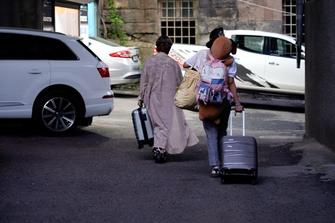
Nagorno-Karabakh conflict Forced displacement Refugees and migration Armenia–Azerbaijan relations Nagorno-Karabakh Armenia Russia Armenian government National Security Service of Armenia Dizak Art Gohar Aleksanyan Marine Mesropyan

Karabakh refugees protest in Yerevan as Armenia cuts back aid

Meduza 3 avr. 2025 English

Style rédactionnel, Interprétatif: The article contains subjective statements and personal stories, reflecting the struggles and opinions of the refugees.

Contexte politique, Centre gauche: The article discusses social welfare and government responsibility towards refugees.

Refugees from Nagorno-Karabakh are protesting in Yerevan against the Armenian government's decision to cut back a crucial aid program. The aid, initially provided after Azerbaijan's offensive in 2023, is being redirected from working-age individuals to a housing assistance program. Many refugees, like the Aharonyan family, find the new program insufficient due to high real estate prices and the requirement to obtain Armenian citizenship. The policy change has sparked protests, with refugees fearing further displacement and migration. The government aims to encourage self-sufficiency and participation in the housing program, but the decision has been met with widespread discontent and concerns over survival.
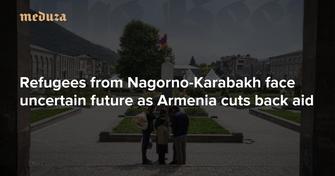
Refugee Crisis Nagorno-Karabakh Conflict Armenian Government Policy Nagorno-Karabakh Armenia Azerbaijan Armenian Government Labor and Social Affairs Ministry Marina Aharonyan Inessa Aharonyan Raya Aharonyan Gegham Stepanyan

Stepan Poghosyan

Yerevan, Arménie

Photojournaliste basé à Erevan, avec une vaste expérience dans les médias d'information et la photographie éditoriale. Depuis plus de cinq ans, je me spécialise dans la couverture de réunions officielles, d'événements de…

Vu dans Deutsche Welle, El País, POLITICO +3 de plus

Armenia's crossroads: moving closer to the European Union under Russia's close watch

EL PAÍS 12 mai 2026 Spanish

Style rédactionnel, Informatif: Predominantly factual reportage based on political developments, expert analysis and interviews, with some interpretive framing.

Contexte politique, Centre: A broadly balanced international-affairs report presenting competing Armenian, Russian, European and regional perspectives without an overt ideological stance.

Armenia is pursuing closer ties with the European Union while trying not to alienate Russia, its historical ally. Prime Minister Nikol Pashinyan's government has sought to ease tensions with Turkey and Azerbaijan, including through a 2025 peace preagreement with Baku, because reopened borders and regional transport links are central to its ambitions to become a corridor between Asia and Europe. The EU and United States have offered diplomatic and financial support, including proposed infrastructure investments and the TRIPP corridor. The strategy faces opposition from pro-Russian forces, Russian warnings, unresolved Azerbaijani conditions and public anger among displaced Nagorno-Karabakh Armenians. Ahead of the June 2026 elections, polls favor Pashinyan's pro-European Civil Contract party, although public opinion remains divided over the peace process and the country's geopolitical direction.

Armenia's European integration Armenia-Russia relations South Caucasus geopolitics Armenia-Azerbaijan peace process Armenia-Turkey relations Nagorno-Karabakh Armenian elections Armenia South Caucasus Russia European Union Azerbaijan

Nagorno-Karabakh tests the Biden administration

POLITICO 25 sept. 2023 English

Style rédactionnel, Équilibré: Mix of factual reporting with quoted subjective viewpoints and criticism from activists and lawmakers.

Contexte politique, Centre gauche: Focuses on diplomatic considerations, humanitarian concerns, and criticism of insufficient U.S. action, typical of moderate foreign-policy commentary.

U.S. officials Yuri Kim and Samantha Power traveled to Armenia as Washington faces criticism for its response to the worsening humanitarian crisis in Nagorno-Karabakh following Azerbaijan’s blockade and recent military operation. Armenian diaspora groups and bipartisan lawmakers argue the administration acted too slowly and failed to deter what they warn could amount to ethnic cleansing. The State Department has ended a waiver enabling military aid to Azerbaijan, and U.S.-Armenian joint military exercises were conducted, while Secretary of State Antony Blinken engaged leaders in both Yerevan and Baku. Activists and legislators are pushing for sanctions on Azerbaijani officials and the cessation of U.S. military assistance. Thousands of ethnic Armenians have fled into Armenia as fears of further displacement grow, and proposed legislation seeks to label the crisis a campaign of ethnic cleansing and bolster aid to Armenia.

Nagorno-Karabakh conflict U.S. foreign policy Humanitarian crisis Nagorno-Karabakh Armenia Azerbaijan U.S. Department of State USAID Azerbaijani government Armenian government Yuri Kim Samantha Power

Karen Tovmasyan

Yerevan, Arménie

Bonjour, je suis journaliste indépendant en Arménie, j'ai 35 ans.

Vu dans Medium

On Optimizing AWS Storage

The Startup (Medium) 6 août 2020 English

Style rédactionnel, Informatif: Primarily factual and explanatory, with a brief personal account of a storage-performance workshop.

Karen Tovmasyan describes an AWS storage performance-tuning workshop, focusing on EFS and S3 after setting aside EBS, whose tuning largely involved adjusting IOPS. The post introduces S3, EBS, and EFS and says the workshop compares performance across different ways of writing data. Readers are encouraged to try the exercises, with a warning to watch the costs.

AWS Storage Cloud Computing Performance Optimization Software Development The Startup Karen Tovmasyan Amazon Web Services Amazon S3 Amazon EFS Amazon EBS

Ani Avetisyan

Yerevan, Arménie

Ani Avetisyan est une journaliste basée à Londres et à Érevan, avec plus de cinq ans d'expérience en journalisme de données et en enquêtes en sources ouvertes.

Vu dans Eurasianet, EVN Report, OC Media

Armenia formalizes closer ties with the West

Eurasianet 14 janv. 2025 English

Style rédactionnel, Équilibré: Mostly factual reporting, with some interpretive framing about Armenia's geopolitical shift and its implications.

Contexte politique, Centre: Geopolitical analysis describes competing positions and uncertainties without advocating a clear partisan or ideological stance.

Armenia has formalized closer relations with the United States through a strategic partnership agreement and passed a law authorizing efforts to pursue European Union membership. The moves reflect growing dissatisfaction with Russia, which many Armenians blame for failing to provide security support during the conflict over Nagorno-Karabakh. Armenia has suspended its participation in the Collective Security Treaty Organization but has not announced plans to leave the Eurasian Economic Union, despite Russian warnings that EU and EAEU membership are incompatible. EU accession would require extensive domestic reforms and a peace agreement with Azerbaijan, whose renewed demand for extraterritorial transit rights has hindered negotiations. The future of US-Armenian cooperation is also uncertain as Donald Trump prepares to return to office.

Armenia's relations with the European Union and United States European Union integration Armenia-Russia relations Armenia-Azerbaijan peace process South Caucasus geopolitics Armenia South Caucasus Russia Government of Armenia European Union United States Government of Russia

Azerbaijan Wants EU Monitoring Mission to Leave

Eurasianet 18 déc. 2024 English

Style rédactionnel, Informatif: Mostly factual reporting, with limited evaluative wording and attributed claims.

Contexte politique, Centre: Reports the positions of Armenia and Azerbaijan and the state of negotiations without endorsing either side.

Azerbaijan says the EU monitoring mission must leave before it will sign a peace treaty with Armenia, while Armenian Prime Minister Nikol Pashinyan argues that the mission remains important for security and suggests limiting its work to undemarcated border areas. Negotiators have reportedly agreed on 15 of 17 draft treaty articles, but constitutional language concerning Nagorno-Karabakh remains a major sticking point. Further criminal charges against detained former Karabakh leader Ruben Vardanyan could also complicate negotiations.

Armenia-Azerbaijan Peace Negotiations EU Monitoring Mission Nagorno-Karabakh Armenia Azerbaijan European Union Government of Azerbaijan Government of Armenia Ilham Aliyev Nikol Pashinyan Hikmet Hajiyev Ruben Vardanyan

Anzhelika Zakaryan

Yerevan, Arménie

Réservations terminées
3

Anzhelika Zakaryan est journaliste basée à Stepanakert, Haut-Karabakh.

Vu dans CIVILNET, Euronews

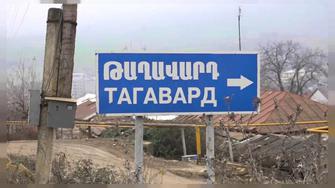
Tagavard: A Village Divided by War

Euronews 23 déc. 2020 Russian

Due to the war in Nagorno-Karabakh, the village of Tagavard has been split in two, with Armenians living in one part called Kaller Tagavard, while Azerbaijani forces occupied the other. About 400 Armenian residents, including Susanna Shahramanyan, were forced to flee their homes and become refugees. Life has drastically changed for those who remained, with Armenian and Azerbaijani checkpoints only tens of meters apart. Samvel Atayan returned to his native village with his family, feeling significantly less safe than before the war. A 30-meter boundary marked by a Russian flag now divides Tagavard, and the local cemetery has become inaccessible to the Armenian villagers.

War Human Interest Tagavard Nagorno-Karabakh Stepanakert Armenian Army Susanna Shahramanyan Samvel Atayan

Beatriz Arslanian

Yerevan, Arménie

Je suis journaliste et professionnel des médias basé en Arménie, avec plus de dix ans d'expérience de terrain dans la couverture de la région. De langue maternelle espagnole et maîtrisant l'anglais, j'ai travaillé intens…

Mariya Yeghiazaryan

Yerevan, Arménie

Journaliste et professionnel des médias avec plus de 10 ans d'expérience chez CivilNet. Dédié à promouvoir un journalisme transparent et impartial qui renforce le discours démocratique en Arménie et relie les communautés…

Pays populaires
États-Unis, Kenya, Royaume-Uni, Inde, Espagne, France, Zimbabwe, Italie, Nigeria, Turquie