Vinícius Fontana
Vitoria, Brazil
Journalist, with 9 years of career, having experience working on public communication, television, and websites. I am passionate about reporting and photography and the areas that thrill me most are human rights, society…
Seen in BBC, Deutsche Welle, Dialogo Chino +5 more
Beyond the Uruguay River, what defines the Brazil/Argentina border? Mapping and analysis of the offer of the Spanish language in municipal schools on the border line
Reporting style, Balanced: The text contains a mix of factual information and subjective analysis regarding language policies and their implementation.
Political context, Centre-left: The text emphasizes the importance of state involvement in language planning and community engagement, which aligns with center-left views on state intervention and cultural preservation.
The study investigates the provision of the Spanish language in municipal schools along the Brazil/Argentina border, focusing on 16 municipalities from Garruchos to Barra do Guarita in Rio Grande do Sul. Utilizing field research and questionnaires sent to municipal education secretariats, the study assesses compliance with Constitutional Amendment 74/2018, which mandates the offering of Spanish. The findings highlight the importance of collaborative linguistic planning between the state and linguistic communities to value languages, cultures, and identities in this diverse border region.
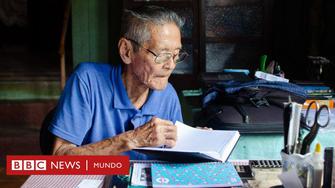
The concentration camp in the Amazon where hundreds of Japanese families were imprisoned during World War II
During World War II, Brazil, aligning with the Allies, persecuted Japanese, Italian, and German immigrants, confining many in 11 concentration camps across the country. The Tomé-Açu camp, unique for being in the Amazon region, held Japanese immigrants under strict rules and surveillance. Families were stripped of their rights and properties, and their communication was heavily censored. The camp functioned as a self-contained city with a military detachment for security. After the war, the detainees faced stigmatization and poverty, with many struggling to rebuild their lives. The Assembleia Legislativa do Amazonas later apologized for the wartime abuses. Tomé-Açu eventually thrived economically through sustainable agroforestry, with the Japanese culture leaving a lasting impact on the local society.