Hana Ibrahim
Erbil, Irak
- Répond habituellement
- En quelques heures
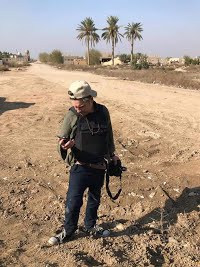
Journaliste basée à Erbil, Irak, travaillant à distance et ouverte à voyager à travers l'Irak et à l'étranger. Passionnée conteuse multimédia et communicante humanitaire, capturant des histoires inédites à travers l'Irak…
Vu dans The Jiyan Archives, Global Bar Magazine, Einnews
Shatoo Kamaran and the Making of Jargy
Style rédactionnel, Interprétatif: A strongly admiring profile that combines reported biography with advocacy for Shatoo Kamaran and greater support for Kurdish artists.
Shatoo Kamaran, a self-taught Kurdish special-effects artist from Slemani, built Jargy Studio from basement experiments using improvised materials into Kurdistan’s first special-effects studio and Iraq’s first female-owned studio of its kind. Her work spans film, advertising, horror and advocacy campaigns addressing women’s rights, while major projects such as a film about the Halabja chemical attack established her professional reputation. Despite discrimination from imported male specialists, limited resources and cultural restrictions on Kurdish women, Kamaran continues to expand the field, mentor emerging artists and seek international training. Jargy’s future depends on greater investment, infrastructure and recognition for local creative talent.
Jinwar: Where Women Rebuild the Future
Style rédactionnel, Interprétatif: Advocacy-oriented feature that presents Jinwar and its communal feminist model favorably, while incorporating interviews and descriptive reporting.
Contexte politique, Centre gauche: Supports feminist communalism, anti-patriarchal organizing and ecological self-management, while criticizing state-centric systems and occupation.
Jinwar, a women-led village in Rojava founded in 2017, offers women and children displaced by ISIS, patriarchal violence and conflict a communal alternative centered on solidarity, self-governance, ecological sustainability and mutual aid. Resident Yasmîn describes how shared decision-making, education, agriculture, health care, breadmaking and clothing production help residents rebuild their lives and develop economic self-sufficiency. The village supports newcomers emotionally while allowing them to decide whether to join its collective life, and raises children outside traditional gender stereotypes. Its residents view Jinwar as both a sanctuary and a model for a broader liberated society.