Quickly connect with experienced news professionals in Lomé, ready to cover your story or provide expert reporting. From breaking news to in-depth features, find the talent you need.
Use our search to find exactly what you are looking for.
Photographers in Lomé
Tadegnon Kokou Noel
Lome, Togo
Bookings Completed
31
I am a freelance video journalist based in Togo. I collaborate with various television channels and news agencies worldwide, including Reuters News Agency, Canal+ International, Deutsche Welle (German radio and televisio…
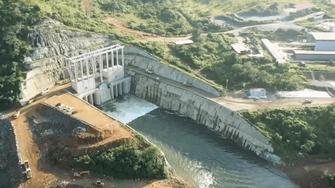
China’s green power in Angola: When clean energy comes with heavy debt
Global Voices17 Dec 2025English
Reporting style, Balanced: Reporting mixes factual analysis with interpretive framing around debt sustainability, transparency, and geopolitical narratives.
Political context, Centre: Covers geopolitical dynamics and state financing without taking an ideological position.
China’s expanding role in Angola’s energy sector is presented through contrasting narratives: Chinese officials emphasize green development and climate‑aligned hydropower investments, while Angolan journalists and international researchers highlight debt risks, opaque financing, and limited public benefits. Major projects such as the Laúca and Caculo Cabaça dams have significantly increased energy generation but coexist with persistent energy access gaps and rising fiscal strain due to oil‑backed Chinese loans. Debt sustainability assessments warn of constrained public investment capacity, and Angola continues to navigate competing international actors while seeking diversified partnerships. The country’s experience illustrates how clean energy infrastructure can bring environmental gains yet impose substantial economic and political costs when transparency and long‑term fiscal viability are lacking.
Chinese overseas developmentDebt and financeGreen energyChina–Africa relationsInfrastructure lendingAngolaChinaAfricaChinese governmentBelt and Road InitiativeInternational Monetary FundAfrican Development Bank
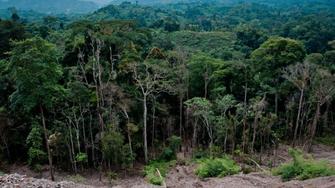
Fraudulent networks fuel deforestation and illegal timber exports in Cameroon
Global Voices16 Dec 2025English
Reporting style, Balanced: Mix of factual reporting with evaluative language about governance failures and environmental harm
Cameroon’s forests, a major part of the Congo Basin ecosystem, are undergoing severe degradation driven by illegal logging, international demand for rare tropical timber species, and weak enforcement of existing forestry laws. Despite legal frameworks requiring quotas and reforestation, fraudulent practices—such as cutting in prohibited areas, falsifying documents, and laundering illegally harvested timber—thrive due to poor oversight, corruption, and porous borders. A shift in global markets, particularly reduced European demand due to stricter legality measures and rising demand from Asian countries led by China, has intensified exploitation. Cross‑border smuggling networks involving neighboring countries further undermine Cameroon’s forestry governance, enabling illegal timber to be exported under different identities and reinforcing a shadow economy that threatens biodiversity and local livelihoods.
Matteo Fraschini Koffi was born on July 10th, 1981 in Lomé, Togo (West Africa). At ten months old he was adopted by a family from Milan (Italy). Before moving to Africa in 2005, he has traveled to countries such as the o…
Kayi Lawson est une journaliste basée à Lomé, Togo. Journaliste avec plus de 15 ans d'expérience, Kayi Lawson est une JRI et Mojo. Journaliste de terrain, elle est une passionnée du sport.
Reporting style, Interpretive: Strongly cautionary and editorial in its portrayal of Alabuga Start as an exploitative recruitment scheme and vehicle for Russian wartime labor needs.
Alabuga Start is presented as a Russian vocational training and employment program that recruits young African women with promises of education, good wages, and career opportunities. The article argues that recruits may instead be assigned to poor working conditions and the assembly of Shahed military drones for Russia’s war against Ukraine, while some African men recruited for jobs in Russia have reportedly ended up fighting for Russian forces. Following the capture of Togolese nationals in Ukraine, Togo’s Ministry of Foreign Affairs urged citizens to verify scholarships and employment offers and consult official authorities before traveling. The article calls on African governments, civil society groups, NGOs, and media to warn young people about such schemes and create better domestic employment opportunities.
Youth MigrationLabor ExploitationRussian Recruitment in AfricaRussia-Ukraine WarDisinformationTogoRussiaUkraineTogo Ministry of Foreign AffairsAlabuga Special Economic ZoneRussian Armed ForcesUkrainian Armed Forces
Paul-Henri Damiba Arrested and Expelled from Togo
Africa Rendez-vous20 Jan 2026French
Reporting style, Factual: Predominantly factual reporting based on attributed claims and official developments
Political context, Centre: Straight news coverage presenting claims from the Burkinabè authorities and noting the lack of official confirmation
Former Burkina Faso transitional leader Lieutenant Colonel Paul-Henri Sandaogo Damiba was detained in Lomé and expelled from Togo, where he had lived in exile since October 2022 after being overthrown by Ibrahim Traoré. He was reportedly taken from his residence to the Court of Appeal, where a magistrate approved an extradition request from Burkina Faso. Damiba was later escorted by the military to the airport, although his final destination remained unconfirmed. Burkina Faso authorities have repeatedly accused him of involvement in efforts to destabilize Traoré's regime, including an alleged plot they say was thwarted on January 3. Neither Togo nor Burkina Faso had officially confirmed the extradition or disclosed his destination.
Burkina Faso political crisisExtraditionAlleged coup plotTogo-Burkina Faso relationsTogoBurkina FasoLoméGovernment of Burkina FasoGovernment of TogoRadio France InternationalePaul-Henri Sandaogo DamibaIbrahim Traoré
Ékoué Blamé
Lomé, Togo
Ékoué Blamé is a journalist based in Lomé, Togo. I am a bilingual writer. I have worked from 2011 till 2023 for BBC's Focus on Africa programme in the tiny West African of Togo. I have also worked several years for Assoc…
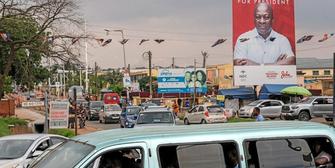
Ghana votes to remain the 'good student of Africa'
Le Point5 Dec 2024French
Reporting style, Balanced: The article presents a mix of factual reporting and subjective analysis, particularly in discussing the political and economic implications of the elections.
Political context, Centre: The article discusses the political landscape in Ghana without showing a clear bias towards any political ideology.
Ghana is preparing for a crucial election with the ruling Nouveau Parti patriotique (NPP) and the opposition Congrès national démocratique (NDC) in a tight race. The election is set against a backdrop of economic challenges, including high inflation and debt, which have dominated the campaign. Key candidates include Mahamudu Bawumia of the NPP and John Dramani Mahama of the NDC, both presenting different economic visions. The election is seen as a test of Ghana's democratic stability in a region troubled by political unrest. The outcome could reshape the political landscape and serve as a measure of democracy in West Africa.
Ghana ElectionsEconomic CrisisPolitical StabilityGhanaWest AfricaAccraNouveau Parti patriotique (NPP)Congrès national démocratiqueCommission électorale (CE)Conférence épiscopale du GhanaNana Akufo-AddoMahamudu Bawumia
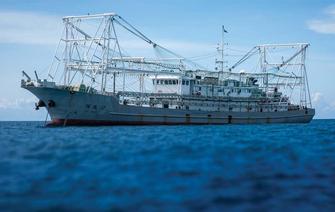
Danger at sea – West Africa's scourge of foreign fleets
Africa in Fact1 Jan 2024English
Reporting style, Interpretive: The article presents a mix of factual reporting and subjective statements, highlighting the negative impact of foreign fleets on local economies and communities.
Political context, Centre-left: The article emphasizes the need for stronger regulation and international cooperation to protect local economies and the environment.
Foreign fleets, mainly Chinese and South Korean, dominate West African waters, causing economic and environmental harm through illegal, unreported, and unregulated (IUU) fishing. This overexploitation threatens local fishing communities, food security, and marine biodiversity. Efforts to combat IUU fishing include regional cooperation, legal reforms, and international support, but challenges remain due to weak enforcement and high operational costs. Sustainable solutions require coordinated action, involving local fishers and harmonizing legal frameworks to protect marine resources and livelihoods.
We respect your privacy and use a limited number of cookies to provide essential functionality and enhance your visit. No third-party advertising cookies involved. For more details, please read our Cookie Policy.