Hire journalists

Publishers & Broadcasters Content Marketing Teams PR & Comms Teams Risk & Intelligence Teams Find journalists Media Monitoring Pricing

For journalists

Journalism jobs Pay rates Create your free profile

About Rania

Languages
English
Seen in
National Geographic Newyorker Publishersweekly Foreign Policy Kirkus Reviews The New York Times Alicia Patterson Foundation GulfNews PBS NewsHour Asiatimes Content Foreignaffairs ECFR Marie Claire Magazine No Turning Back: Life, Loss and Hope in Wartime Syria PEN America POLITICO The Age The Atlantic The Globe and Mail The Sydney Morning Herald The Washington Post WAtoday Nationalpost Niemanreports Nymag Smallwarsjournal Brisbanetimes Politics Prose Realclearpolitics Rsn Thenation

Work 139

Where Are Syria’s Weapons Coming From?

FRONTLINE 15 Jun 2026 English

Syrian rebels obtain weapons through regional black markets, smuggling routes from Turkey and Iraq, captured regime stockpiles, local purchases, homemade production, and increasingly organized Saudi and Qatari support reportedly facilitated by U.S. approval and Turkish cooperation. Supplies are inconsistent and distributed through fragmented rebel networks, intensifying rivalries and encouraging commanders to form larger Islamist or other coalitions around wealthy patrons. Meanwhile, the Syrian regime retains a substantial Russian-supplied arsenal, including tanks, artillery, missiles, aircraft and helicopters. The competition for arms and loyalty risks empowering warlords and producing violent infighting even after the regime’s possible fall.

Syrian Civil War Arms Smuggling Syrian Opposition Weapons Proliferation Middle East Conflict Syria Turkey Iraq Free Syrian Army Saudi Arabia Qatar Syrian government
Reporting styleInformative

Predominantly factual, based on field reporting, interviews and weapons-price data, while including some analytical assessment of the risks of rebel patronage networks.

Political contextCentre

A reported analysis of weapons sources and factional dynamics in the Syrian conflict, without a clear partisan ideological framing.

The Missing Bride of Anqoun

The New Yorker 21 May 2026 English

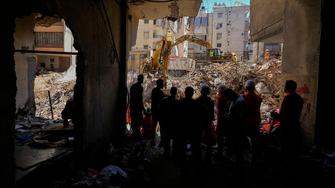
An Israeli air strike on Beirut’s Hamad Building during a period of supposed calm killed at least twenty-four people, including Zahra Abboud, whose family searched for days through rubble to find her remains. Operation Eternal Darkness struck more than a hundred sites across Lebanon, causing hundreds of deaths and extensive destruction amid an ongoing war between Israel and Hezbollah. Survivors, first responders, and families describe the devastation, personal loss, and sectarian tensions exacerbated by displacement and continued bombardment. Zahra was ultimately buried in her hometown of Anqoun, one of thousands killed as the conflict persists despite a nominal ceasefire.

War in Lebanon Israeli air strikes Humanitarian impact Lebanon Israel Iran Hezbollah Lebanese security forces Lebanese government Israeli military Lebanon’s Civil Defense United Nations
Reporting styleInformative

Mostly factual reporting with emotional narratives from survivors

Political contextCentre

Focuses on reporting and documented conflict impacts without clear ideological stance

No Turning Back: Life, Loss, and Hope in Wartime Syria

Kirkus Reviews 22 Jan 2026 English

Susan Nezami’s narration of Rania Abouzeid’s account of the Syrian conflict traces the unrest that began in 2011 through the experiences of Suleiman, Mohammad, Abu Azzam, and other civilians caught between rebels and the regime. The review praises Nezami’s precise, somber delivery and argues that the individual stories make the complex, devastating civil war more comprehensible.

Syrian Civil War Wartime Syria Audiobook Narration Refugee Experiences Syria Syrian rebels Syrian regime Rania Abouzeid Susan Nezami Suleiman Mohammad Abu Azzam
Reporting styleBalanced

A fact-based audiobook review that includes substantial evaluative judgments about the narration and presentation.

Unearthing the past: Iraq’s mass graves and the quest for justice

Alicia Patterson Foundation 8 Dec 2025 English

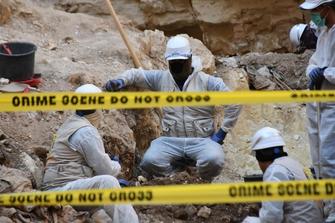
Iraq continues to confront decades of mass disappearances through the work of its mass graves and medico-legal directorates, but efforts were hindered by the premature end of the UN’s UNITAD mission, which was mandated to investigate ISIS crimes. Tensions grew over evidence sharing, sovereignty concerns, and gaps in Iraq’s legal framework for prosecuting international crimes. Survivors and NGOs who relied on UNITAD for justice and identifications were left disappointed, while bureaucratic weaknesses, underfunding, and overlapping mandates hamper Iraq’s domestic institutions. European and UN involvement is portrayed as well-intentioned but poorly aligned with local needs and politics. The article highlights lessons for future international interventions and underscores the need for coordinated national systems, legislative reform, and sustained support for families seeking truth and accountability.

Iraq mass graves ISIS atrocities Transitional justice UNITAD mission Iraq Syria Europe UNITAD United Nations Iraqi government European Union ICMP
Reporting styleBalanced

Mix of reporting and analysis with some subjective assessments

Political contextCentre

Focuses on accountability, human rights and institutional shortcomings without partisan framing

Unearthing the Past: Iraq's Mass Graves and the Quest for Justice

European Council on Foreign Relations 31 Jul 2025 English

Iraq continues to confront a vast legacy of mass graves and missing persons linked to decades of conflict, with hundreds of thousands still unaccounted for. Between 2018 and 2024, UNITAD worked alongside Iraqi forensic and investigative bodies to excavate sites, gather evidence of ISIS atrocities, and support international prosecutions. Despite technical support and substantial evidence collection, UNITAD’s mandate ended early due to tensions with Baghdad over evidence sharing, sovereignty concerns, and incompatibilities between Iraqi law and UN requirements. The closure left many survivors without answers and complicated future accountability efforts. Iraqi institutions now face the challenge of coordinating overlapping mandates, improving forensic capacity, establishing a unified national registry, and securing resources to continue exhumations and identifications. Civil society organisations remain essential to advocating for victims and assisting with data collection. The experience highlights the need for international actors to respect local contexts, ensure sustainable planning, and avoid raising expectations they cannot fulfil—lessons increasingly relevant as Syria begins its own reckoning with mass graves and enforced disappearances.

Mass Graves in Iraq Transitional Justice UNITAD Mandate and Closure ISIS Atrocities Iraq Syria Middle East UNITAD United Nations Iraqi Government Medico-Legal Directorate (MLD) Mass Graves Protection and Missing Persons Directorate (MGMPD)
Reporting styleInformative

Primarily fact-based reporting with analytical elements and cited interviews, containing limited subjective interpretation.

The Iraq War May Have Ended, but Its Lingering Impact on the Middle East and Beyond Has Not

The Globe and Mail 14 Jun 2025 English

The 2003 U.S.-led invasion of Iraq, justified by false claims about weapons of mass destruction and links to al-Qaeda, reshaped the Middle East while undermining American credibility and the rules-based international order. The dismantling of Iraq’s military and bureaucracy and the imposition of sectarian governance fueled civil conflict, strengthened Iran, and helped create the conditions for al-Qaeda in Iraq and ISIS. The war’s consequences spread through Syria, Yemen, Lebanon and the wider region, contributing to refugee crises and regional instability. The column argues that abuses at Abu Ghraib, failures of accountability and credulous Western journalism created precedents now visible in the Gaza war, where international institutions and media credibility are likewise being weakened.

Iraq War Middle East Geopolitics U.S. Foreign Policy Iranian Regional Influence Sectarian Conflict Rise of ISIS International Law Gaza War Journalistic Accountability Iraq Middle East Gaza
Reporting styleInterpretive

Strongly argued opinion column that presents a critical interpretation of the Iraq War, Western foreign policy, international law and media coverage, supported by historical reporting and factual claims.

Political contextCentre-left

Critiques U.S. interventionism, authoritarianism, Israeli conduct in Gaza, international-law double standards and uncritical Western media coverage, while emphasizing democratic movements and human-rights concerns.

60th Annual Competition Fellowship Winners for 2025

Alicia Patterson Foundation 9 Jan 2025 English

The Alicia Patterson Foundation announced the winners of its 60th annual journalism fellowships, supporting ten journalists in undertaking projects on topics such as migrant abuses and global HIV medicine responsibilities. The fellowships, established in memory of Alicia Patterson, provide grants for in-depth reporting. Notable fellowships include the Josephine Patterson Albright fellow, Carrie Arnold, focusing on climate-related kidney disease, and the Cissy Patterson fellows, Christine Peterson and Ashley Stimpson, addressing amphibian extinction. The foundation has supported over 462 journalists since its inception.

Journalism Fellowships Investigative Reporting United States Alicia Patterson Foundation Howard Center for Investigative Journalism Ethnic Media Services Pacific News Service New America Media EdSource Fund for Investigative Journalism Science News
Reporting styleFactual

The text is factual, providing information about fellowship winners and their projects.

Are Israel and Hezbollah Headed Toward an “Open-Ended Battle”?

The New Yorker 23 Sep 2024 English

The article discusses the escalating conflict between Israel and Hezbollah, highlighting recent Israeli airstrikes in Lebanon that resulted in significant casualties and destruction. Hezbollah's response, including rocket attacks on Israel, has intensified fears of a prolonged conflict. The article details the impact on Lebanese civilians, the political and military strategies of both sides, and the broader implications for regional stability. It also touches on international reactions and the potential for further escalation, with both sides preparing for possible extended hostilities.

Israel-Hezbollah Conflict Middle East Tensions Lebanon Crisis Lebanon Israel Beirut Hezbollah Israeli Defense Forces United Nations U.S. State Department Sayyed Hassan Nasrallah Benjamin Netanyahu
Reporting styleBalanced

The article presents a mix of factual reporting and subjective interpretations, particularly in the analysis of political and military strategies.

Political contextCentre

The article provides a balanced view of the conflict, presenting perspectives from both sides without overt bias.

Who Gets the Guns in Lebanon?

The New Yorker 20 Apr 2024 English

In the aftermath of a ceasefire between Hezbollah and Israel, Lebanon faces challenges in asserting state authority and managing Hezbollah's military presence. Prime Minister Nawaf Salam and President Joseph Aoun, seen as reformers, aim to strengthen the Lebanese Armed Forces and assert state control over weapons. Despite a ceasefire, Israeli forces continue to occupy parts of southern Lebanon, leading to tensions and calls for Hezbollah's disarmament. The Lebanese Army, though respected, is weaker than Hezbollah and reliant on foreign aid. International efforts, including a conference led by Emmanuel Macron, aim to support Lebanon's security forces. The situation remains tense, with potential for renewed conflict if diplomatic solutions are not found.

Lebanon-Israel Conflict Hezbollah Middle East Politics Lebanon Israel United States Lebanese Armed Forces UNIFIL United Nations U.S. Security Council Nawaf Salam Joseph Aoun
Reporting styleBalanced

Balanced reporting with both factual information and subjective perspectives.

Political contextCentre

The article presents a balanced view of the political dynamics in Lebanon, discussing both Hezbollah's influence and the Lebanese government's challenges.

A Sunny Place for Shady People: How Malta Became One of the Most Curious and Corrupt Places in the World

Publishers Weekly 7 Feb 2024 English

Ryan Murdock's book 'A Sunny Place for Shady People' is an exposé of Malta's pervasive culture of corruption, from government to local communities. It highlights the assassination of journalist Daphne Caruana Galizia, who had implicated former Prime Minister Joseph Muscat in financial scandals. Murdock, a travel writer who resided in Malta, combines his personal experiences of surveillance and intimidation with a critique of societal norms driven by nepotism and theft. His narrative blends biting wit with somber reflections on the island's atmosphere, offering a potent portrayal of a society deeply entrenched in corrupt practices.

Corruption True Crime Travel Malta Malta Government Daphne Caruana Galizia Joseph Muscat Ryan Murdock
Reporting styleBalanced

The text includes subjective descriptions and personal experiences, but is based on true events and investigations.

Political contextCentre

The text is a non-fiction exposé and travelogue, not primarily focused on advocating a political ideology.

See all 139 pieces of work with a free account

Other journalists in Beirut

Hire Message
×

Sign up to message Rania

Already have an account? Log in
Looking for work? Register as a Journalist
Verify your email to complete registration
We’ve just sent an email to . Please check your inbox and click the link to verify your email address and complete your registration. If you don’t see the email, be sure to check your spam or junk folder.
Didn’t receive the email?

Sign up to unlock profiles

Already have an account? Log in
Looking for work? Register as a Journalist
Verify your email to complete registration
We’ve just sent an email to . Please check your inbox and click the link to verify your email address and complete your registration. If you don’t see the email, be sure to check your spam or junk folder.
Didn’t receive the email?