RS
Richard Smyth
Environment & Climate · United Kingdom
Covers
Environment & Climate
Arts & Culture
Science & Medicine
Breaking News & General Assignment
Travel & Tourism
Space & Aviation
Seen in
Published work
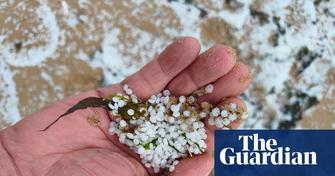
Country diary: We’re going on a nurdle hunt
Country diary: The skies here are busy with satellites and fieldfares
A winter walk near Prendwick in Northumberland observes hares, pheasants, partridges and migrating fieldfares while reflecting on the region’s cold, clear dark skies. The familiar constellations are increasingly accompanied by thousands of moving satellites, particularly Elon Musk’s Starlink constellation, which the writer describes as making the night sky feel crowded and unsettling.
Country diary: I see 38 bird species in a day – but does it matter?
At Swillington Ings in West Yorkshire, the writer records 38 bird species during a winter walk, contrasting this modest total with three birders’ annual tally of 84 species in the Michael Clegg Memorial Bird Race. The experience leads to a reflection on the value of bird lists, expertise and competitive birdwatching, ultimately concluding that enjoying the species encountered matters more than achieving an impressive count. Greater black-backed gulls are the day’s highlight.
Country diary: Racing peregrines among the rusting mills
A visit to Bradford’s partly derelict Lister’s Mill explores how peregrines, gulls, pigeons and other wildlife have occupied the former industrial site since its closure in 1999. Local volunteers helped install a peregrine nesting tray, enabling two chicks to be raised, while the Bradford Peregrine Trail links similar post-industrial habitats across the area. The peregrines are presented as a fitting symbol of both the mills’ industrial past and Manningham’s British-Pakistani community, whose migrant labour sustained the mills for decades.
Country diary: This wetland is dry and scratchy as a loofah – for now
Brearley Fields wetland nature reserve in Mytholmroyd, West Yorkshire, is currently dry after a hot summer, but it was designed to absorb water when the River Calder rises. Created as part of Slow The Flow’s wider network of natural flood-management projects, the reserve helps provide space for floodwater following the valley’s severe 2015 floods while also supporting trees, grasses and wetland plants.
Country diary: Pristine avocets under the cooling towers
Wildlife is thriving around Teesmouth despite the continuing presence of chemical works, fuel terminals, power stations and other heavy industrial infrastructure. Grey and common seals have returned to Seal Sands, while avocet chicks, lapwings, dunlins, plovers and godwits inhabit nearby wetlands, illustrating how industrial landscapes can also support diverse ecosystems.
Country diary: A fishing reel, digital noise … the grasshopper warbler is a bird for every age
During an evening walk along the clifftops at Whitley Bay, the writer hears a returning grasshopper warbler before briefly glimpsing other wildlife, including fulmars, red-listed grey partridges, skylarks and a dead grey heron. The warbler’s elusive behavior and unusual song are compared with historical descriptions as well as modern digital sounds, highlighting the bird’s distinctive place in natural history.
Country diary: A chiffchaff has swapped north Africa for this icy reedbed
At Old Moor in South Yorkshire’s Dearne Valley, a partial thaw after an intense January freeze brings waterfowl, finches and predators back into view. The writer observes peregrines, sparrowhawks, a barn owl and a stoat before discovering an unexpected chiffchaff surviving in the frozen reedbed, despite normally wintering in southern Europe or North Africa.
Country diary: A common blue on a bramble is as startling as Paul Newman’s eyes
In an untended strip of land between Shipley station and Bradford Beck, the writer observes a common blue butterfly among brambles and bracken. Its vivid colour stands out against the drab September surroundings, prompting reflections on the modest but revealing wildlife of urban edgelands and on the overlooked food plants that sustain local butterflies.
Country diary: Signs of summer are … here somewhere
In Shipley, West Yorkshire, an unusually cool spell makes a freshly prepared cricket field feel more like early spring than summer. Wildlife around Hirst Wood nature reserve includes tadpoles, pond skaters, a newt, a suspected duck leech and various birds. Despite the subdued weather, groundsel and wild camomile are thriving, with the latter providing a distinctive pineapple scent; the narrator also moves a snail from the pavement to safety.
Country diary: Watching the divers’ disappearing act
A father and son observe divers off Blyth beach in Northumberland as the birds repeatedly plunge beneath the North Sea and reappear far from their original positions. The narrator initially mistakes the sightings for a single bird, then realizes that three or four divers are taking turns diving in near-synchrony. Consulting a bird book afterward, the narrator identifies the uptilted bill as a feature of the red-throated diver, while noting the difficulty of distinguishing the species in winter plumage.
Country diary: Seven-hundred fieldfare and one ‘mixy’ rabbit
In severe November weather on Bingley Moor in West Yorkshire, the writer observes more than 700 fieldfares feeding on berries, alongside woodpigeons, crows, jackdaws, a buzzard and red grouse. The diary reflects on the resilience of birds in harsh conditions, the prevalence of myxomatosis among wild rabbits, and the saturated peat landscape before the writer reaches the moor plateau.