Contratar jornalistas

Editoras e emissoras Equipes de marketing de conteúdo Equipes de RP e comunicação Equipes de risco e inteligência Encontrar jornalistas Monitoramento de mídia Preços

Para jornalistas

Vagas de jornalismo Tarifas Crie seu perfil gratuito

Sobre Roonak

Sou Roonak Faraji, uma jornalista de radiodifusão dinâmica, apresentadora de TV, produtora e estrategista de mídias sociais com mais de seis anos de experiência em televisão e mídia digital. Trabalhei como apresentadora e produtora em 'Samte No', um programa televisivo diário ao vivo na Manoto TV, onde desenvolvi e apresentei conteúdo envolvente sobre uma ampla gama de questões sociais críticas, com foco particular nos direitos das mulheres e das crianças. Nos últimos dois anos, também trabalhei como jornalista freelance para a BBC Persian, produzindo conteúdo noticioso e jornalístico de alta qualidade sob prazos exigentes e de acordo com padrões editoriais profissionais. Minha experiência abrange produção televisiva, jornalismo, narrativa, pesquisa e criação de conteúdo digital. Tenho fortes competências em edição de áudio e vídeo, software de produção televisiva, transmissão ao vivo e estratégia de redes sociais. Em combinação com minha capacidade de desenvolver narrativas envolventes e comunicar questões complexas de forma clara, essas habilidades me permitem criar conteúdo impactante para públicos diversos em plataformas televisivas e digitais. Sou particularmente apaixonada por amplificar vozes sub-representadas, reportar sobre questões sociais importantes e produzir jornalismo preciso, envolvente e significativo que conecte com o público. Adoto uma abordagem criativa, adaptável e orientada editorialmente em cada projeto, com experiência de trabalho eficaz em ambientes de mídia dinâmicos e orientados por prazos. Tenho experiência em desenvolver e implementar estratégias de redes sociais que aumentam o engajamento do público, fortalecem a presença da marca e entregam conteúdo atraente em plataformas digitais.

Idiomas
curdo persa holandês inglês
Visto em
Radiozamaneh BBC

Trabalhos 20

Mehdi Farid Executed in Iran on Charges of Spying for Israel; Human Rights Groups Fear More Executions

BBC News فارسی 22 abr. 2026 Persian

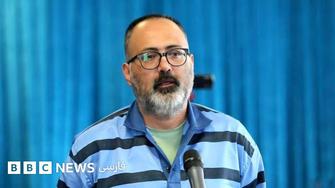
Iran executed Mehdi Farid after accusing him of providing sensitive information to Mossad through online contacts and unauthorized USB access at a sensitive organization. Iranian authorities released few details about the evidence or proceedings, while independent reporting said Farid had worked at Iran’s Atomic Energy Organization and had previously been a newspaper columnist. Human Rights Iran and other rights groups warned that the execution forms part of a broader increase in security-related executions during wartime, including cases involving protesters and alleged links to the People’s Mojahedin Organization of Iran. They say rapid trials, limited access to information and the absence of independent verification raise serious due-process concerns and warn that hundreds of protesters face capital charges.
Executions in Iran Espionage Allegations Human Rights Iranian Political Prisoners Iran Protests Due Process and Judicial Transparency Iran Tehran Israel Judiciary of the Islamic Republic of Iran Human Rights Iran Mizan News Agency
Estilo de reportagemInformativo

Predominantly factual reporting based on official statements and human-rights sources, with critical emphasis on the lack of transparent evidence and due process.

Contexto políticoCentro-esquerda

The report is institutionally framed but emphasizes human-rights concerns, judicial opacity and criticism of Iranian state repression.
Reactions to the Execution of Prisoners Amid the War: From “Political Repression” to “the Government’s Revenge on the Iranian People”

BBC News Persian 4 abr. 2026 Persian

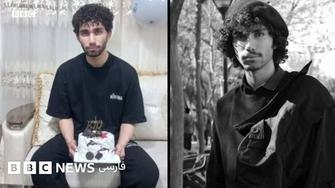
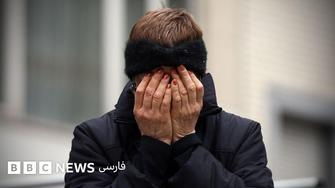
Amid the reported war between Israel, the United States and Iran, Iranian authorities have accelerated the execution of political and security prisoners. The Judiciary announced the executions of People’s Mojahedin Organization members Abolhasan Montazer and Vahid Bani-Amirian, while 18-year-old protester Amirhossein Hatami was also executed. Iranian human-rights sources say at least 11 prisoners have been executed since the war began, with several others reportedly transferred to solitary confinement and at imminent risk. Amnesty International, the UN special rapporteur Mai Sato, Iran Human Rights, Shirin Ebadi and Reza Pahlavi condemned the executions, warning that the government is using capital punishment to intimidate opponents and suppress renewed protests. Social-media users likewise described the executions as political revenge and called for the sentences to be halted.

Executions in Iran Political Prisoners Human Rights Iranian Protests Iran War Political Repression Iran Israel United States Islamic Republic of Iran Iranian Judiciary Amnesty International
Estilo de reportagemInformativo

Primarily a reported account of executions and public reactions, though it includes strongly worded quotations and critical framing from human-rights advocates and opposition figures.

Contexto políticoCentro-esquerda

Human-rights-focused reporting that emphasizes criticism of the Iranian government’s use of capital punishment and political repression.

Tehran City Council Member: Iranian Women Face More Than 120 Types of Social Harm

BBC Persian 3 mai. 2025 Persian

Tehran City Council member Sوده نجفی warns that Iranian women face more than 120 forms of social harm, including poverty, domestic violence, gender discrimination, and limited access to work. The report links these problems to Iran’s economic crisis, discriminatory laws, mandatory-hijab enforcement, surveillance, and policies that prioritize traditional gender roles. Women who head households are described as particularly vulnerable, with low economic participation and limited access to insurance and stable employment. Existing support programs are portrayed as underfunded and inadequate, while rights groups call for repealing discriminatory laws, strengthening protections for victims of violence, and expanding women’s access to education and employment.

Women’s Rights in Iran Gender Inequality Domestic Violence Poverty and Economic Vulnerability Mandatory Hijab Social Harm Iran Tehran Isfahan Government of Iran Tehran City Council Amnesty International
Estilo de reportagemEquilibrado

Primarily a reported news analysis, but it uses critical framing and advocacy-oriented language about Iranian government policies.

Contexto políticoCentro-esquerda

Advocates gender equality, expanded legal protections, and structural reform while sharply criticizing Iranian government policies and enforcement.

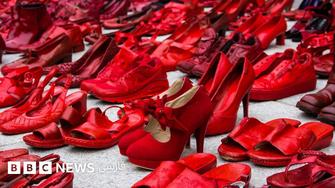
Living in the Shadow of Violence: Rising Femicide and a Law That Offers No Protection

BBC Persian 7 fev. 2025 Persian

Femicide and domestic violence against women in Iran are reportedly increasing, with at least 13 women and girls killed by family members in one recent month and at least 143 women killed since the beginning of the Iranian year. Survivors describe repeated failures by families, police and courts to protect them. The long-delayed bill on preserving women’s dignity and protecting them from violence has not been enacted and is criticized for emphasizing post-incident services rather than prevention, deterrence and gender-based protections. Safe houses offer vital legal, psychological and social support, but they are few, unevenly distributed and poorly known, while social stigma and weak judicial protection limit access. Women’s rights activists attribute the persistence of violence to patriarchal norms, lenient treatment of honor killings, family pressure to forgive perpetrators and official tendencies to dismiss abuse as a private family dispute.

Femicide in Iran Domestic Violence Violence Against Women Honor Killings Women’s Rights Gender Inequality Legal Protection and Safe Houses Iran Tehran Sistan and Baluchestan Iranian Parliament Iranian Judiciary
Estilo de reportagemInformativo

Predominantly fact-based reporting using testimonies, statistics and expert interviews, with critical analysis of Iran’s legal and cultural response to violence against women.

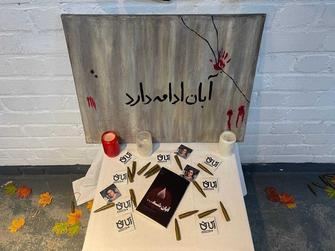
What Remained

Radio Zamaneh 25 nov. 2024 Persian

An exhibition titled “What Remained” was held in Cologne from 22 to 24 November 2024 to mark the fifth anniversary of Iran’s November 2019 protests. Organized by Iranian survivor and victims’ family groups with human-rights and cultural partners, it displayed personal belongings, letters, photographs and handmade objects connected to people killed, imprisoned or executed by the Islamic Republic. Families of victims from the November 2019 protests, the Woman, Life, Freedom movement, the downing of the Ukrainian passenger flight and the 1980s political-prisoner executions described ongoing intimidation, grief and their determination to pursue justice. The exhibition also highlighted continuing resistance by political prisoners, including the “Tuesday No Executions” campaign, and sought to internationalize documentation of Iran’s abuses. Its central message was that remembrance must lead to sustained accountability, solidarity and a freer, more humane future.

Iranian Protest Movement Justice-Seeking Movement Political Repression in Iran Human Rights November 2019 Protests Woman, Life, Freedom Movement 1988 Massacre of Political Prisoners Commemorative Exhibitions Iran Cologne, Germany Europe Islamic Republic of Iran
Estilo de reportagemInterpretativo

Advocacy-oriented and emotionally charged coverage that combines reported interviews and descriptions with strong condemnation of state repression and calls for continued justice-seeking.

Contexto políticoEsquerda

Strongly critical of the Islamic Republic and supportive of protest movements, human rights activism and transitional justice.

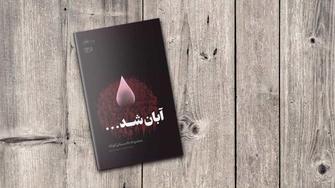
“Aban Became”: Linking the Justice-Seeking Movement and Literature

Radio Zamaneh 22 nov. 2024 Persian

The book “Aban Became,” published by Ronak Publishing for the fifth anniversary of Iran’s Aban 2019 protests, brings together short stories written in response to a call by the Association of Aban Families Seeking Justice, along with an introduction by Sepideh Rashno. The piece presents the collection as a bridge between literature and the justice-seeking movement, transforming personal grief and eyewitness experience into collective memory and a demand for truth. It praises the book’s narrative and philosophical dimensions, arguing that remembering Aban is a social responsibility and that literature can confront historical trauma, encourage empathy and preserve the pursuit of justice.

Aban 2019 protests Justice-seeking movement Contemporary Persian literature Collective memory Social justice Iran Association of Aban Families Seeking Justice Sepideh Rashno Ronak Publishing Aban Became
Estilo de reportagemInterpretativo

Highly evaluative literary commentary that strongly praises the book and frames it as a moral and social call to action.

Contexto políticoCentro-esquerda

Supports public remembrance, accountability and social justice for victims of the Aban 2019 protests, without presenting a detailed partisan political program.

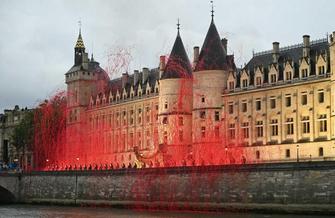
Olympic Artistic Awakening: A Manifestation of History and Modernity

Radio Zamaneh 2 ago. 2024 Persian

Gojira’s performance at the 2024 Paris Olympics opening ceremony is interpreted as a fusion of heavy metal, opera and French revolutionary imagery. Through references to Les Misérables, the song “Ah! Ça Ira” and repeated images of Marie Antoinette’s severed head, the performance links France’s revolutionary past with contemporary struggles over inequality, climate change, human rights and social justice. The piece presents the performance as aligned with Olympic ideals of unity and international cooperation, while acknowledging criticism from conservative, nationalist and religious figures who viewed its violent imagery and historical framing as inappropriate. Supporters, including Emmanuel Macron and several artists and activists, praised its artistic ambition and political symbolism.

2024 Paris Olympics Gojira’s Olympic Opening Ceremony Performance French Revolution Art and Political Symbolism Social Justice and Inequality Climate Change Human Rights France Paris Global National Rally French Republic
Estilo de reportagemInterpretativo

Interpretive and strongly approving analysis that presents the performance as a meaningful reflection on justice, revolution, unity and contemporary social issues, while also reporting opposing reactions.

Contexto políticoCentro-esquerda

The article emphasizes equality, human rights, climate action, social justice and solidarity, while sympathetically presenting criticism of conservative and nationalist opponents.

The Uncertainty Surrounding Farzad Moazemi Goudarzi’s Detention: The Story of a Life They Destroyed

Radio Zamaneh 19 jun. 2024 Persian

Farzad Moazemi Goudarzi, a relative of November 2019 protest victim Reza Moazemi Goudarzi, has reportedly spent more than 75 days in detention without publicly known charges. Security forces allegedly arrested him violently outside his home in Borroojerd, raided the house, confiscated personal belongings, and transferred him to Ward 209 of Evin Prison. The report links his detention to broader pressure on families seeking justice for victims, citing the cases of Mashallah Karami and Manouchehr Bakhtiari. Farzad had also been detained previously around the anniversary of Mahsa Amini’s death and the start of the 2022 protests.

Political Detention Human Rights Iranian Protest Victims’ Families Suppression of Dissent Iran Borroojerd Evin Prison Islamic Republic of Iran Islamic Revolutionary Guard Corps Iranian Ministry of Intelligence Farzad Moazemi Goudarzi Reza Moazemi Goudarzi
Estilo de reportagemInterpretativo

Predominantly factual reporting, but strongly critical and advocacy-oriented in its descriptions of government repression.

Contexto políticoEsquerda

Criticizes the Iranian government’s repression of protesters’ families and emphasizes human-rights concerns.

Silent Voices: Death as Protest

Radio Zamaneh 13 mar. 2024 Persian

The commentary examines suicide and self-immolation as extreme forms of political and social protest, drawing on Émile Durkheim’s concept of altruistic suicide. It surveys historical and contemporary cases, including Jan Palach, Mohamed Bouazizi, Homa Darabi, Sahar Khodayari, Mohammad Moradi and Aaron Bushnell, arguing that such acts can expose repression, inequality and political crises but generally cause profound harm and are not desirable means of achieving change. The text warns against reducing politically motivated deaths to individual psychological problems, while stressing that suicide should never be romanticized or promoted and providing emergency helplines in several countries.

Suicide as Political Protest Self-Immolation Authoritarianism and Repression Human Rights Social Movements Women’s Rights Palestine and Gaza Iran Turkey Islamic Republic of Iran United Nations High Commissioner for Refugees Khorramshahr Municipality
Estilo de reportagemInterpretativo

Primarily an analytical and argumentative commentary that critiques authoritarian repression and discusses the political meaning of suicide, while also presenting historical examples and factual context.

Contexto políticoCentro

Center-Left: strongly critical of dictatorship, state repression and human-rights abuses, with emphasis on social justice and protest movements.

The Streets and the Names of the Men Who Rule Over Them

Radio Zamaneh 19 fev. 2019 Persian

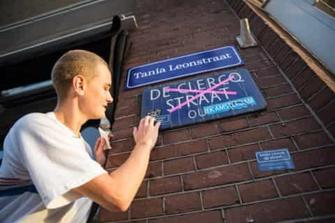
The article examines the overwhelming dominance of male names in European and Iranian streets and presents feminist campaigns in Brussels, Paris, Amsterdam and other cities that temporarily or permanently rename streets after notable women. Amsterdam activists, for example, renamed twelve streets to symbolize women’s small share of the city’s street names. The article argues that Iran combines overwhelmingly male street nomenclature with laws, harassment and morality-police enforcement that make public space unsafe and unequal for women. It criticizes Tehran’s city authorities for commemorating only a handful of women among thousands of streets and calls for greater recognition of women’s historical contributions and equal rights to public space.

Gender Inequality Feminist Movements Street Naming Women’s Safety and Public Space Patriarchy in Iran Iran Europe Amsterdam Tehran City Council Tehran Municipality Guidance Patrol of Iran Beyoncé
Estilo de reportagemInterpretativo

Strongly opinionated feminist commentary that combines reported examples with persuasive criticism of patriarchal institutions and public-space policies.

Contexto políticoCentro-esquerda

Advocates feminist equality, women’s rights and reform of patriarchal public institutions while focusing on social and cultural change rather than a broader partisan program.

Veja todos os 20 trabalhos com uma conta gratuita

Contratar Mensagem
×

Cadastre-se para enviar uma mensagem para Roonak

Já tem uma conta? Entrar
Procurando trabalho? Cadastre-se como jornalista
Verifique seu e-mail para concluir o cadastro
Acabamos de enviar um e-mail para . Verifique sua caixa de entrada e clique no link para verificar seu endereço de e-mail e concluir seu cadastro. Se não vir o e-mail, não deixe de checar sua pasta de spam ou lixo eletrônico.
Não recebeu o e-mail?

Cadastre-se para desbloquear perfis

Já tem uma conta? Entrar
Procurando trabalho? Cadastre-se como jornalista
Verifique seu e-mail para concluir o cadastro
Acabamos de enviar um e-mail para . Verifique sua caixa de entrada e clique no link para verificar seu endereço de e-mail e concluir seu cadastro. Se não vir o e-mail, não deixe de checar sua pasta de spam ou lixo eletrônico.
Não recebeu o e-mail?