Contratar jornalistas

Editoras e emissoras Equipes de marketing de conteúdo Equipes de RP e comunicação Equipes de risco e inteligência Encontrar jornalistas Monitoramento de mídia Preços

Para jornalistas

Vagas de jornalismo Tarifas Crie seu perfil gratuito

Sobre Roozbeh

Roozbeh Mirebrahimi é um jornalista nascido no Irã, pesquisador sênior e especialista em mídia, assuntos políticos e direitos humanos, atualmente baseado nos Estados Unidos. Mirebrahimi também é autor e seu trabalho concentra-se na política iraniana, no autoritarismo e nos direitos humanos. The First Brick é seu livro mais recente, entrelaçando história e percepções pessoais para explorar como uma revolução pela liberdade se tornou uma teocracia.

Idiomas
inglês persa
Visto em
Iran International Fair Observer RNAnews

Trabalhos 20

IRGC takes de facto control of Iran government amid deepening power struggle

Iran International 1 abr. 2026 English

The Islamic Revolutionary Guard Corps is reportedly exercising de facto control over Iran’s core state functions amid a political deadlock between President Masoud Pezeshkian’s administration and the military leadership. IRGC commander Ahmad Vahidi allegedly blocked proposed intelligence-minister candidates and insisted that sensitive posts be controlled directly by the Guard during wartime. The reported absence or inaccessibility of Supreme Leader Mojtaba Khamenei has enabled a senior-officer military council to restrict access to him and filter government reports. Meanwhile, members of Khamenei’s inner circle are reportedly seeking the removal of security official Ali Asghar Hejazi, who has opposed Mojtaba’s potential succession and warned that it would give the IRGC broader control over Iran.

Iranian political power struggle Islamic Revolutionary Guard Corps Iranian government crisis Succession of Iran’s Supreme Leader Civil-military relations Iran Tehran Israel Islamic Revolutionary Guard Corps (IRGC) Iranian government Assembly of Experts Supreme Leader’s Office
Estilo de reportagemInterpretativo

Predominantly reported claims attributed to informed sources, but relies heavily on unverified allegations and speculative assessments about Iran’s internal power structure.
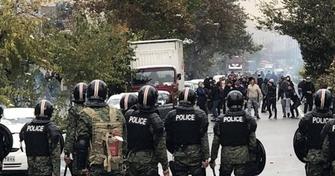
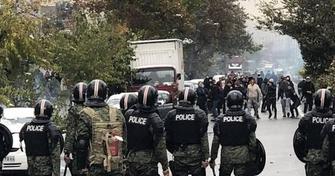
Khameneism after Khamenei: why Mojtaba represents continuity, not change

Iran International 31 mar. 2026 English

Khameneism is presented as a deeply entrenched system engineered by Ali Khamenei to eliminate unpredictability and centralize ideological control, enabling Mojtaba Khamenei’s rise as a continuation of established structures rather than a shift in direction. Iran’s institutions have been reshaped to suppress dissent, constrain political alternatives and ensure predetermined outcomes, leaving the regime inflexible and increasingly dependent on coercion. Public messages and reporting reflect widespread fear and anger over the arrival of Hashd al-Shaabi forces inside Iran, seen as a sign of escalating repression. Iraqi officials criticize the militias’ support for Iran, warning of worsening regional tensions. Economic strain, sanctions dynamics and India’s emerging role in redirected energy flows further intensify pressure on Tehran. The narrative highlights eroding ideological legitimacy, internal fractures and growing external pressure, suggesting that Iran’s trajectory remains open-ended rather than predetermined, shaped by a convergence of domestic unrest, military escalation and shifting geopolitical alignments.

Iranian politics Leadership succession Militias and regional conflict Economic crisis US–Iran relations India energy policy Iran Iraq India Islamic Revolutionary Guard Corps Hashd al-Shaabi Islamic Republic of Iran
Estilo de reportagemEquilibrado

Mix of factual analysis and interpretive political argument

Contexto políticoCentro

Analytical discussion of geopolitical and regime dynamics without advocating partisan positions

How '800 executions canceled' fits Tehran’s playbook

Iran International 21 jan. 2026 English

Claims about halted mass executions highlight Tehran’s longstanding use of political deception while U.S. responses reflect shifting calculations in a tense bilateral relationship. Diaspora protests expanded globally as Iranians abroad rallied in support of unrest inside the country. Inside Iran, an extensive internet blackout accompanied a violent crackdown that left thousands dead, with eyewitnesses describing severe repression, shortages, and economic paralysis. Rising expectations among protesters coincide with escalating rhetoric between Donald Trump and Ali Khamenei, deepening an already personal and volatile confrontation.

US-Iran relations Iranian protests Government repression Internet shutdowns Iran United States Europe Islamic Republic of Iran US government PAAIA Ali Khamenei Donald Trump
Estilo de reportagemEquilibrado

Analytical framing with interpretive commentary but grounded in reported events

Contexto políticoCentro

Covers geopolitical conflict without explicit ideological alignment

What Tehran means when it says protesters won’t be executed

Iran International 16 jan. 2026 English

Iranian officials’ assurances that protesters will not be executed rely on reclassifying detainees as terrorists, saboteurs or enemies of the state, enabling capital charges despite claims of restraint. Nationwide protests on January 8 and 9 drew millions before a rapid and deadly crackdown, with thousands reportedly killed and mass arrests continuing under an internet blackout. Turkey balanced caution with quiet diplomacy, seeking stability amid economic and security stakes, while international condemnation grew. Reza Pahlavi outlined a post‑Islamic Republic policy vision emphasizing diplomacy, transparency and economic reintegration. Eyewitness accounts described unprecedented violence, pervasive fear and despair across Iran as authorities reframed unrest as a foreign-driven conspiracy and consolidated a securitized response.

Iran protests Human rights Government repression International relations Iran Turkey United States Islamic Republic of Iran United States government Turkish government United Nations Security Council Basij
Estilo de reportagemEquilibrado

Mix of factual reporting and analytical interpretation

Accountability for Iran hangs on UN mission’s future

Iran International 17 set. 2025 English

The United Nations fact-finding mission on Iran, established after the 2022 protests, serves as a crucial tool for accountability, aiming to document and preserve evidence for potential prosecutions of Iranian officials. Despite its limited initial mandate, the mission has expanded to address broader human rights violations, highlighting systemic abuses in Iran. The mission's continuation depends on international political and financial support, as it faces challenges from Iran's denial of allegations and global financial constraints. The mission is essential for amplifying victims' voices and building a legal framework for future justice, urging governments to sustain its efforts amidst diplomatic and budgetary pressures.

Human Rights Iran Protests International Accountability Iran United Nations Human Rights Council Mahsa Amini
Estilo de reportagemInterpretativo

The article presents a mix of factual reporting and subjective analysis, emphasizing the importance of the UN mission and the challenges it faces.

Contexto políticoCentro-esquerda

The article advocates for international accountability and human rights, aligning with center-left values.

Accountability for Iran hangs on UN mission’s future

Iran International 17 set. 2025 English

Iranian authorities sentenced a former hijab enforcement official, Seghati, and another man to flogging and exile for same-sex conduct, while a separate case involving political detainee Babak Shahbazi raised fears of imminent execution following repeated denials of retrial requests. Rights groups cite coerced confessions, torture, and unfair trials in both cases, linking them to broader patterns of repression since the 2022 protest movement that followed Mahsa Amini’s death. The article recounts several protest victims whose deaths galvanized public dissent. Iranian officials continue issuing threats against Israel and the United States amid heightened regional tensions, drawing criticism from the US State Department for using external threats to distract from domestic crises. Iran faces severe economic deterioration, marked by a collapsing currency, high inflation, and widespread public dissatisfaction exacerbated by years of sanctions and mismanagement.

Human rights in Iran Iran protests Political repression Iran–Israel tensions Economic crisis in Iran Iran Israel United States Islamic Republic of Iran US State Department Basij militia Islamic State
Estilo de reportagemInformativo

Mostly factual reporting with some advocacy-oriented statements from sources and rights groups.

Contexto políticoCentro

Covers political repression and geopolitical tensions without promoting a partisan domestic political stance.

Tehran’s denial after wartime thrashing may deepen its peril

Iran International 3 set. 2025 English

Iran faces unprecedented challenges following the assassination of General Qassem Soleimani and subsequent military actions on its soil, which have shattered long-held perceptions of invincibility. The regime's continued denial of these shifts and reliance on outdated strategies may accelerate its decline. The normalization of targeting senior officials and military strikes within Iran highlights a significant erosion of deterrence, with Tehran's nuclear ambitions losing leverage amid global realities.

Iranian Politics Middle East Conflict Military Strategy Iran Middle East Israel Islamic Republic Iranian Armed Forces Qassem Soleimani Donald Trump
Estilo de reportagemInterpretativo

The article presents a critical view of Iran's political and military strategies, suggesting a subjective analysis of the situation.

Contexto políticoCentro-direita

The article criticizes Iran's leadership and military strategies, aligning with a perspective that supports Western and Israeli actions.

Tehran’s denial after wartime thrashing may deepen its peril

Iran International 3 set. 2025 English

Iran’s tourism sector faces severe decline due to wartime instability, new visa restrictions, and long-standing economic pressures, with industry leaders reporting deep financial strain. Israeli officials publicly express support for exiled opposition figure Reza Pahlavi and signal continued pressure on Tehran following Israel’s strikes on Iranian sites during the 12-day war. Inside Iran, conflicting signals from Ayatollah Khamenei and political elites highlight growing factional rifts over engagement with the United States, while moderates advocate renewed diplomacy and hardliners reject concessions. Regional tensions intensify as Yemen’s Houthis escalate attacks after an Israeli strike. The appointment of Ali Bagheri Kani to a senior security role underscores maneuvering among Iran’s influential clerical families as the country edges closer to a future leadership transition.

Iran-Israel conflict Iranian politics Tourism decline in Iran Diplomacy and nuclear negotiations Iran Israel Yemen Iranian government Israeli government Houthi movement Supreme National Security Council of Iran IAEA
Estilo de reportagemInformativo

Mostly factual reporting with some analytical interpretation and political framing.

Contexto políticoCentro

Covers political factions analytically without promoting a clear ideological stance.

What’s at Stake in the Iranian Election?

Fair Observer 24 fev. 2016 English

The article discusses the critical stakes in the upcoming Iranian parliamentary elections, emphasizing the challenges President Hassan Rouhani faces in implementing economic and human rights reforms without a cooperative parliament. It highlights the dominance of hard-liners in key power centers, the obstacles reformist candidates face, and the potential consequences of a hard-liner victory. The international community's role in supporting Rouhani's reform efforts is also underscored.

Iranian Election Human Rights Political Reform Iran Islamic Republic Revolutionary Guard Guardian Council Supreme Leader International Community Hassan Rouhani Ayatollah Ali Khamenei Issa Saharkhiz
Estilo de reportagemInterpretativo

The article contains a mix of factual reporting and subjective analysis, particularly regarding the potential outcomes and implications of the election.

Contexto políticoCentro-esquerda

Supports reformist agenda and human rights improvements in Iran.

Participated in VOA special coverage of the 77th session of the United Nations General Assembly as an expert.

Vídeo YouTube

Veja todos os 20 trabalhos com uma conta gratuita

Contratar Mensagem
×

Cadastre-se para enviar uma mensagem para Roozbeh

Já tem uma conta? Entrar
Procurando trabalho? Cadastre-se como jornalista
Verifique seu e-mail para concluir o cadastro
Acabamos de enviar um e-mail para . Verifique sua caixa de entrada e clique no link para verificar seu endereço de e-mail e concluir seu cadastro. Se não vir o e-mail, não deixe de checar sua pasta de spam ou lixo eletrônico.
Não recebeu o e-mail?

Cadastre-se para desbloquear perfis

Já tem uma conta? Entrar
Procurando trabalho? Cadastre-se como jornalista
Verifique seu e-mail para concluir o cadastro
Acabamos de enviar um e-mail para . Verifique sua caixa de entrada e clique no link para verificar seu endereço de e-mail e concluir seu cadastro. Se não vir o e-mail, não deixe de checar sua pasta de spam ou lixo eletrônico.
Não recebeu o e-mail?