Hire journalists

Publishers & Broadcasters Content Marketing Teams PR & Comms Teams Risk & Intelligence Teams Find journalists Media Monitoring Pricing

For journalists

Journalism jobs Pay rates Create your free profile

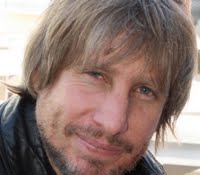
About Ruud

Ruud Elmendorp is a Dutch video journalist travelling through Africa. For a variety of clients, he produces news packages, features and documentaries and writes articles. Find out more on ****

Languages
Dutch English French German Swahili
Seen in
Ruud Elmendorp's Substack De Telegraaf Voice of America EUobserver

Work 23

Every Image Needs a Birthplace

Ruud Elmendorp's Substack 27 Aug 2026 English

Ruud Elmendorp explains that his AI-generated cyberpunk imagery originates in experiences and influences that predate generative AI by decades. A rainy Tokyo scene involving transparent umbrellas provided the core visual inspiration, while Blade Runner supplied the genre's vocabulary and Star Trek's Borg introduced the idea of technology integrated into the body. A thought about smartwatches, phones, earbuds and eventually technologically augmented pets prompted him to create AI images that magnify present-day technological trends into possible futures. He presents AI as a tool for expressing an established artistic vision rather than the source of that vision.

Artificial Intelligence and Generative Art Cyberpunk Artistic Inspiration Human-Technology Integration Tokyo Japan Blade Runner Star Trek Smartwatch
Reporting styleInterpretive

Highly personal and reflective, presenting the author's artistic philosophy and interpretations of technology.


Learning to See in Post-Production

Ruud Elmendorp's Substack 26 Aug 2026 English

Journalist Ruud Elmendorp reflects on making TikTok satire and AI-generated cyberpunk images alongside his reporting work in Africa. He describes these activities as an escape from covering crises, a way to sharpen his storytelling and observation skills, and a means of reviving his long-abandoned interest in drawing. He acknowledges legitimate criticism of AI-generated art but argues that, for him, it enables creative work that would otherwise never happen. Editing has also changed how he perceives everyday scenes, sometimes making real skies appear as if they could be digitally graded; remembering the difference between edited imagery and reality becomes an important act of discernment.

AI-Generated Art TikTok and Social Media Journalism Post-Production and Editing Creative Expression Africa Europe Netherlands Voice of America Ruud Elmendorp TikTok Substack
Reporting styleInterpretive

Personal reflective essay with subjective views on AI art, TikTok, journalism, and creativity, though grounded in the author's professional experience.

What If We Equip a Paperclip With Its Own AI?

Ruud Elmendorp's Substack 24 Aug 2026 English

A paperclip equipped with an AI serves as a narrator for a meditation on technological change. The essay contrasts highly funded advances in artificial intelligence, datacenters, rockets, and satellite internet with mundane stationery tools that have remained essentially unchanged because their core problems are already solved. It argues that innovation follows shifting constraints and available funding rather than addressing every unresolved problem, and suggests that a tool’s stability can represent success rather than failure. The paperclip’s verdict is that the current AI boom, like earlier waves of technological hype, will eventually pass.

Artificial Intelligence Technology Innovation Technology Hype Venture Capital History of Writing Tools Elon Musk Paperclip Post-it Notes Tipp-Ex Sellotape Superglue
Reporting styleInterpretive

A strongly opinionated reflective essay using satire and metaphor to critique technology hype and the uneven funding of innovation.

The War Correspondent Who Went Looking for Peace, and Found It in Bamboo

Ruud Elmendorp's Substack 21 Aug 2026 English

Former Dutch war correspondent Arthur de Leeuw left conflict reporting to establish a bamboo plantation and manufacturing business near Nairobi. Since January 2025, his operation has sourced bamboo from Kenyan smallholders and combined it with recycled plastic to produce terrace decking for homes, businesses and safari lodges, with exports expanding beyond Kenya. Despite staffing challenges and his continuing urge to cover fighting in eastern Congo, de Leeuw is focused on making the venture profitable and says the adventure of building something new keeps him motivated.

War Correspondence Bamboo Farming Sustainable Manufacturing Entrepreneurship in Africa Career Change Kenya Netherlands Democratic Republic of the Congo Invest International Arthur de Leeuw Ruud Elmendorp Stephen Kimani Kiburi
Reporting styleBalanced

A fact-based profile shaped by the author's personal observations and sympathetic narrative framing.

Journalism and AI: A Personal Reckoning

Ruud Elmendorp's Substack 9 Aug 2026 English

Ruud Elmendorp reflects on using generative AI while reporting on African politics, natural resources, business, and the environment. He argues that AI's rapid arrival caught journalists and major media organizations unprepared, while introducing risks such as hallucinations, fabricated sources, and degraded accountability. Although AI shifts rather than eliminates cognitive effort, it can speed restructuring and enable deeper, better-argued reporting when paired with rigorous verification, sourcing, and editorial judgment. Drawing on Journalism in the Age of AI, he warns that AI may intensify journalism's volume-driven “hamster wheel” or provide an off-ramp toward more thoughtful work, depending on who controls its use.

Artificial Intelligence Journalism News Media Media Ethics Journalistic Workflows Africa BBC Ruud Elmendorp Seth C. Lewis Rodrigo Zamith Tomás Dodds Polity Press
Reporting styleInterpretive

Strongly personal and evaluative, while grounded in professional experience and cited evidence.

Verified

Ruud Elmendorp's Substack 16 Jul 2026 English

Journalist Ruud Elmendorp reflects on receiving verification from Bluesky, X and TikTok, while Instagram continues reviewing his request. He says the blue checks matter not as status symbols but because journalists face real risks of impersonation and because the platforms have recognized years of reporting across 46 countries. Meta has separately placed his Facebook account in a protection program for accounts considered likely to be targeted.

Online Verification Journalism Social Media Impersonation Digital Identity Global Ruud Elmendorp Plato Bluesky X TikTok Instagram Meta
Reporting styleInterpretive

Predominantly personal reflection, with subjective discussion of the meaning and emotional significance of verification.

The Blink Never Changed

Ruud Elmendorp's Substack 14 Jul 2026 English

Ruud Elmendorp argues that TikTok’s three-second retention threshold is not a modern invention but a digital expression of a principle long understood by television and newspaper editors. Drawing on his experience editing Betacam SP footage with a Sony RM-450, he presents micro-editing and strong leads as forms of the same craft: holding attention long enough for the story to begin. The tools and audiences have changed, but the decisive first few seconds have not.

Digital Media and Social Platforms Journalism and Storytelling Video Editing Audience Attention Ruud Elmendorp TikTok Sony Betacam SP Sony RM-450
Reporting styleInterpretive

A strongly personal and interpretive essay that argues modern social-media retention practices continue long-standing principles of journalism and video editing.

The Tools Change the Story — Then They Change You

Ruud Elmendorp's Substack 12 Jul 2026 English

Journalist Ruud Elmendorp reflects on how moving from legacy broadcast formats to AI-assisted, mobile and TikTok-based storytelling has changed not only his workflow but also his appearance, habits, public identity and relationship with audiences. He argues that platform feedback can shape a reporter’s personality and ethics, citing his own mistaken use of Rastafarian imagery in a shopping mall as a lesson in respecting the meanings behind adopted personae. Although algorithmic transformation can become harmful when it happens unconsciously, Elmendorp says that adopting new tools deliberately has increased his discoverability, led to media appearances and attracted a substantial conversation with Meridian 17 about African media.

Journalism and Media Artificial Intelligence in Journalism Social Media Storytelling African Media Reporter Identity Cultural Appropriation Africa Khartoum, Sudan Nairobi, Kenya Voice of America Meridian 17 Ruud Elmendorp
Reporting styleInterpretive

Predominantly a personal, reflective essay that advances subjective arguments about technology, identity and journalism, while grounding them in the author's professional experience.

The Only Journalist in the Room

Ruud Elmendorp's Substack 9 Jul 2026 English

At an Iranian Embassy memorial in Nairobi for Ali Khamenei, Ruud Elmendorp finds himself the only journalist and only white attendee among Kenyan Muslim scholars and religious leaders mourning Iran’s late Supreme Leader. Their praise for Khamenei contrasts sharply with the repression, killings of demonstrators and persecution of minorities associated with his rule. Elmendorp then asks Iran’s ambassador about obtaining a journalist visa and receives an encouraging but uncertain invitation to apply. He recognizes that access would come with strict government supervision, a predetermined story, a minder and severe limits on reporting, yet argues that witnessing Iran firsthand is important during a period marked by Khamenei’s death, mourning ceremonies, a succession struggle and renewed public tensions over the Islamic Republic.

Iranian Politics Ali Khamenei's Death Journalism and Press Freedom Iranian State Repression Visa Access for Foreign Journalists Iran Nairobi Kenya Islamic Republic of Iran United States Israel Ruud Elmendorp
Reporting styleInterpretive

Strongly personal and reflective, combining eyewitness reporting with subjective judgments about Iranian politics, repression and the prospects of obtaining a visa.

Political contextCentre

Critical of Iranian authoritarianism and sympathetic to human-rights concerns, while maintaining a journalistic rather than partisan ideological stance.

The Rasta in the Mall

Ruud Elmendorp's Substack 5 Jul 2026 English

Ruud Elmendorp describes dressing in Rastafari-inspired clothing bought from Nairobi’s Gikomba second-hand market before filming at Two Rivers Mall. The outfit prompted more smiles, conversations and commercial attention than his usual practical clothing, leading him to conclude that appearance changes how a social environment responds to a person. In an added note, he acknowledges that using Rastafari’s sacred colours and symbols to present a shopping mall was contradictory, says he removed the related TikTok videos, and announces a future reflection on style, the sacred and content creation.

Identity and Social Perception Fashion and Self-Presentation Rastafari Journalism and Media Nairobi Kenya Gikomba Ruud Elmendorp TikTok Two Rivers Mall Rastafari-inspired clothing and accessories
Reporting styleInterpretive

Personal reflective essay built around the author's subjective experience and interpretation, while presenting an observational finding about clothing and social interaction.

See all 23 pieces of work with a free account

Other journalists in Johannesburg

Hire Message
×

Sign up to message Ruud

Already have an account? Log in
Looking for work? Register as a Journalist
Verify your email to complete registration
We’ve just sent an email to . Please check your inbox and click the link to verify your email address and complete your registration. If you don’t see the email, be sure to check your spam or junk folder.
Didn’t receive the email?

Sign up to unlock profiles

Already have an account? Log in
Looking for work? Register as a Journalist
Verify your email to complete registration
We’ve just sent an email to . Please check your inbox and click the link to verify your email address and complete your registration. If you don’t see the email, be sure to check your spam or junk folder.
Didn’t receive the email?