Engager des journalistes

Éditeurs et diffuseurs Équipes de marketing de contenu Équipes RP et communication Équipes risques et renseignement Trouver des journalistes Veille médias Tarifs

Pour les journalistes

Offres d'emploi en journalisme Tarifs Créez votre profil gratuit

À propos de Saibal

Travaux 74

Should Ministers Have Domain Expertise? Gen Z Protests Revive an Old Debate

The Economic Times 10 août 2026 English

Gen Z protests over India’s education system have renewed debate about whether ministers should have academic or professional expertise relevant to their portfolios. The Modi government responded by transferring the education secretary, removing 47 National Testing Agency officials, and accepting Education Minister Dharmendra Pradhan’s resignation, but Pralhad Joshi’s appointment as his successor drew criticism because of his lack of experience in education. The article argues that only a minority of ministers under both the Modi and Manmohan Singh governments had qualifications aligned with their ministries, with education providing a particularly stark example. Political, regional, caste, community, and coalition considerations often shape appointments, while trusted political allies are given key portfolios. Greater specialization, as seen in systems such as Britain’s shadow cabinet, could reduce ministries’ excessive dependence on generalist civil servants and improve decision-making without eliminating political judgment. Specialist appointments such as Manmohan Singh as finance minister and S. Jaishankar as foreign minister are cited as successful precedents.

Ministerial Appointments Government Expertise Education Policy Gen Z Protests Governance Reform India United Kingdom Government of India National Testing Agency Indian Administrative Service Indian National Congress Bharatiya Janata Party
Style rédactionnelInterprétatif

Analytical opinion column that uses comparative evidence and examples to argue for greater alignment between ministers' expertise and their portfolios.

Contexte politiqueCentre

The analysis criticizes both major political traditions and emphasizes governance quality, expertise, and institutional reform rather than a partisan ideology.
Why India's Gen Z Protest Movement Differs from Nepal, Bangladesh and Sri Lanka

The Economic Times 27 juil. 2026 English

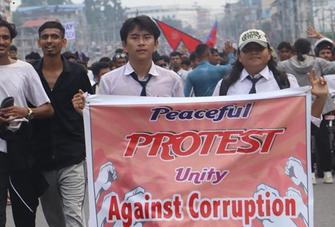
Gen Z-led protests in Nepal, Bangladesh and Sri Lanka produced political upheaval, elections and new leadership but achieved limited structural progress against corruption. Nepal’s movement brought Balen Shah and the Rastriya Swatantra Party to power, though executive overreach has raised concerns and institutional reform remains weak. Bangladesh’s protests removed Sheikh Hasina, but the subsequent BNP government has largely failed to fulfil anti-corruption promises. Sri Lanka’s uprising led to a new coalition that has reduced the debt burden under an IMF-backed programme, while making only modest progress against entrenched corruption. India’s Cockroach Janta Party movement differs because it pursued narrower demands—Dharmendra Pradhan’s resignation and examination-system reform—through predominantly non-violent protests, within a functioning electoral system and without the economic-collapse conditions seen in Sri Lanka. After Pradhan’s departure, the movement must determine whether it can evolve from a protest platform into a broader force for institutional reform.

Gen Z Protests Political Reform Corruption Governance South Asian Politics Education Reform India Nepal Bangladesh Cockroach Janta Party (CJP) Rastriya Swatantra Party (RSP) Bangladesh Nationalist Party (BNP)
Style rédactionnelÉquilibré

Fact-based political analysis with evaluative judgments about the limited success of youth-led movements and institutional reform.

Contexte politiqueCentre

Analytical and comparative rather than ideologically partisan; it assesses youth movements and governments mainly by their institutional and anti-corruption outcomes.

World's Longest Cable-stayed Bridge Opens in China

Engineering News-Record (ENR) 17 oct. 2025 English

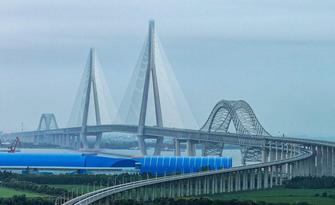
China has opened the Chantai Yangtze River Bridge, now the world’s longest cable‑stayed bridge with a 1,208‑meter main span. Extending 10.3 kilometers, the bridge significantly cuts travel time between Changzhou and Taizhou. Engineers addressed major challenges related to an asymmetrical design, uneven loading from rail and road configurations, and strong river currents. Solutions included adjusting cable tensions, pre‑calibrating bridge segments, and deploying intelligent tower cranes, underwater robots, and extensive sensors. The structure incorporates advanced monitoring systems, is designed to withstand natural disasters, and reflects China’s continued investment in large‑scale infrastructure along the Yangtze.

Infrastructure Engineering Bridge Construction China Development China Jiangsu Province Yangtze River Jiangsu transport department CCTV Qin Shunquan Li Zhen Ma Zenggang
Style rédactionnelFactuel

Neutral, fact-focused reporting on engineering details and project development.

Optics Over Power: Trump’s Elusive Quest for the Nobel Peace Prize

Basis Point Insight 10 oct. 2025 English

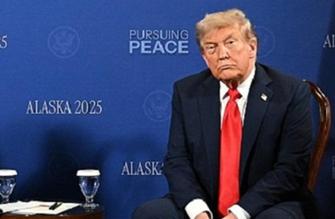
The Nobel Committee awarded María Corina Machado the Peace Prize, rejecting Donald Trump’s long-running effort to secure the honour and signaling Europe’s resolve to maintain institutional independence despite geopolitical pressure. Machado was praised for her courage in remaining in Venezuela despite threats, while the White House dismissed the decision as political. The article highlights European unease with Trump’s tariff-focused diplomacy and frames Norway’s choice as a quiet act of resistance. Trump’s claims of ending conflicts and his reliance on endorsements from Israel and Pakistan underscore the gap between his self-promotion and actual diplomatic outcomes. The decision affirms a global shift in values, contrasting Trump’s transactional view of peace with Europe’s principled approach.

Nobel Peace Prize US Politics Trump Presidency Geopolitics United States Norway Venezuela Norwegian Nobel Committee White House US Government Donald Trump María Corina Machado
Style rédactionnelInterprétatif

The text contains strong subjective framing, clear evaluative language, and critical interpretation of Trump’s actions while still referencing factual events.

Contexte politiqueCentre gauche

The text expresses criticism of Trump from a perspective valuing multilateralism, institutional independence, and moral leadership.

Japan’s First Woman PM Faces Big Tests, And India Has a Stake in the Outcome

Basis Point Insight 7 oct. 2025 English

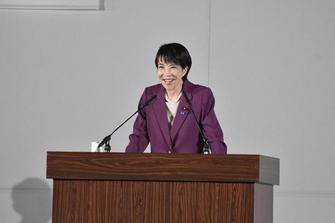
Sanae Takaichi’s rise as Japan’s first female prime minister signals major shifts in domestic politics and foreign policy, with implications for India, the US, and China. Known for conservative and nationalist positions, she faces challenges including economic stagnation, demographic decline, and navigating factional LDP politics. India anticipates strengthened cooperation on technology, defence, and investment under the existing New Vision Partnership. Her strategic alignment with India and the US contrasts with rising tensions with China, especially on defence and maritime issues. Takaichi is expected to review aspects of the recent US–Japan investment agreement while reinforcing Japan’s strategic autonomy. Her government is likely to enhance deterrence capabilities, tighten scrutiny of Chinese economic influence, and accelerate defence and technology partnerships across the Indo-Pacific.

Japanese Politics India–Japan Relations China–Japan Relations US–Japan Relations Japan India China Liberal Democratic Party Quadrilateral Security Dialogue (Quad) Chinese Foreign Ministry Sanae Takaichi Narendra Modi
Style rédactionnelInformatif

Primarily factual political analysis with limited subjective commentary.

Contexte politiqueCentre

Analytical coverage of geopolitical alignments without clear partisan framing.

Nepal in Crisis

Basis Point Insight 9 sept. 2025 English

Nepal faces a major political crisis marked by widespread youth‑led protests, corruption allegations, and the resignation of the prime minister amid violent unrest. Gen Z demonstrators reject traditional political parties, while questions emerge about the role of the military, opposition forces, and external influence from India and China. The situation reflects deep frustration with governance failures and uncertainty about whether the upheaval will lead to meaningful reform or repeat past cycles of instability.

Nepal protests Political crisis Youth movements Corruption Nepal India China Nepal Institute for International Cooperation and Engagement Nepalese Government Nepalese Military Pramod Jaiswal Saibal Dasgupta
Style rédactionnelÉquilibré

Analytical framing with subjective descriptions but focused on political events.

Contexte politiqueCentre

Describes political unrest without endorsing any ideological position.

Nepal Burns, What Do the Smoke Signals Mean for Delhi?

BasisPoint Insight 9 sept. 2025 English

Mass protests led by Nepal’s Gen Z have forced the resignation of Prime Minister K. P. Oli and President Ram Chandra Poudel, creating a political vacuum as the Nepali parliament faces dissolution. Demonstrations driven by anger over corruption, unemployment, and restrictions on free expression have turned violent, leading to 22 deaths and widespread arson. Army Chief Ashok Raj Sigdel has refrained from using force against protestors, drawing comparisons to the Bangladesh Army’s response during the 2024 Dhaka unrest. Analysts debate whether the movement is spontaneous or influenced by political interests, though some argue it is driven by widespread youth rejection of all traditional leaders. Oli’s departure raises questions about Nepal’s future orientation toward China and whether relations with India may shift. Emerging youth figures such as Sudan Gurung and Kathmandu mayor Balen Shah are gaining prominence, though concerns remain that young protest leaders may eventually lose influence as happened in Bangladesh. The army faces a crucial decision between facilitating democratic transition or seizing power, though public sentiment strongly opposes military rule, and the movement shows no significant support for restoring the monarchy.

Nepal political crisis Youth protests India–Nepal relations Nepal India Bangladesh Nepali Army Bangladesh Army Nepal Institute of International Cooperation and Engagement Bangladesh Nationalist Party Jamaat-e-Islami Ashok Raj Sigdel
Style rédactionnelÉquilibré

Provides analytical commentary mixed with factual reporting about political developments.

Contexte politiqueCentre

Analytical, fact-driven discussion of political unrest without overt ideological framing.

Can India Win Back Chinese Tourists—And a Slice of Their $251B Spend?

The Quint 30 juil. 2025 English

India’s decision to resume tourist visas for Chinese visitors aims to boost tourism revenue and rebuild trust amid strained bilateral relations. With Chinese travellers representing the world’s highest tourism spenders, the move follows diplomatic talks between India’s external affairs minister and his Chinese counterpart. Despite regional competitors capturing larger shares of Chinese tourism, India faces challenges including safety perceptions, harassment incidents, and inadequate infrastructure. Strengthening collaboration with major Chinese travel agencies, improving marketing, ensuring tourist safety, and enhancing cultural offerings such as Chinese cuisine are recommended. The initiative is also linked to broader political efforts, including assessing domestic reactions before encouraging Chinese investment.

India-China relations Tourism Foreign policy India China South Asia India Tourism Indian government Chinese government Global Times Sun Wukong S Jaishankar
Style rédactionnelInterprétatif

Clearly positioned as an opinion piece with subjective analysis and evaluative language, though supported by factual context.

Contexte politiqueCentre

Discusses diplomatic engagement and tourism policy without clear partisan leaning; analytical rather than ideological.

When Drones Dare to Dump Hellfire

The Quint 13 mai 2025 English

The article discusses the recent use of drones in the India-Pakistan conflict, highlighting India's strategic use of drones and air defense systems against Pakistani drone incursions. It emphasizes the role of various Indian and foreign companies in drone production and the potential for further collaboration. The piece also critiques Pakistan's use of drones against civilian populations and contrasts the technological capabilities of both nations. The author suggests that India should enhance its indigenous drone manufacturing capabilities, drawing comparisons with Pakistan's advancements.

India-Pakistan Conflict Drone Warfare India Pakistan China Indian Armed Forces Pakistan Armed Forces NESCOM Global Industrial and Defence Solutions Saibal Dasgupta Baykar Alpha Design Technologies
Style rédactionnelInterprétatif

The article presents a subjective analysis of drone warfare between India and Pakistan, with personal opinions and interpretations.

Contexte politiqueCentre

The article discusses military strategies and defense capabilities without a clear political bias.

China Allows Construction to Resume of High-Rise Stopped for Last Decade

Engineering News-Record 3 mai 2025 English

China has allowed the resumption of construction on the 117-story skyscraper in Tianjin, halted for nearly a decade. Originally named Goldin Finance 117, the project faced financial issues following a stock market crash. The building, now under a state-owned company, BGI Engineering Consultants, aims for completion by 2027. The skyscraper, featuring a reinforced-concrete core and steel framing, will include luxury apartments, a hotel, and businesses. This decision aligns with China's efforts to stabilize its real estate market amid economic challenges. The project may not retain its original name or usage plan, and it faces structural challenges due to Tianjin's seismic activity.

Construction Real Estate Economic Slowdown Tianjin China Hong Kong National Development Reforms Commission Ministry of Housing P&T Group Qiao Shitong Goldin Properties Holdings BGI Engineering Consultants
Style rédactionnelÉquilibré

The article presents a mix of factual reporting and expert opinions on the construction resumption.

Voir les 74 réalisations avec un compte gratuit

Recruter Message
×

Inscrivez-vous pour envoyer un message à Saibal

Vous avez déjà un compte ? Se connecter
Vous cherchez du travail ? S'inscrire en tant que journaliste
Vérifiez votre e-mail pour finaliser l'inscription
Nous venons d'envoyer un e-mail à . Veuillez consulter votre boîte de réception et cliquer sur le lien pour vérifier votre adresse e-mail et finaliser votre inscription. Si vous ne voyez pas l'e-mail, pensez à vérifier votre dossier spam ou courrier indésirable.
Vous n'avez pas reçu l'e-mail ?

Inscrivez-vous pour débloquer les profils

Vous avez déjà un compte ? Se connecter
Vous cherchez du travail ? S'inscrire en tant que journaliste
Vérifiez votre e-mail pour finaliser l'inscription
Nous venons d'envoyer un e-mail à . Veuillez consulter votre boîte de réception et cliquer sur le lien pour vérifier votre adresse e-mail et finaliser votre inscription. Si vous ne voyez pas l'e-mail, pensez à vérifier votre dossier spam ou courrier indésirable.
Vous n'avez pas reçu l'e-mail ?