Éditeurs et diffuseurs Équipes de marketing de contenu Équipes RP et communication Équipes risques et renseignement Journalistes et professionnels des médias Veille médias Tarifs

À propos de Samanachan

Thailand.Samanachan est journaliste indépendant·e basé·e dans la région nord-est de la Thaïlande, rendant compte des enjeux locaux du point de vue des populations locales. Les sujets traités incluent les droits humains, l'environnement, le développement et la politique. En 2023, Thailand.Samanachan a reçu une EJN CCMP Mekong Virtual Fellowship pour couvrir à distance la conférence COP28 à Dubaï.

Langues
thaï
Vu dans
Coconuts Chinadialogue Prachataienglish Eco Business Thethirdpole

Travaux 5

The problem with potash: Thailand’s salt-encrusted fields

Eco-Business 29 déc. 2023 English

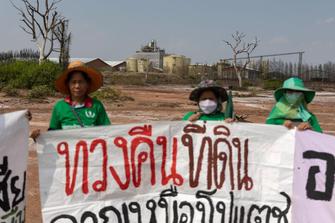
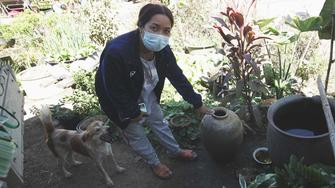
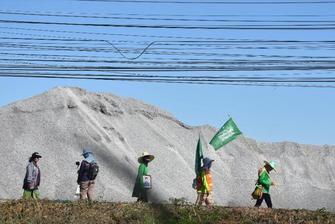
In Thailand's Isan region, local communities are opposing potash mining due to environmental concerns such as land and water salinisation. The China Mingda Potash Corporation and Thai Kali Company have faced resistance for their mining activities, with the only active mine in Dan Khun Thot causing significant environmental damage. Despite this, the Thai government is interested in potash mining to reduce fertilizer imports and support the electric vehicle industry with sodium-ion batteries developed by Khon Kaen University. The government's '30@30' vision aims for 30% of vehicles to be electric by 2030, potentially increasing demand for potash as a source of sodium.
Environmental Issues Mining Industry Agriculture Isan, Thailand Dan Khun Thot, Thailand Wanon Niwat, Thailand Khon Kaen University Thai government Wanon Niwat Preservation Group Environment and Pollution Control Office Thanawan Kainok Santiparp Siriwatthanaphaiboon
Style rédactionnelInformatif

Primarily factual reporting with some analysis
The problem with potash: Thailand’s salt-encrusted fields

China Dialogue 1 avr. 2023 English

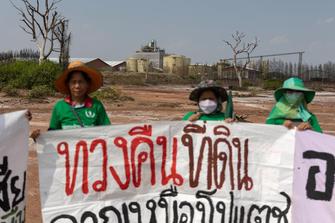
Thanawan Kainok and local communities in north-east Thailand are opposing potash mining due to severe environmental impacts, including land salinisation and water contamination. The China Mingda Potash Corporation and Thai Kali Company face strong resistance from groups like the Wanon Niwat Preservation Group and the Dan Khun Thot District Preservation Group. Despite the Thai government's push for potash mining to reduce fertiliser imports and support the development of sodium-ion batteries for electric vehicles, experts argue that current rock salt supplies are sufficient. The debate highlights the tension between economic development and environmental sustainability.

Environmental Impact Mining Agriculture Electric Vehicles Thailand China Isan Thai Government Khon Kaen University Wanon Niwat Preservation Group Dan Khun Thot District Preservation Group The Project for Public Policy on Mineral Resources
Style rédactionnelÉquilibré

Balanced reporting with both factual information and subjective statements from various stakeholders.

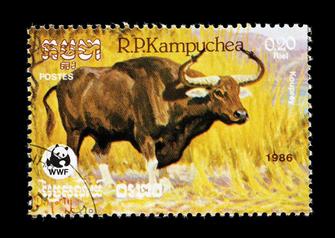
The kouprey: on the trail of Cambodia’s elusive wild cattle

Dialogue Earth 19 sept. 2022 English

The kouprey, Cambodia's national mammal, has not been definitively sighted for over half a century and is considered 'most likely to be extinct' by the IUCN. Researchers from re:Wild and the Leibniz Institute for Zoo and Wildlife Research are conducting a study to identify potential kouprey habitats. The kouprey, a symbol of Cambodian culture, faces threats from hunting and snaring, which also endanger other wild cattle species in Indochina. Conservationists argue that declaring the kouprey extinct could galvanize efforts to protect other endangered species in the region.

Wildlife Conservation Endangered Species Biodiversity Cambodia Laos Vietnam International Union for Conservation of Nature re:Wild Leibniz Institute for Zoo and Wildlife Research Fauna & Flora International WWF Andrew Tilker
Style rédactionnelÉquilibré

Balanced between factual reporting and subjective interpretation, especially regarding the potential extinction of the kouprey and its implications.

The problem with potash: Thailand’s salt-encrusted fields

Coconuts Bangkok English

In Thailand's Isan region, local communities are opposing potash mining due to environmental concerns such as land and water salinisation. The China Mingda Potash Corporation and Thai Kali Company have faced resistance for their mining activities, which have led to soil degradation and water contamination. Despite the potential for potash to support Thailand's electric vehicle battery industry, experts and activists question the need for new mines and emphasize the importance of managing environmental impacts. The Thai government's '30@30' vision aims for 30% electric vehicles by 2030, potentially increasing demand for sodium used in batteries. However, the current rock salt mining is deemed sufficient for the battery industry's needs, and there are calls for a more responsible approach to resource management and pollution control.

Environmental Issues Mining Industry Agriculture Isan, Thailand Sakon Nakhon, Thailand Nakhon Ratchasima, Thailand Khon Kaen University Wanon Niwat Preservation Group Environment and Pollution Control Office Thanawan Kainok Santiparp Siriwatthanaphaiboon Krue Kainok
Style rédactionnelInformatif

Primarily factual reporting with some analysis
Fermented Fish and the Mekong: A Tradition in Peril

Prachataienglish English

The article discusses the decline of a traditional culinary practice in Thailand's northeast due to the construction of dams on the Mekong River. Fermented fish, once a staple and symbol of prosperity, is now a fading tradition as fish populations plummet, affecting the ecosystem and local livelihoods. Kankong Junlong, a resident of Ban Muang, shares her experience of how the dams have led to a decrease in fish, halting the production of fermented fish. The Pak Yam Community Economy Group, known for its fermented fish, has stopped production due to the scarcity of fish. The article highlights the broader implications of dam construction on food security, economic activities, and cultural practices. It also touches on the community's efforts to adapt, such as purchasing farm-raised fish to continue the tradition of fermented fish production.

Culinary Traditions Environmental Impact Economic Challenges Cultural Heritage Thailand Southeast Asia Mekong River Region Pak Yam Community Economy Group Chiang Mai University United Nations
Recruter Message
×

Inscrivez-vous pour envoyer un message à Samanachan

Vous avez déjà un compte ? Se connecter
Vous cherchez du travail ? S'inscrire en tant que journaliste
Vérifiez votre e-mail pour finaliser l'inscription
Nous venons d'envoyer un e-mail à . Veuillez consulter votre boîte de réception et cliquer sur le lien pour vérifier votre adresse e-mail et finaliser votre inscription. Si vous ne voyez pas l'e-mail, pensez à vérifier votre dossier spam ou courrier indésirable.
Vous n'avez pas reçu l'e-mail ?

Inscrivez-vous pour débloquer les profils

Vous avez déjà un compte ? Se connecter
Vous cherchez du travail ? S'inscrire en tant que journaliste
Vérifiez votre e-mail pour finaliser l'inscription
Nous venons d'envoyer un e-mail à . Veuillez consulter votre boîte de réception et cliquer sur le lien pour vérifier votre adresse e-mail et finaliser votre inscription. Si vous ne voyez pas l'e-mail, pensez à vérifier votre dossier spam ou courrier indésirable.
Vous n'avez pas reçu l'e-mail ?