Hire journalists

Publishers & Broadcasters Content Marketing Teams PR & Comms Teams Risk & Intelligence Teams Find journalists Media Monitoring Pricing

For journalists

Journalism jobs Pay rates Create your free profile

About Sara

Languages
English
Seen in
Lobelog ECFR Oxfordenergy Bourse & Bazaar Foundation The Hill Atlanticcouncil

Work 16

The War and the New Energy Narrative: How Minerals Redefine the Middle East’s Strategic Position

Atlantic Council 9 Oct 2026 English

The Middle East crisis is influencing investment narratives before the physical energy system has fundamentally changed, risking capital diversion from infrastructure the world still relies on. The Western Hemisphere can add supply and resilience but cannot replace the Middle East; Europe remains exposed to global prices despite reducing Russian gas dependence, while Asian importers are especially concerned about access to Middle Eastern oil and LNG. The region should protect export infrastructure while using affordable energy, mineral resources, capital, and geography to expand mineral processing, manufacturing, AI infrastructure, and other energy-intensive industries. A broader global minerals partnership could connect producers, processors, consumers, and technology markets, improve transparency, and diversify supply chains. The author argues that resilience depends on addition and cooperation across strong regional centers, not replacement or concentration.

Middle East energy security Critical minerals Energy markets and investment Supply chain resilience Energy transition Industrial development Middle East United States Europe Atlantic Council European Union Saudi Arabia
Reporting styleInterpretive

Argues for a strategic approach that industrializes the Middle East and advocates diversification, cooperation, and investment rather than replacement.


OIES Podcast – Nuclear Energy in the Global Energy Landscape

Oxford Energy Institute 20 Feb 2024 English

James Henderson and Sara Vakhshouri discuss the role of nuclear power in the energy transition, focusing on the nuclear fuel cycle, the dominance of Russia and China in the industry, and efforts to diversify away from Russian dependence, especially since the Ukraine war. They explore the development of small modular reactors, fuel waste disposal, nuclear energy's role in developing countries, and the boost from COP 28. Sara Vakhshouri also highlights the world's reliance on Russia for medical isotopes.

Energy Transition Nuclear Energy Russia China Ukraine James Henderson Sara Vakhshouri
Reporting styleFactual

The text is a factual discussion of nuclear energy in the context of global energy transition.

Nuclear energy in the global energy landscape: advancing sustainability and ensuring energy security?

Oxford Energy Forum 19 Feb 2024 English

In the wake of the Russia-Ukraine war, energy security has become a critical global issue, highlighting the vulnerability of energy supply chains. The European Union and other regions are looking to nuclear power as a secure energy source to address these concerns, especially in light of the global stocktake agreement at COP28. The Oxford Energy Forum's latest issue examines nuclear energy's role in the energy transition, covering arguments for and against its use, technological advancements such as SMRs and nuclear fusion, regional adoption experiences, and the geopolitics of nuclear energy and medical isotopes.

Energy Security Nuclear Energy Sustainability European Union Global COP28 SMRs Nuclear Fusion
Reporting styleBalanced

Balanced discourse with arguments for and against nuclear power

Trump recognizes that domestic mining is a national security issue

The Hill 24 Oct 2023 English

President Trump's executive order aims to increase domestic critical mineral production, framing it as a national security measure. The order activates the Defense Production Act to boost mining and processing of essential minerals, addressing U.S. dependency on foreign sources, particularly China. It establishes the National Energy Dominance Council to expedite mining permits and prioritize mineral-rich lands. The directive seeks to build a resilient domestic mineral supply chain, crucial for energy security and military strength, while acknowledging potential environmental trade-offs. The move signals America's commitment to securing its industrial future amid geopolitical competition.

National Security Domestic Mining Geopolitical Competition United States China Japan National Energy Dominance Council Defense Production Act Donald Trump Dr. Sara Vakhshouri
Reporting styleInterpretive

The article presents a subjective analysis of Trump's executive order, emphasizing its strategic importance and potential implications.

Political contextRight

The article supports Trump's executive order as a strategic move for national security.

DOGE should use AI to fix environmental review

Atlantic Council 1 Oct 2023 English

The article advocates for the Department of Government Efficiency (DOGE), led by Elon Musk, to utilize AI to streamline the National Environmental Policy Act (NEPA) processes, which are currently seen as cumbersome and inefficient. It highlights the potential of AI to reduce bureaucratic delays and improve public engagement in environmental reviews. The Bureau of Ocean Energy Management's initiative to use AI for environmental impact statements is cited as a positive example. The article suggests that DOGE, in collaboration with the White House Council on Environmental Quality, could modernize NEPA, facilitating renewable energy growth and better environmental impact understanding.

Artificial Intelligence Environmental Policy Government Efficiency United States Department of Government Efficiency Bureau of Ocean Energy Management White House Council on Environmental Quality Elon Musk Richard Nixon William Yancey Brown Google's NotebookLM Google Gemini AI
Reporting styleInterpretive

The article presents a subjective view on how AI can improve government efficiency, particularly in environmental reviews.

Political contextCentre-right

The article discusses a Trump administration initiative and suggests reforms that align with conservative values of efficiency and reduced bureaucracy.

Iraq: Implementing a Way Forward

Atlantic Council 27 Apr 2022 English

The report 'Iraq: Implementing a Way Forward' by Atlantic Council staff and fellows provides recommendations to improve political, social, economic, and security conditions in Iraq. It is based on two years of engagement with experts through a US-Europe-Iraq Track II Dialogue. The report suggests fostering legitimacy, economic reform, strengthening national identity, mobilizing youth, establishing a monopoly on the use of force, and optimizing international assistance.

Iraq's Stability Economic Growth Political Reform Iraq United States Europe Atlantic Council Konrad-Adenauer-Stiftung DT Institute
Reporting styleFactual

The report is based on research and policy recommendations.

Iran’s strategy to tackle sanctions: pre-selling oil

Atlantic Council 8 Jul 2019 English

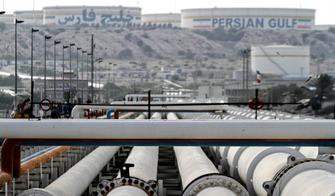
Iran is attempting to circumvent U.S. sanctions by pre-selling oil to willing countries in exchange for investment, goods, or services. This strategy aims to maintain Iran's market share and leverage while under sanctions. The U.S. ceased issuing waivers for Iranian oil purchases, causing Iran's oil production and exports to drop significantly. Iran's lost market share has been largely absorbed by other OPEC members and U.S. production. Pre-selling oil could help Iran regain market share post-sanctions and weaken the impact of U.S. sanctions. Potential buyers could include Russia, India, and China, although their current relations with the U.S. may complicate such deals. The EU's involvement through INSTEX could support the JCPOA and reduce the sanctions' effectiveness, but private businesses may be reluctant to engage until sanctions are lifted.

Sanctions Oil Trade International Relations Iran United States European Union INSTEX OPEC Eshaq Jahangiri
Reporting styleInformative

Mostly factual reporting with some analysis

Iran oil exports: 8 waivers and the OPEC meeting

European Council on Foreign Relations 10 Dec 2018 English

The Trump administration reimposed sanctions on Iran's energy sector but issued eight waivers to prevent a spike in oil prices, allowing limited imports from Iran by countries like China and India. This led to a drop in oil prices and expectations of oversupply. However, Iran's oil exports are unlikely to exceed 1.1-1.3 million barrels per day due to factors like limited shipping capacity and payment issues. The OPEC meeting resulted in production cuts by Saudi Arabia and Russia, while Iran was excluded from cuts due to existing sanctions. The overall impact on Iran's economy could be significant if oil prices remain low.

Iran Oil Exports US Sanctions OPEC Meeting Iran United States China OPEC National Iranian Tanker Company Donald Trump Saudi Aramco China National Petroleum Company National Iranian Oil Company
Reporting styleBalanced

Balanced analysis with some subjective interpretations

Political contextCentre-right

Discusses US sanctions and market impacts with a focus on economic and geopolitical factors

Can Iran weather the oil-sanctions storm?

European Council on Foreign Relations 1 Oct 2018 English

The US administration is intensifying economic pressure on Iran through sanctions aimed at curtailing its oil exports, which significantly contribute to state revenue. These measures are expected to impact global energy markets and potentially raise oil prices. The Trump administration's approach is notably harsher than previous sanctions, aiming to reduce Iran's oil exports to less than 1 mb/d by November. Major oil producers like Saudi Arabia and the UAE are increasing supply to substitute Iranian oil, but this could weaken global energy security. The sanctions have already caused a decline in Iranian oil exports, and further reductions are anticipated. Despite the economic challenges, Iran may rely on strategic patience and support from countries like China, Russia, and some European nations to weather the sanctions. However, the Iranian economy remains vulnerable, and aggressive responses from Iran could escalate tensions in the region.

US Sanctions Iranian Oil Exports Global Energy Markets Iran United States China Trump Administration Obama Administration European Union OPEC National Iranian Oil Company Donald Trump
Reporting styleBalanced

Balanced analysis with some subjective interpretations

Political contextCentre-left

Critiques the Trump administration's approach while showing some support for multilateral agreements like the JCPOA

Can Iran Weather the Oil Sanctions Storm?

Bourse & Bazaar Foundation 21 Sep 2018 English

The US administration is intensifying economic pressure on Iran through sanctions aimed at curtailing its oil exports, which could significantly impact Iran's economy and global energy markets. The new sanctions are stricter than those under the Obama administration, aiming to reduce Iran's oil exports to less than 1 million barrels per day. Major oil producers like Saudi Arabia and the UAE are increasing their supply to substitute Iranian oil, but this could weaken global energy security. The sanctions have already caused a decline in Iranian oil exports, and further reductions are expected. The situation is complicated by the actions of other countries like China and India, which may continue importing Iranian oil. The Iranian government may respond aggressively if the sanctions severely impact its economy, potentially disrupting global oil shipments and causing chaos in energy markets.

Sanctions Oil Exports Global Energy Markets Iran United States China US administration European Union OPEC National Iranian Oil Company Donald Trump Hassan Rouhani
Reporting styleBalanced

Balanced analysis with some subjective interpretations

Political contextCentre-right

Criticizes the Trump administration's sanctions but acknowledges the complexity of the situation

See all 16 pieces of work with a free account

Other journalists in Washington

Hire Message
×

Sign up to message Sara

Already have an account? Log in
Looking for work? Register as a Journalist
Verify your email to complete registration
We’ve just sent an email to . Please check your inbox and click the link to verify your email address and complete your registration. If you don’t see the email, be sure to check your spam or junk folder.
Didn’t receive the email?

Sign up to unlock profiles

Already have an account? Log in
Looking for work? Register as a Journalist
Verify your email to complete registration
We’ve just sent an email to . Please check your inbox and click the link to verify your email address and complete your registration. If you don’t see the email, be sure to check your spam or junk folder.
Didn’t receive the email?