Éditeurs et diffuseurs Équipes de marketing de contenu Équipes RP et communication Équipes risques et renseignement Journalistes et professionnels des médias Veille médias Tarifs

À propos de Sarwar

Sarwar Hossain est journaliste basé à Dacca, au Bangladesh. Il travaille actuellement pour une chaîne d'information importante nommée Channel 24. Il a rejoint les médias audiovisuels en 2011.

Langues
bengali anglais
Vu dans
DEV Community Southasiamonitor Hindustan Times Businesspostbd Kathmandupost Onlinelibrary Theconversation Downtoearth Europe Solidaire

Travaux 17

Ganga Waters Treaty at Crossroads: Why a Resilient River Basin Is Vital for India-Bangladesh Ties

Down To Earth 23 juin 2026 English

The Ganges Water Treaty between India and Bangladesh is due to expire in December 2026 amid political strain, climate pressures and rising demand for water. The treaty has helped stabilise relations, but the article argues that negotiations must look beyond allocation to the river basin’s ecological resilience. Reduced dry-season flows, pollution, altered flooding and sediment disruption are worsening salinity, threatening agriculture, fisheries, wetlands, biodiversity and the Sundarbans. The Farakka Barrage is linked to upstream sediment build-up and flood risk, downstream sediment loss, and barriers to fish migration. Research on a proposed “safe operating space” found that four of ten rivers in the Bangladesh Delta exceeded ecological limits, with the others under caution. The author urges India and Bangladesh to use scientific evidence, coordinate across sectors and protect healthy river flows as part of treaty renewal.

Ganges Water Treaty India-Bangladesh Relations Transboundary River Governance Climate Change and River Basin Resilience River Ecosystems and Biodiversity Water Security Ganges-Brahmaputra-Meghna Basin India Bangladesh Government of India Government of Bangladesh Bangladesh National Party
Style rédactionnelInterprétatif

Advocates for ecological safeguards and a resilient river basin alongside water-sharing diplomacy.

Contexte politiqueCentre

Focuses on cross-border water cooperation and ecological resilience without endorsing a party or ideological position.

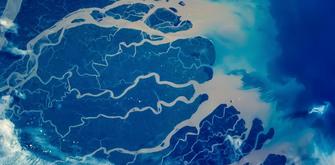
A Social-Ecological Systems Perspective Is Needed to Deal with Transboundary Water Conflicts

Hindustan Times 4 juin 2026 English

South Asia’s shared rivers face growing pressure from climate change, rising water demand, pollution and upstream infrastructure. With the 1996 Ganges Water Treaty due to expire in December 2026, India and Bangladesh have an opportunity to update water-sharing arrangements to account for ecological limits, changing flows and climate risks. Reduced dry-season flows and rising salinity threaten agriculture, fisheries, ecosystems and coastal areas, while infrastructure such as the Farakka barrage and China’s planned Brahmaputra mega-dam heighten cross-border concerns. Greater transparency, real-time monitoring and science-based cooperation could strengthen resilience and help keep shared rivers from becoming sources of regional tension.

Transboundary Water Conflicts Climate Change River Governance Water Security India-Bangladesh Relations South Asia India Bangladesh China Intergovernmental Panel on Climate Change University of Glasgow Md Sarwar Hossain
Style rédactionnelInterprétatif

An explicitly argued perspective advocating more adaptive, science-based cooperation on shared rivers.

Contexte politiqueCentre

Focuses on cooperative regional governance and climate resilience without endorsing a political party or ideological position.

Strain in the Bangladesh delta

Kathmandu Post 13 juil. 2025 English

Four of Bangladesh’s major rivers, including the Ganges and Old Brahmaputra, are flowing below levels needed to sustain ecological and human systems, placing food security, fisheries and the Sundarbans mangrove forest at risk. Upstream water extraction, hydropower dams and climate-driven pressures are degrading river health, increasing salinity and threatening biodiversity such as hilsha fish and freshwater dolphins. Existing treaties, including the India-Bangladesh Ganges agreement, have proven insufficient. Sustainable management will require stronger transboundary cooperation among countries across the Himalayan basin, along with tax-based water-sharing frameworks, ecological restoration and long-term climate resilience measures to keep river systems within their safe operating space.

Water scarcity Climate change Transboundary rivers Environmental degradation Bangladesh India Nepal China Pakistan Mekong River Commission
Style rédactionnelInformatif

Analysis grounded in research with limited subjective language, though includes interpretive assessments of risks and policy needs.

Contexte politiqueCentre

Focuses on evidence-based environmental policy and cross-border cooperation without ideological framing.

The Bangladesh delta is under a dangerous level of strain, analysis reveals

The Conversation 10 juil. 2025 English

Four major rivers in the Bangladesh delta—Ganges, Old Brahmaputra, Gorai and Halda—have fallen below their safe operating space, jeopardizing water security, food production, fisheries and the world’s largest mangrove forest. Urban expansion, agricultural water demand, climate change and upstream hydropower and irrigation projects are intensifying the strain. Reduced flows, particularly linked to upstream extraction and the Farakka barrage in India, have increased salinity, harmed fisheries and threatened key ecosystems. Existing political agreements such as the 1996 Ganges treaty have proven insufficient. Addressing the crisis will require transboundary cooperation involving multiple countries, fair water-sharing frameworks, ecological restoration and climate resilience measures. Securing sustainable river flows is essential to protecting livelihoods and regional environmental stability.

Water scarcity Climate change Environmental degradation Bangladesh India Nepal Mekong River Commission Government of Bangladesh Government of India
Style rédactionnelInformatif

Evidence-based analysis with some interpretive assessment of risks and policy needs.

The Bangladesh delta is under a dangerous level of strain, analysis reveals

Europe Solidaire 9 juil. 2025 English

Four major rivers in Bangladesh, including the Ganges and Old Brahmaputra, no longer meet minimum water flow requirements needed to support ecosystems and livelihoods, while six others are nearing critical thresholds due to upstream water extraction, hydropower development and expanding irrigation. Declining flows and rising salinity are harming fisheries, agriculture and the world’s largest mangrove forest, threatening regional climate stability and biodiversity. Existing political agreements, such as the 1996 Ganges water-sharing treaty, have proved insufficient as upstream extraction continues to strain the system. Transboundary cooperation, fair water-sharing mechanisms and ecosystem restoration are identified as essential to maintaining resilience and securing sustainable water resources for nearly 700 million people dependent on the river systems.

Water scarcity Climate change Environmental degradation Bangladesh India Nepal Stockholm University Mekong River Commission Governments of India and Bangladesh Md Sarwar Hossain Emre Akkoyun
Style rédactionnelInformatif

Primarily evidence-based analysis with limited interpretive commentary

How to Exclude a Route from Global Prefix & Versioning in NestJS

Dev.to 29 juin 2025 English

In NestJS applications, global route prefixes and versioning are commonly used, but there are scenarios where certain endpoints, like a payment gateway callback, need to be excluded from these constraints. The article provides a solution to expose routes without the global prefix by excluding the route from the global prefix and marking it as version-neutral. This allows specific routes to be accessed directly while maintaining the versioning for other routes.

NestJS API Development
Style rédactionnelFactuel

The article provides a factual guide on how to configure NestJS routes.

Unleashing the Potential of useBlocker Hook in React Router

Dev.to 13 mai 2024 English

The useBlocker hook in React Router is highlighted as a valuable tool for preventing accidental data loss during navigation transitions, enhancing user experience. Although deprecated in recent versions, similar functionality can be achieved using JavaScript's window object and the beforeunload event listener. This approach ensures seamless and intuitive web experiences, prioritizing user satisfaction and data integrity.

React Development Web Development User Experience useBlocker Hook React Router JavaScript's window object
Style rédactionnelÉquilibré

The text provides a balanced view on the useBlocker hook, discussing its benefits and alternatives.

Easy access form value in Nextjs/React with TS

Dev.to 16 mars 2024 English

The article discusses the benefits of using TypeScript for handling form submissions in React or Next.js applications. It emphasizes the ease and elegance of TypeScript in extracting form field values, enhancing developer experience, and ensuring type safety. The author provides code examples to demonstrate the simplicity and efficiency of this approach.

Web Development TypeScript React Next.js
Style rédactionnelOpinion

complete opinion

Everyday Security: Our Thoughts for the New Year

LinkedIn 14 déc. 2023 Bengali

MD Sarwar Hossain addresses various social and political issues in Bangladesh, including the generational gap in respect and understanding, the need to capitalize on the population dividend, language sensitivity, the dangers of self-diagnosing medical conditions online, construction worker safety, political challenges and expectations for the upcoming election, the importance of social history in understanding the liberation war, the evolving definition of intellectuals, and changing reading habits among the youth.

Social Issues Healthcare Politics Labor Rights Cultural Heritage Bangladesh Awami League BNP Sheikh Hasina Prof. Dr. Md. Habibullah Talukder Abul Kashem Fazlul Haq Muntasir Mamun
Style rédactionnelÉquilibré

Contains a mix of factual reporting and the author's analysis or perspective

Contexte politiqueCentre gauche

The text discusses political parties and their actions without clear bias but mentions challenges to democracy.

‘Third World’ and ‘Developed Nation’: Outdated Terms in a Politically Conscious Era

Southasiamonitor 5 avr. 2023 English

The article critiques the use of terms like 'Third World' and 'Developed Nation', suggesting they are derogatory and ethnocentric. It discusses the emergence of the terms 'Global South' and 'Global North', originally coined by Carl Oglesby in 1969, as politically neutral alternatives. The 'Global South' includes Asia, Africa, Latin America, and Oceania, regions that are developing economically and politically. The article highlights China's growing influence in the Global South, particularly through the Belt and Road Initiative. It also touches on the historical colonial exploitation of the Global South and the ongoing geopolitical interests of Western countries in these regions. The author argues that as long as there is an imbalance of power, money, knowledge, and technology, terms like 'Global North' and 'Global South' will remain relevant. The piece concludes by emphasizing the need for a shared approach to building a better world, especially in the face of climate change and religious terrorism.

Global North and Global South Colonial Exploitation Economic Development Political Hegemony Global Asia Africa Latin America Oceania

Inscrivez-vous gratuitement pour voir les 17

Recruter Message
×

Inscrivez-vous pour envoyer un message à Sarwar

Vous avez déjà un compte ? Se connecter
Vous cherchez du travail ? S'inscrire en tant que journaliste
Vérifiez votre e-mail pour finaliser l'inscription
Nous venons d'envoyer un e-mail à . Veuillez consulter votre boîte de réception et cliquer sur le lien pour vérifier votre adresse e-mail et finaliser votre inscription. Si vous ne voyez pas l'e-mail, pensez à vérifier votre dossier spam ou courrier indésirable.
Vous n'avez pas reçu l'e-mail ?

Inscrivez-vous pour débloquer les profils

Vous avez déjà un compte ? Se connecter
Vous cherchez du travail ? S'inscrire en tant que journaliste
Vérifiez votre e-mail pour finaliser l'inscription
Nous venons d'envoyer un e-mail à . Veuillez consulter votre boîte de réception et cliquer sur le lien pour vérifier votre adresse e-mail et finaliser votre inscription. Si vous ne voyez pas l'e-mail, pensez à vérifier votre dossier spam ou courrier indésirable.
Vous n'avez pas reçu l'e-mail ?