Journalisten engagieren

Verlage & Sender Content-Marketing-Teams PR- & Kommunikationsteams Risiko- & Intelligence-Teams Journalisten finden Medienbeobachtung Preise

Für Journalisten

Stellenangebote im Journalismus Honorare und Tarife Kostenloses Profil erstellen

Über Shahram

Shahram Rafizadeh ist Senior-Multimedia-Journalist und Leiter des Redaktionsteams mit über 25 Jahren Erfahrung in der Produktion, Redaktion und Betreuung von Nachrichten-, digitalen und Social-Media-Inhalten mit Schwerpunkt Iran für persischsprachige Zielgruppen. Nachweisliche Erfolge in der Führung redaktioneller Teams, der Zuweisung und Überprüfung von Inhalten sowie in der Gewährleistung von Genauigkeit und Qualität. Fundierter Hintergrund in politischer Berichterstattung, Interviewführung, Line-Producing und redaktionellen Standards.

Sprachen
Persisch Englisch
Gesehen in
صدای آمریکا ARTICLE 19 Independentpersian

Arbeiten 5

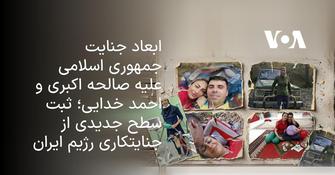
Dimensions of the Islamic Republic’s crime against Saleheh Akbari and Ahmad Khodayee; a new level of brutality by the Iranian regime

VOA Persian 22. Apr. 2026 Persian

Saleheh Akbari was killed during a security forces raid after she and her husband, Ahmad Khodayee, helped injured protesters, with authorities allegedly desecrating her body and subjecting Ahmad to intimidation and psychological torture. Officials denied responsibility, framing the death as suicide and attacking the couple’s credibility. Human rights organizations have documented systematic sexual assault and torture by security forces, and the case is presented as evidence of escalating brutality by the Iranian regime.
Human rights abuses Iranian protests Government repression Iran Islamic Republic of Iran Iranian Judiciary Islamic Revolutionary Guard Corps Amnesty International Human Rights Watch Saleheh Akbari Ahmad Khodayee Jalal Afaghi
BerichtsstilInterpretierend

Strongly critical language and subjective framing alongside factual reporting

Politischer KontextLinks

Critique of state repression and support for human rights against authoritarian governance

Rasoul Jalili and Amn-Afzar Gostar Sharif: Architects of Internet Filtering and Shutdowns in Iran

VOA Persian 20. Apr. 2026 Persian

Documents reveal that Rasoul Jalili and the company Amn-Afzar Gostar Sharif designed and implemented Iran’s system of intelligent filtering, classified internet access, and nationwide shutdown capabilities used during protests. The leaked technical plan outlines a discriminatory internet structure enabling broad censorship and rapid disconnection from the global network, along with tools for surveillance, evidence collection, and facial recognition deployed by security agencies. Jalili’s influence spans interconnected companies involved in digital repression and his long-term role within the Supreme Council of Cyberspace. Sanctions by the U.S. and EU and his controversial tenure at Sharif University further underscore his central role in constructing Iran’s digital control architecture.

Internet censorship in Iran Digital surveillance Human rights in Iran Iran Iranian government Supreme Council of Cyberspace Islamic Revolutionary Guard Corps U.S. government European Union Rasoul Jalili Ali Khamenei Isa Zarepour
BerichtsstilInterpretierend

Contains factual reporting with strong critical and interpretive framing

Politischer KontextMitte-links

Critical of state repression, digital rights violations and censorship

Tightening the Net: Iran’s New Phase of Digital Repression

ARTICLE 19 23. Juli 2024 English

Iran is accelerating efforts to centralize control over the internet through the Supreme Council of Cyberspace as part of a broad campaign to restrict digital freedoms. Key elements of this effort include implementation of the User Protection Bill, expanding censorship, suppressing circumvention tools, and consolidating internet governance under state and military control. Recent developments since the Mahsa Jhina Amini uprising include new measures to counter VPN use, enforcement mechanisms linked to the Hijab and Chastity Bill, increased digital surveillance of women, and monetisation programs favoring pro-government influencers. ARTICLE 19 warns that despite potential shifts in political leadership, this trajectory of digital repression is expected to continue and calls on third-party governments and private actors to respond accordingly.

Digital repression Internet censorship Human rights in Iran Iran Islamic Republic of Iran Supreme Council of Cyberspace ARTICLE 19 Iranian Parliament Ali Khamenei Masoud Pezeshkian Mahsa Jhina Amini National Information Network
BerichtsstilInterpretierend

The text is largely analytical and advocacy-oriented, expressing concerns and critiques about Iran’s digital repression policies.

Politischer KontextLinks

The text advocates for civil liberties, human rights, and resistance to state repression, aligning with a pro-rights, anti-authoritarian viewpoint.

Security Scenarios of the Islamic Republic in Confronting Public Protests

Independent Persian 8. Okt. 2022 Persian

Security and intelligence agencies of the Islamic Republic have intensified psychological operations and disinformation campaigns to suppress nationwide protests in Iran. By fabricating narratives around victims, coercing families, manipulating state media, and staging forced confessions, authorities aim to disrupt public solidarity and reduce protest momentum. These tactics follow decades of similar efforts, from labeling dissidents in the 1980s to misinformation around the 1998 chain murders, the 2009 protests, and the downing of Flight PS752. The widening gap between the public and the state, particularly after the death of Mahsa Amini, has diminished the credibility of official narratives, prompting more aggressive propaganda efforts designed not only to suppress domestic dissent but also to undermine international support for the protest movement.

Iran protests Government repression State propaganda Human rights abuses Iran Tehran Middle East Islamic Republic of Iran Islamic Revolutionary Guard Corps (IRGC) Basij Judiciary of the Islamic Republic National Defense University (Iran)
BerichtsstilInterpretierend

The text contains analysis and subjective interpretation regarding state actions and propaganda, though grounded in factual events.

Politischer KontextLinks

Critical of authoritarian state structures, emphasizes human rights abuses and suppression of dissent.

Reviewing Mahsa’s Killing in the Iranian Press

Video Radio Farda 19. Sept. 2022 Persian

Journalist Shahram Rafizadeh reviews recent headlines and articles in Iranian newspapers concerning Mahsa Amini’s death.

Death of Mahsa Amini Iranian media coverage Iranian press Iran Mahsa Amini Shahram Rafizadeh
BerichtsstilInformativ

Primarily a factual review of newspaper coverage, with no clear persuasive stance in the available text.

Politischer KontextMitte

The available description reports on press coverage of Mahsa Amini’s death without expressing a discernible political position.

Engagieren Nachricht
×

Registrieren Sie sich, um Shahram eine Nachricht zu senden

Haben Sie bereits ein Konto? Anmelden
Suchen Sie Arbeit? Als Journalist registrieren
Verifizieren Sie Ihre E-Mail, um die Registrierung abzuschließen
Wir haben gerade eine E-Mail gesendet an . Bitte prüfen Sie Ihren Posteingang und klicken Sie auf den Link, um Ihre E-Mail-Adresse zu verifizieren und Ihre Registrierung abzuschließen. Falls Sie die E-Mail nicht sehen, prüfen Sie unbedingt Ihren Spam- oder Junk-Ordner.
E-Mail nicht erhalten?

Registrieren Sie sich, um Profile freizuschalten

Haben Sie bereits ein Konto? Anmelden
Suchen Sie Arbeit? Als Journalist registrieren
Verifizieren Sie Ihre E-Mail, um die Registrierung abzuschließen
Wir haben gerade eine E-Mail gesendet an . Bitte prüfen Sie Ihren Posteingang und klicken Sie auf den Link, um Ihre E-Mail-Adresse zu verifizieren und Ihre Registrierung abzuschließen. Falls Sie die E-Mail nicht sehen, prüfen Sie unbedingt Ihren Spam- oder Junk-Ordner.
E-Mail nicht erhalten?