 Contratar agora
 Enviar mensagem para Sharif
Idiomas
bengali
inglês
híndi
Costuma responder
Em alguns meses
Quer um perfil como este?
Junte-se a milhares de profissionais de imprensa que usam a journalist.net para divulgar seu trabalho e serem contratados pelos principais veículos de mídia.
Começar
Veja como funciona
Conecte-se pela Journalist.net
1
Profissionais verificados
Cada jornalista nesta plataforma foi verificado manualmente pela nossa equipe de Londres. Você está se conectando com um profissional de imprensa confirmado.2
Interação protegida
Protegemos os dados de contato dos jornalistas e oferecemos cobertura de seguro para todas as reservas. Ambas as partes trabalham com confiança e segurança.3
Pagamento seguro
Os pagamentos são mantidos em custódia e liberados quando o trabalho é entregue. Os jornalistas têm o pagamento garantido; os clientes aprovam antes que os fundos sejam finalizados.Ainda tem dúvidas?
Consultar perguntas frequentesAbout Sharif
Jornalista investigativo | Narrador visual | Fundador, One-Man Newsroom | Bangladesh & Sul da Ásia | Ex-BenarNews/RFA

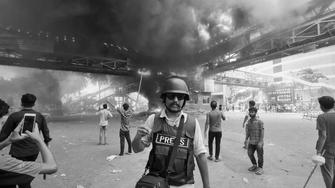
Sharif Khiam Ahmed (Eon) relata sobre direitos humanos, corrupção política, conflitos transfronteiriços e a crise dos refugiados Rohingya a partir de Bangladesh e do Sul da Ásia, incluindo ampla cobertura do levante de julho de 2024 e suas consequências. Seu trabalho recente inclui uma contribuição para The Fuller Project e uma passagem como produtor local para DW TV, além de cargos anteriores como jornalista visual para BenarNews / Radio Free Asia (RFA) e Netra News. Ele é o fundador do One-man Newsroom, um modelo de veículo solo. Vencedor do Edward R. Murrow Award (2021), de um Telly Award (2023) e finalista do New York Festivals TV & Film Awards (2021). Fluente em bengali e inglês, conversação em hindi. Disponível para cobertura de última hora, trabalhos como stringer e projetos documentais/investigativos de maior duração.
Matéria em vídeo (Web / TV)
Reportagem em áudio (Rádio / Podcast)
Entrevista (Vídeo / TV)
Enquete de rua (vox pop)
Documentários
Apuração de notícias
Reportagens especiais
Redação de conteúdo
Pesquisa
Jornalismo investigativo
Entrevista (Impresso / Rádio / Podcast)
Fotografia
Imagens brutas
Imagens de drone
Entrevista
Filmagem em 360°
Jornalismo
Reportagem ao vivo
Portfólio
Sed ut perspiciatis unde omnis iste natus error sit voluptatem accusantium
doloremque laudantium,
totam rem aperiam, eaque ipsa quae ab illo inventore veritatis et quasi architecto beatae vitae dicta sunt explicabo. Nemo enim ipsam voluptatem quia voluptas sit aspernatur aut odit aut fugit, sed quia consequuntur magni dolores eos qui ratione voluptatem sequi nesciunt. Neque porro quisquam est, qui dolorem ipsum quia dolor sit amet, consectetur, adipisci velit, sed quia non numquam eius modi tempora incidunt ut labore et dolore magnam aliquam quaerat voluptatem. Ut enim ad minima veniam, quis nostrum exercitationem ullam corporis suscipit laboriosam, nisi ut aliquid ex ea commodi consequatur?
doloremque laudantium,
totam rem aperiam, eaque ipsa quae ab illo inventore veritatis et quasi architecto beatae vitae dicta sunt explicabo. Nemo enim ipsam voluptatem quia voluptas sit aspernatur aut odit aut fugit, sed quia consequuntur magni dolores eos qui ratione voluptatem sequi nesciunt. Neque porro quisquam est, qui dolorem ipsum quia dolor sit amet, consectetur, adipisci velit, sed quia non numquam eius modi tempora incidunt ut labore et dolore magnam aliquam quaerat voluptatem. Ut enim ad minima veniam, quis nostrum exercitationem ullam corporis suscipit laboriosam, nisi ut aliquid ex ea commodi consequatur?

Quer ver mais amostras do portfólio?
Cadastre-se no journalist.net, é grátis!
Entrar
Cadastrar-se