سع
سمير عادل
Politics & Government · United Kingdom
Covers
Politics & Government
International Affairs
Conflict & Security
Social Issues & Demographics
Labor & Workplace
Business & Economy
Seen in
Published work
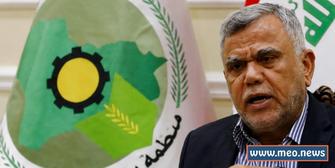
Hadi al-Amiri Reveals the True Face of the “Resistance” in Iraq
The Costs of Political Victory in the Ongoing War in the Region
A trilateral defense alliance among Saudi Arabia, Turkey and Pakistan is presented as evidence of declining U.S. influence and the emergence of new regional power centers. The article argues that Israel’s envisioned “new Middle East” has not materialized, while Iran is increasingly constrained by neighboring states, Russia’s war in Ukraine, the loss of Syrian support and China’s limited willingness to assist it. Tehran’s remaining leverage includes the Strait of Hormuz, Gulf security and negotiations over sanctions, frozen funds and a possible U.S. withdrawal. Washington, meanwhile, is portrayed as having little room to retreat and as continuing a hard-line policy despite domestic political risks. The author concludes that ordinary people, especially workers and the disadvantaged in Iran, bear the costs of escalating confrontation, and calls for ending the war, lifting sanctions and opposing both U.S. coercion and repression by Iran’s ruling system.
The Coordination Framework Government Between Washington’s Predicament and Tehran’s Predicament
The article argues that Iraq’s Coordination Framework government is trapped between conflicting demands from Washington and Tehran. Prime Minister Ali al-Zaidi’s visit to Washington, meeting with Donald Trump and economic memoranda are portrayed as political theater rather than evidence of Iraqi independence or imminent foreign investment. The government is unlikely to dismantle the Popular Mobilization Forces or curb Iranian influence because both are embedded in the post-2003 political order that sustains it. The United States and Iran are likewise described as locked into escalating confrontations, with neither side able to retreat without damaging its strategic position. Against this backdrop, Iraq remains politically and security-wise unstable, while its government lacks the autonomy and credibility needed to attract investment. The country’s future, the article concludes, will depend less on Washington agreements than on the outcome of the US-Iranian conflict and Iraq’s own unresolved social and political transformations.
The War on Corruption: An Attempt to Save Iraq’s Political Authority
The article argues that Iraq’s anti-corruption campaign is primarily an effort by the ruling political class to preserve its power and reorganize its governing mechanisms, not a genuine attempt to eliminate corruption. It links Iraq’s political and economic crises to entrenched corruption, oil dependence, insecurity, Iranian influence and the consequences of regional conflict. The campaign is presented as compatible with US strategic goals, neoliberal reforms, privatization and preferential access for American companies, while austerity, currency devaluation, higher prices and reduced public services would shift the burden onto workers and poorer citizens. The author concludes that the campaign seeks to rescue the political system from its structural crisis rather than rescue Iraqi society.
What Does al-Zaidi Lose from Socialism?
The article argues that Iraqi Prime Minister Ali al-Zaidi's attacks on socialism are intended both to reassure international financial institutions and to deflect responsibility for poverty, unemployment, corruption and weak public services. It links proposed privatization and the dismantling of public-sector protections to the interests of Iraq's bourgeois political class, warning that workers could face lower wages, longer hours, weaker social protections and loss of the right to organize. Socialism is presented as a program of universal healthcare and education, unemployment protection, economic equality, political freedoms, secular government and gender equality—principles that would threaten al-Zaidi's wealth, sectarian political position and the privileges of Iraq's broader ruling class.
The Chaos of Power Distribution Through the Ongoing Conflict in the Region
The conflict between the United States and Iran is portrayed as a metaphorical world war reshaping global alliances, power balances and control over energy routes, especially the Strait of Hormuz. China, Russia and the BRICS grouping face internal divisions over whether to support Iran or protect their economic interests, while Europe struggles with declining influence and the prospect of greater military independence. The United States is depicted as using militarization and control of strategic waterways to contain rivals and preserve its dominance, despite the limited political results of its actions in Venezuela and Iran. Washington’s engagement with China brought Beijing recognition as a peer competitor and economic benefits but no concessions on Taiwan, sanctions or tariffs. The article argues that democratic and human-rights rhetoric has been displaced by economic and strategic interests, while Western repression of pro-Palestinian protests exposed the limits of those claims. Iran’s defiance and threats involving Hormuz are interpreted as efforts to prevent regime change, although the resulting confrontation is worsening living conditions for workers and the poor and obscuring violence in Gaza, Lebanon and Sudan.
A New Difficult Labor in Iraq
The selection of Ali al-Zaidi as Iraq’s new prime minister has temporarily eased the Coordination Framework’s internal crisis but has not resolved the country’s political deadlock. The article argues that US pressure—including restrictions on security cooperation and access to dollars—helped force the selection, demonstrating Washington’s leverage over Baghdad, while Iran’s influence has become less decisive amid its military and economic difficulties. It portrays the US as selectively enforcing its anti-militia, anti-money-laundering and anti-Iran conditions, noting that al-Zaidi is linked to the sanctioned South Islamic Bank. The incoming government is expected to be more repressive toward workers and protesters as Iraq faces falling oil revenues, disruptions linked to the war and the closure of the Strait of Hormuz, reduced exports, austerity and declining living standards.
Iraq Between the Clutches of Political Islam and Islamic Nationalist Populism
Iraq’s political landscape is portrayed as a struggle between Iranian-aligned Shia Islamist forces and the Sadrist movement’s Islamic nationalist populism. Both currents are criticized as sectarian, corrupt and rooted in the same political-Islamist tradition, despite their rivalry over power and patronage. The analysis argues that the United States and its allies are seeking to replace Iraq’s existing sectarian power-sharing system with a more centralized state and to eliminate armed forces operating outside government control. It interprets pressure on the Popular Mobilization Forces, the possible political rehabilitation of Muqtada al-Sadr, and Iranian efforts to keep Iraqi oil exports flowing as parts of a wider contest over Iran’s regional influence. The article rejects both camps as alternatives for Iraqis and also condemns U.S. policy for prioritizing strategic and economic interests over democracy, equality and human rights.
Iraq: The Soft Underbelly Between Washington and Tehran
Iraq has become the most volatile arena after Iran in the escalating US-Iran confrontation, combining military strikes, militia attacks, threats to diplomatic and energy interests, and Iranian missile attacks on Iraqi Kurdistan. The analysis argues that Tehran relies on Iraqi militias and strategic disruption of Iraq’s oil exports as leverage, while Washington uses its military presence and the 2008 strategic framework to justify attacks as self-defense. Baghdad appears unable to control the Popular Mobilization Forces or reconcile competing political factions, issuing contradictory decisions that expose its weakness. The conflict threatens to trigger wider security chaos or civil war, disrupt oil revenues and salaries, raise prices, and deepen public hardship. It has also exposed the fragility, social isolation and political dependence of Iraq’s Shiite Islamist parties, which may face renewed labor and popular protests once the war ends.
The Last Bullet: The Islamic Republic and the Militias
The war involving Iran, Israel, and the United States is portrayed as an existential struggle for the survival of the Islamic Republic rather than a conventional contest of military strength. The conflict has exposed the regime’s weakened social and ideological foundations, following years of protests over repression, poverty, and compulsory veiling, and may force profound political and social changes even if the system survives formally. Iran is described as relying on missiles, drones, threats to close the Strait of Hormuz, and intensified religious and nationalist rhetoric to preserve its influence. Its regional allies, especially Hezbollah in Lebanon and Iran-backed militias in Iraq, are likewise presented as fighting for their own political, military, and financial survival. The author expects Iraq to experience particularly significant postwar political and social upheaval, alongside attempts to exploit sectarian, nationalist, and pro-American narratives to expand insecurity.
Failed States and Investment in Them: Iraq as a Model
Iraq is presented as a failed state exploited by competing regional and international powers, particularly Iran, the United States and Israel. The article argues that Prime Minister Mohammed Shia' al-Sudani’s claims of neutrality and infrastructure achievements have been exposed by militia attacks, US airstrikes, economic pressures and the government’s inability to protect sovereignty, civilians or oil-based livelihoods. It condemns the Supreme Judicial Council and the wider political class for tolerating violence while repressing protesters, workers and opponents. The article calls on Iraqi workers and marginalized communities to reject sectarian and nationalist justifications for conflict, oppose the militias and demand that human dignity, security, equality and economic rights take priority.
Scenarios of Defeat
The article argues that the war between the United States, Israel, and Iran is a global power struggle rather than a merely local or regional conflict. It presents an Iranian defeat as a major victory for U.S. dominance and the containment of China and Russia, while warning that a U.S. political defeat could mark the beginning of American imperial decline. The author contends that Washington might seek to manufacture an apparent victory by encouraging civil war and broader regional destabilization, while Iran may retaliate against Gulf states and deepen the chaos. Israel is described as the war’s principal beneficiary because the conflict could advance Israeli regional hegemony and undermine prospects for an independent Palestinian state. The article concludes by warning of renewed ethnic, religious, and authoritarian violence after a possible Iranian collapse and calls for humanitarian opposition to the war and support for refugees.