توظيف الصحفيين

الناشرون وهيئات البث فرق تسويق المحتوى فرق العلاقات العامة والاتصال فرق المخاطر والاستخبارات ابحث عن صحفيين الرصد الإعلامي الأسعار

للصحفيين

وظائف صحفية أسعار الأجور أنشئ ملفك المجاني

نبذة عن Stanislaw

Stan Kwiatkowski, PhD, صحفي وباحث ومحلل سياسي متعدد اللغات متخصص في تايوان والصين والمنطقة الأوسع للهند والمحيط الهادئ. يركّز عمله على العلاقات عبر المضيق، التأثير السياسي والدعاية الصينية، السياسة والمجتمع التايوانيان، حقوق الإنسان، القمع عبر الحدود، وسياسات الشتات. He holds a PhD in Human Rights from the University of Sussex, حيث فحصت أبحاثه مناصرة الشتات الإيغوري، التعبئة السياسية العابرة للحدود، الخطاب الصيني حول حقوق الإنسان، والقمع عبر الحدود. تتركز أبحاثه الحالية على المجتمع التايواني وتأثير الرسائل السياسية وجهود النفوذ لجمهورية الصين الشعبية، بما في ذلك كيفية استجابة الجمهور التايواني الشاب للدعاية الصينية. Having lived in Taiwan for approximately 15 years and working fluently with Mandarin Chinese and Taiwanese-language sources, يجمع بين البحث الأكاديمي والمعرفة المباشرة الواسعة بالسياسة والمجتمع التايوانيين. كما يعمل في بيئات لغوية يابانية وروسية وبولندية وإنجليزية، مما يتيح له تحليل التطورات السياسية عبر الحدود اللغوية والإقليمية. تشمل صحافته وتحليلاته السياسية تايوان والصين، السياسة الخارجية للولايات المتحدة، الدبلوماسية الأوروبية، عمليات النفوذ الصينية، الحركات الديمقراطية، الانتخابات، الاحتجاجات، الأمن الدولي، حرية الصحافة، والتطورات الجيوسياسية عبر منطقة الهند والمحيط الهادئ. أخذته تقاريره من تايبيه إلى واشنطن وأوروبا، جامعًا بين التغطية الميدانية والتحليل المستند إلى البحث. إلى جانب التغطية الإخبارية العاجلة والمقابلات، ينتج تحليلات سياسية مطوّلة وأصلية للجمهور الرقمي ويترجم بانتظام القضايا الأكاديمية والجيوسياسية المعقدة إلى تعليقات يسهل الوصول إليها.

اللغات
الإنجليزية البولندية الصينية (الماندرين) الألمانية اليابانية
ظهر في
The Washington Times pourquoi 報呱 9DASHLINE Liberty Times Net The Diplomat 看雜誌

الأعمال 15

China’s New Mobilisation Law Learns From Russia: Foreign Companies Should Too

9DASHLINE 30 سبتمبر 2026 English

China's revised National Defence Mobilisation Law, due to take effect on 1 October 2026, broadens the grounds for declaring mobilisation, places the decision under stronger Communist Party leadership, and gives authorities powers over information, supply chains, data, software, and property. The author compares these provisions with measures Russia improvised after invading Ukraine, including controls on information, efforts to secure industrial supplies, and state takeovers of foreign companies. The law contains no special exemption for foreign-invested businesses, while it suspends litigation and other forms of legal recourse during mobilisation. Although the changes do not establish that conflict is imminent, the author warns that foreign companies could lose the opportunity to move staff, capital, and assets once a mobilisation order is issued, and argues they should reduce their exposure beforehand.

China's National Defence Mobilisation Law Foreign Business in China China-Russia Comparisons Taiwan Strait Security Expropriation and Requisition Wartime Information Controls China Russia Taiwan Chinese Communist Party Chinese government Russian government
أسلوب التغطيةتفسيري

Strongly cautionary commentary urges foreign companies to reduce their exposure in China, while grounding its argument in legal analysis and reported events.

السياق السياسيوسط

The piece offers a security-focused critique of Chinese state policy and advises companies to manage risk, without clearly advocating a left- or right-wing political ideology.
Beijing’s New Exit and Entry Rules: Chinese Americans and Taiwanese Should Think Twice Before Traveling to China

看雜誌 2 سبتمبر 2026 Traditional Chinese

China's State Council issued new exit-and-entry rules, scheduled to take effect September 15, 2026. The author argues that the rules give authorities broad discretion to bar Chinese citizens from leaving for alleged industrial or technological security concerns, potentially without notifying them, and could affect foreign nationals whom Beijing considers Chinese. Citing cases involving a Japanese national, Canadians Michael Kovrig and Michael Spavor, and Australian journalist Cheng Lei, the piece warns that passports and foreign citizenship may offer limited protection in China. It urges the U.S. State Department and Taiwan's Mainland Affairs Council to strengthen travel warnings, particularly for Chinese Americans and Taiwanese travelers.

China’s Exit Bans Travel Risks in China China–United States Relations Cross-Strait Relations Dual Citizenship China United States Taiwan State Council of the People's Republic of China Chinese Communist Party United States Department of State Taiwan's Mainland Affairs Council
أسلوب التغطيةرأي

Strongly opinionated commentary warning about China's exit restrictions, using persuasive language and urging governments and travelers to take action.

السياق السياسييمين الوسط

The commentary strongly criticizes the Chinese Communist Party and advocates protection of democratic-country citizens, but does not make a broader domestic partisan argument.

Beijing’s new law claims the right to punish U.S. citizens

The Washington Times 27 يوليو 2026 English

A new Chinese law, effective July 1, asserts that people and organizations outside China can face legal consequences for undermining ethnic unity. The commentary argues that the law could enable Beijing to target critics abroad, including U.S. citizens, and could intensify pressure on religious and ethnic minorities and Taiwanese people. It cites warnings from Amnesty International and a bipartisan group of U.S. senators, and calls on Washington to protect residents and make clear that Chinese law does not extend beyond China's borders.

China's Law on Promoting Ethnic Unity and Progress Transnational Repression Religious and Cultural Rights Taiwan U.S.-China Relations China United States Chinese Communist Party United States Senate Taiwanese government Amnesty International Stan Kwiatkowski
أسلوب التغطيةرأي

Strongly opinionated commentary, using persuasive language to condemn China's law and urge U.S. action.

السياق السياسييمين الوسط

Advocates a firm U.S. response to China's actions and emphasizes national security and protection of American residents.

Is Beijing Winning the Taiwan Narrative War?

The Washington Times 2 يوليو 2026 English

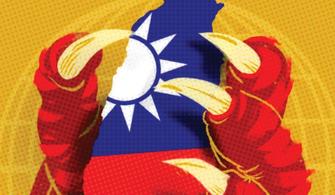
Stan Kwiatkowski argues that Beijing has gained ground in shaping perceptions of Taiwan’s future through political engagement, media influence and claims that the United States may abandon Taiwan. Taiwan’s opposition parties delayed a proposed defense budget of roughly $40 billion and supported a smaller alternative; the final $24.8 billion bill is the island’s largest special defense budget but falls short of President Lai Ching-te’s plan. The piece says criticism of U.S. weapons-delivery delays overlooks supply-chain disruptions and wartime demand, while Beijing misrepresents U.S. policy and international resolutions concerning Taiwan. It concludes that Washington should make a stronger effort to reassure Taiwanese people and demonstrate that Taiwan is worth defending.

Taiwan Strait Chinese propaganda and influence Taiwan defense spending U.S.-Taiwan relations Taiwan China United States Chinese Communist Party Taiwan Legislative Yuan Kuomintang Taiwan People’s Party United States Department of State
أسلوب التغطيةرأي

Opinion commentary argues that Beijing is winning the narrative war and urges Washington to strengthen its support for Taiwan.

السياق السياسييمين الوسط

The commentary favors strong defense spending and U.S. support for Taiwan, and criticizes China’s influence efforts.

Taiwan Opposition Leader’s Tale of Two Visits

The Washington Times 24 يونيو 2026 English

Stan Kwiatkowski argues that Kuomintang chair Cheng Li-wun’s visits to Beijing and the United States exposed the risks of the party’s closer relationship with China’s Communist Party. He says Cheng received prominent treatment from Xi Jinping in Beijing but no meetings with Trump administration officials in the United States, despite portraying her trip as significant. The commentary also criticizes Cheng for defending Vladimir Putin’s leadership and blaming NATO for the war in Ukraine, and describes the removal and assault of Chinese dissidents who challenged her at U.S. events as transnational repression. Kwiatkowski links these concerns to the KMT’s efforts to stall President Lai Ching-te’s proposed nearly $40 billion defense budget, arguing that Taiwan cannot expect U.S. security support while underfunding its own deterrence. He concludes that the KMT must choose between courting Beijing and maintaining Washington’s support.

Taiwan-China Relations Taiwanese Politics U.S.-Taiwan Relations Military Deterrence Authoritarianism Transnational Repression Taiwan United States China Kuomintang (KMT) Chinese Communist Party (CCP) Taiwanese government
أسلوب التغطيةرأي

Strongly opinionated commentary that condemns Cheng Li-wun’s approach to Beijing and urges Taiwan to increase defense spending.

السياق السياسييمين الوسط

Advocates a strong defense posture, supports Taiwan’s alignment with Washington, and sharply criticizes Beijing and the KMT’s engagement with it.

When Chinese Propaganda Goes Viral in Taiwan

The Diplomat 24 أكتوبر 2025 English

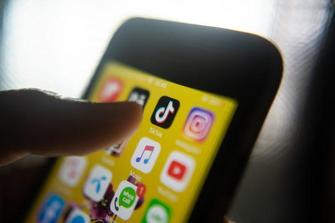
Chinese state-linked accounts turned remarks by pro-independence Taiwanese politician Wang Shih-cheng into a viral AI-generated song, which China’s Taiwan Affairs Office then used to criticize cross-strait relations. The piece argues that Chinese-owned platforms and Taiwanese influencers’ China-focused content are gradually normalizing China and reducing support for TikTok restrictions, while skepticism grows about U.S. willingness to defend Taiwan. It calls for Washington to pair military commitments with a renewed communications strategy that reinforces trust and democratic ties, warning that Beijing’s soft-power efforts could erode Taiwanese resistance to unification.

Chinese propaganda Taiwanese public opinion Social media influence operations Cross-strait relations U.S.-Taiwan relations Taiwan China United States Chinese Communist Party Taiwan Affairs Office Democratic Progressive Party Taiwan Public Opinion Foundation
أسلوب التغطيةتفسيري

Argues that Beijing’s messaging is reshaping Taiwanese attitudes and urges Washington to strengthen its communications strategy.

السياق السياسييسار الوسط

Supports Taiwan’s democratic autonomy and closer U.S. support, while criticizing Chinese influence operations and advocating a stronger counter-messaging strategy.

China’s Aggression Isn’t About Communism – It’s About Empire

The Diplomat 1 يوليو 2025 English

The article argues that China's aggressive foreign policy is driven by an imperial ideology known as Grand Uniformity, rather than communism. This ideology, deeply rooted in Chinese political culture, emphasizes centralized rule and cultural homogenization, leading to territorial expansion and cultural assimilation. The article suggests that this mindset transcends party politics and has been a consistent theme across different Chinese regimes, including the Qing Dynasty, the Republic of China, and the People's Republic of China. It warns that even if the Chinese Communist Party were to fall, the imperial logic of Grand Uniformity would persist, posing a continued threat to global stability.

China's Foreign Policy Imperialism Grand Uniformity Ideology China Indo-Pacific Xinjiang Chinese Communist Party Qing Dynasty Republic of China People’s Republic of China Xi Jinping Mao Zedong
أسلوب التغطيةتفسيري

The article presents a subjective analysis of China's imperial ideology and its implications.

السياق السياسييمين الوسط

The article critiques China's imperialistic policies and emphasizes the need for a strategic response.

Not Just Harvard, Is Cambridge University Also a Chinese Spy School?

pourquoi 報呱 21 مايو 2025 Chinese

The article explores the possibility of Cambridge University being involved in espionage activities for China, similar to allegations against Harvard. It examines the historical context of espionage between China and the UK, referencing the 'Cambridge Five' and suggesting a broader infiltration strategy by China. The piece raises questions about academic institutions' roles in international espionage without providing definitive evidence.

Espionage China-UK Relations China United Kingdom Cambridge University
أسلوب التغطيةمتوازن

The article presents a mix of factual information and speculative analysis regarding espionage activities.

السياق السياسيوسط

The article discusses espionage activities without a clear political bias.

Taiwan’s Contradictory Treatment of Foreign Talent: A Legal System That Is Both Inclusive and Exclusionary

Liberty Times Net 10 يناير 2025 Chinese

The commentary argues that Taiwan’s immigration system is contradictory: it imposes lengthy procedures and restrictive requirements on foreign professionals while granting Chinese spouses comparatively favorable treatment. It highlights Swedish resident Lukas’s struggle to obtain permanent residency and criticizes the certificate’s terminology and the limited rights attached to it. The author argues that these barriers, alongside low salaries and the requirement that many naturalizing foreigners renounce their original nationality, make Taiwan less competitive in attracting and retaining international talent. The piece calls for fairer, more welcoming policies, noting that most people who naturalize in Taiwan are foreign spouses rather than professionals.

Taiwan Immigration Policy Foreign Talent and Immigration Citizenship and Permanent Residency Discrimination and Dual Standards Taiwan China Germany Kuomintang Lukas Risa Alien Permanent Resident Certificate
أسلوب التغطيةتفسيري

Opinionated commentary criticizes Taiwan’s immigration rules as exclusionary and calls for reform.

السياق السياسييسار الوسط

Advocates more inclusive immigration policies and criticizes preferential treatment and nationality-based double standards.

Charting a new course for U.S.-Taiwan security

The Washington Times 27 ديسمبر 2024 English

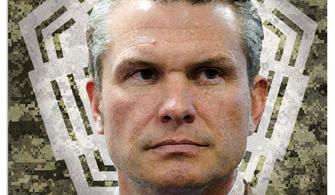
Elbridge Colby and Pete Hegseth's appointments signal a shift in U.S. defense priorities, emphasizing a stronger stance against China's expansionist policies. This change is crucial for Taiwan, which faces significant threats from China. The article critiques Taiwan's current defense spending and preparedness, urging increased investment in asymmetric capabilities and addressing internal security risks. It highlights the need for Taiwan to enhance societal readiness and deepen cooperation with the U.S. to ensure its security. The article underscores the urgency for Taiwan to act decisively to maintain its sovereignty and democratic values.

U.S.-Taiwan Relations Defense Strategy China's Expansion Taiwan China United States Department of Defense People’s Liberation Army Kuomintang CIA Elbridge Colby Pete Hegseth
أسلوب التغطيةتفسيري

The article presents a subjective analysis of U.S.-Taiwan defense relations and strategic recommendations.

السياق السياسييمين

The article supports a strong defense posture and critiques progressive policies within the Department of Defense.

اعرض الأعمال كلها (15) بحساب مجاني

وظّف رسالة
×

سجّل لمراسلة Stanislaw

هل لديك حساب بالفعل؟ تسجيل الدخول
هل تبحث عن عمل؟ سجّل كصحفي
وثّق بريدك الإلكتروني لإتمام التسجيل
لقد أرسلنا للتوّ رسالة إلكترونية إلى . يرجى التحقّق من صندوق الوارد والنقر على الرابط لتوثيق عنوان بريدك الإلكتروني وإتمام تسجيلك. وإذا لم تجد الرسالة، فتأكّد من التحقّق من مجلد البريد العشوائي أو غير المرغوب فيه.
لم تستلم البريد الإلكتروني؟

سجّل للاطّلاع على الملفات الشخصية

هل لديك حساب بالفعل؟ تسجيل الدخول
هل تبحث عن عمل؟ سجّل كصحفي
وثّق بريدك الإلكتروني لإتمام التسجيل
لقد أرسلنا للتوّ رسالة إلكترونية إلى . يرجى التحقّق من صندوق الوارد والنقر على الرابط لتوثيق عنوان بريدك الإلكتروني وإتمام تسجيلك. وإذا لم تجد الرسالة، فتأكّد من التحقّق من مجلد البريد العشوائي أو غير المرغوب فيه.
لم تستلم البريد الإلكتروني؟