Engager des journalistes

Éditeurs et diffuseurs Équipes de marketing de contenu Équipes RP et communication Équipes risques et renseignement Trouver des journalistes Veille médias Tarifs

Pour les journalistes

Offres d'emploi en journalisme Tarifs Créez votre profil gratuit

À propos de Stefanie

Journaliste à Katmandou, souvent pour BBC Travel, der Spiegel, Stern, the Scotsman et d'autres médias allemands et britanniques. Ancien correspondant étranger principal à Bruxelles couvrant les affaires de l'UE. A travaillé dans la diffusion, mais préfère encore la presse écrite et la photographie. J'écris généralement en anglais et en allemand, mais je peux aussi interviewer en français et en espagnol. J'aime davantage écrire en anglais, mais dans les deux cas, cela fonctionne. Quelques articles récents : Spiegel: **** **** Stern: **** BBC: **** **** ****

Langues
anglais français allemand espagnol
Vu dans
The Guardian Faz Störungsmelder The Telegraph BBC Foreign Policy The National Yahoo Sports Canada Monocle Sight Magazine Spiegel Online The Times News Newsrnd Context Inkl Al Jazeera Cordópolis Devdiscourse NZZ Magazin Scroll.in Ca Rebelion Sg Stern Uk Crikey

Travaux 137

‘They assume the man next to me is the owner’: four women doing business in Africa in their own way

The Guardian 2 nov. 2026 English

Profiles of women entrepreneurs in Nigeria, Uganda and Kenya show businesses addressing waste, unreliable water access and child hunger while navigating gender barriers and limited financing. Ifedolapo Runsewe’s Freee Recycle turns discarded tyres into materials and products; Kyokushaba Shine’s Winta Engineering Solutions installs mostly solar-powered irrigation systems for smallholder farmers; and Wawira Njiru’s Food4Education provides meals to more than 700,000 schoolchildren each day. Their work also supports employment, local farmers and environmental sustainability. The text notes persistent obstacles for women seeking capital and authority in male-dominated sectors. A fourth profile, about Chifuno Stevens in Malawi, is cut off in the supplied text.

Women entrepreneurs in Africa Access to business financing Tyre recycling Solar-powered irrigation School meals Sustainable agriculture Nigeria Uganda Kenya World Bank Save the Children International Committee of the Red Cross
Style rédactionnelInformatif

Mostly factual reporting, supported by statistics and interviews, with some evaluative framing about gender barriers and social impact.
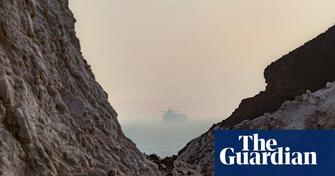
What Life Is Like by the Strait of Hormuz Right Now

Foreign Policy 30 oct. 2026 English

The war has disrupted life in Bandar Abbas, Iran’s key port city and gateway to the Strait of Hormuz. Attacks have damaged roads, bridges, ports, and the state broadcaster, while tourism has collapsed, food prices have surged, and many residents have left for safer villages. The strait’s dangers are undermining fishing, shipping, and other livelihoods, though some village businesses have benefited from displaced residents. Daily explosions and stranded tankers persist even as people resume evening routines along the waterfront. Diplomatic efforts to reopen the waterway have stalled amid threats of renewed U.S. strikes and continued Iranian preparations for possible hostilities.

Iran War Life in Bandar Abbas Strait of Hormuz Economic hardship Maritime trade and shipping Bandar Abbas, Iran Hormozgan Province, Iran Iran United States Israel Oman Taliban
Style rédactionnelFactuel

Reported feature grounded in local accounts and descriptive reporting, with little explicit editorial opinion.

Troubled waters: life during wartime for Iranians on the Strait of Hormuz

The Guardian 21 oct. 2026 English

Ferry crossings between Bandar Abbas and Hormuz Island continue despite a fragile ceasefire, but explosions, attacks and safety restrictions have made life and work increasingly dangerous. Fishing and commercial vessels have been damaged, fishers' movements are constrained, and residents of Bandar Abbas have fled to safer areas. On Hormuz Island, residents have largely stayed, but restrictions and the collapse in visitors have badly hurt tourism, guesthouses and restaurants. Islanders describe supporting one another and maintaining their way of life amid the continuing threat of conflict.

War in Iran Life during wartime Strait of Hormuz Fishing and tourism Civilian livelihoods Hormozgan Province, Iran Oman Iranian government Iranian forces United States Donald Trump Farouq
Style rédactionnelInformatif

Primarily reported, descriptive journalism, with vivid narrative framing and attributed personal accounts.

How Iranians Have Been Coping with the US-Israel Conflict

Monocle 29 mai 2026 English

Iranians have adapted to the US-Israel conflict and an 88-day nationwide internet blackout by rebuilding social and economic life offline. Entrepreneur Sajjad Javanmardi created Place-less to support artists and small businesses, artist Darya Nazeri took her work on the road after an airstrike damaged her home, motorbike racer Marjan Rabiee began teaching women to ride after losing her printing business, and tattoo artist Reza Talebzade returned to work while creating memorial tattoos for people killed in the war. The blackout severely damaged online businesses and freelancers, while community gatherings and face-to-face activities became important sources of income, solidarity and emotional recovery.

Iran-Israel Conflict Civilian Life During War Internet Blackout Community Resilience Economic Impact of Conflict Women in Sport Iran Tehran Mashhad Iranian authorities Iranian government Sajjad Javanmardi
Style rédactionnelInformatif

Predominantly factual and reported through interviews, with limited interpretive framing about the social effects of war.

Contexte politiqueCentre

The piece documents the effects of the conflict on Iranian civilians without endorsing a clear partisan political position.

They were hunted by the Taliban for helping the US. Now, Trump wants to send these families to the DRC

The Guardian 5 mai 2026 English

More than 1,100 Afghans evacuated to Qatar after assisting U.S. forces remain stranded after the Trump administration suspended refugee processing, despite their vetting and promised U.S. resettlement. The administration is reportedly discussing sending them to the Democratic Republic of the Congo or offering payments to return to Afghanistan. Families describe deteriorating conditions at the As-Sayliyah camp, including confinement, inadequate schooling and healthcare, and severe psychological distress. Nasimi’s family fears Taliban reprisals and rejects relocation to the DRC, while teenager Zahra Muhib says she would accept it if forced. AfghanEvac and other advocates argue that the DRC is conflict-affected and lacks the infrastructure and protections needed, and say the United States should honor its resettlement commitments.

Afghan refugees U.S. refugee policy Taliban persecution Refugee resettlement Conditions in refugee camps Afghanistan Qatar Democratic Republic of the Congo U.S. government Trump administration Taliban AfghanEvac
Style rédactionnelInterprétatif

The report is primarily factual but uses emotionally charged testimony and characterizes the proposed transfer as unjust and harmful.

Contexte politiqueCentre gauche

Critical of the Trump administration’s refugee policy, emphasizing humanitarian obligations and the rights and safety of Afghan allies.

A veneer of normality has returned to Tehran but fears for the future are rife

The Guardian 5 mai 2026 English

Tehran’s streets and businesses have partly returned to normal since a fragile ceasefire took hold, but residents remain anxious about renewed conflict and worsening economic conditions. Job losses, rising prices and inflation, expected by the IMF to reach 70% this year, are driving hardship, while schools and businesses have only partially resumed activity. Executions linked to national-security charges continue amid political repression, although many residents are focused on survival rather than protest. With US-Iran tensions high, negotiations stalled and plans to escort ships through the Strait of Hormuz risking escalation, the ceasefire’s durability remains uncertain.

Iran US-Israel war on Iran Ceasefire Economic impact of war Political repression Inflation and unemployment Tehran Strait of Hormuz United States United Nations Stefanie Glinski Mohammad Mohsenifar
Style rédactionnelFactuel

Reported in a factual, on-the-ground style, with attributed testimony and figures; limited interpretive framing.

Tehran’s embattled Jewish community endures despite Israeli bombing of synagogue

The Guardian 22 avr. 2026 English

Tehran’s Jewish community held a Passover service at Rafi’ Nia synagogue on 6 April, hours before an Israeli airstrike destroyed the building. Israel described the damage as collateral from a strike targeting a commander; community members condemned the attack, recovered a few religious texts from the rubble and mourned the loss of historical volumes. The report traces the community’s long history, its sharp population decline after Iran’s 1979 revolution, and its continued religious and civic life despite legal restrictions and antisemitic rhetoric. Members emphasize that they are Iranian, maintain traditions and live alongside Muslim neighbors, while expressing concern that the war has made them collateral damage.

Iranian Jewish Community Israeli Airstrikes Religious Freedom US-Israel War on Iran Iran-Israel Relations Tehran Iran Israel Jewish Association of Iran Israeli army Iranian government Israeli government
Style rédactionnelInterprétatif

Reported feature with strong human-interest framing and critical quotes about the airstrike and Israeli policy.

Contexte politiqueCentre gauche

Focuses on the community's vulnerability and criticizes Israeli military actions while also noting Iranian antisemitism and repression.

‘In no way do we trust America’: Iranians react to two-week ceasefire

The Guardian 8 avr. 2026 English

Iranians reacted to the two-week US-Iran ceasefire with a mix of anger, exhaustion, cautious optimism and distrust. Pro-regime crowds in Tehran debated the unexpected pause, chanted against the United States, Israel and compromisers, and burned US and Israeli flags. Other residents welcomed a possible end to the fighting but were unsure whether Iran's conditions would be met or the ceasefire would hold. Daily life began to resume, with shops reopening and people checking on relatives. Iranian officials portrayed the truce as a victory and an opportunity to strengthen Iran's international standing, while the war had killed at least 1,900 people in Iran and left the country's broader public mood difficult to gauge amid internet blackouts and repression.

US-Israel War on Iran Iran Ceasefire Iranian Public Opinion US-Iran Relations Iran Tehran Middle East United States Israel Donald Trump Masoud Pezeshkian Ali Khamenei
Style rédactionnelInformatif

Primarily reported accounts and factual context, with some attributed interpretations and emotive descriptions.

Contexte politiqueCentre

Reports contrasting reactions to the ceasefire and attributes political claims to Iranian officials and other sources without endorsing a political position.

Aftermath of a rescue: wreckage of aircraft at site of US mission in Iran

The Guardian 7 avr. 2026 English

Workers and Iranian army personnel cleared the wreckage of two US C-130 transport planes and at least two helicopters near Parzan in Isfahan province, after a US mission to rescue two airmen from a downed F-15. Residents described explosions and gunfire, and one resident said a passing civilian vehicle was attacked but its occupants survived. The United States said it destroyed its aircraft after one became stuck; Iran's Revolutionary Guards claimed Iranian forces destroyed them, and an Iranian military officer said a colleague was killed in the operation. US President Donald Trump separately threatened devastating consequences unless Iran reopened the Strait of Hormuz.

US-Israel War on Iran US military rescue mission Aircraft wreckage Military operations Iran Isfahan province Middle East United States Iranian Revolutionary Guard Corps Iranian military The Guardian Donald Trump
Style rédactionnelÉquilibré

Mostly reported fact, with some characterization of the incident and attributed claims from residents and officials.

Contexte politiqueCentre

News reporting focused on the events and attributed accounts from US and Iranian sources, without an evident partisan position.

Israel says it is expanding ‘buffer zone’ in Lebanon – as it happened

The Guardian 26 mars 2026 English

Iran rejected a US ceasefire proposal and denied that negotiations were underway, while the White House maintained that talks were continuing and Donald Trump threatened intensified attacks if they failed. Fighting continued across Iran, Israel and Gulf states. Israel reported strikes in Iran and an expanding buffer zone in southern Lebanon; Hezbollah rejected negotiations and launched attacks, while Lebanese authorities reported more than 1,000 deaths and over one million displaced. China urged dialogue, and reports said Russia was preparing deliveries of drones and supplies to Iran. The conflict has disrupted energy markets, driven oil-price volatility and prompted emergency responses in exposed economies.

US-Israel War on Iran Israel-Lebanon Conflict Iran-US Ceasefire Negotiations Middle East Crisis Strait of Hormuz Middle East Iran Lebanon United States Israel Hezbollah United Nations
Style rédactionnelInterprétatif

Predominantly a factual live news report, but includes some analysis and editorial framing.

Contexte politiqueCentre

Straight news coverage of competing claims and developments, with no consistent partisan position.

Voir les 137 réalisations avec un compte gratuit

Recruter Message
×

Inscrivez-vous pour envoyer un message à Stefanie

Vous avez déjà un compte ? Se connecter
Vous cherchez du travail ? S'inscrire en tant que journaliste
Vérifiez votre e-mail pour finaliser l'inscription
Nous venons d'envoyer un e-mail à . Veuillez consulter votre boîte de réception et cliquer sur le lien pour vérifier votre adresse e-mail et finaliser votre inscription. Si vous ne voyez pas l'e-mail, pensez à vérifier votre dossier spam ou courrier indésirable.
Vous n'avez pas reçu l'e-mail ?

Inscrivez-vous pour débloquer les profils

Vous avez déjà un compte ? Se connecter
Vous cherchez du travail ? S'inscrire en tant que journaliste
Vérifiez votre e-mail pour finaliser l'inscription
Nous venons d'envoyer un e-mail à . Veuillez consulter votre boîte de réception et cliquer sur le lien pour vérifier votre adresse e-mail et finaliser votre inscription. Si vous ne voyez pas l'e-mail, pensez à vérifier votre dossier spam ou courrier indésirable.
Vous n'avez pas reçu l'e-mail ?