Éditeurs et diffuseurs Équipes de marketing de contenu Équipes RP et communication Équipes risques et renseignement Journalistes et professionnels des médias Veille médias Tarifs

À propos de Sune

Je couvre l'Afghanistan pour The Guardian, The Economist, Foreign Policy, The New Republic et d'autres médias. Je réalise régulièrement des interventions en direct à la télévision et des prises d'antenne téléphoniques pour CNN, Sky News, CBS Radio, CBC, Deutsche Welle, TRT World et d'autres. J'habite en Afghanistan depuis juin 2014, après m'y être installé en venant d'Iran, où j'ai passé deux ans. J'ai un Master's degree from Columbia Journalism School in New York.

Langues
danois anglais
Vu dans
Foreign Policy BBC The New York Times The Wall Street Journal

Travaux 22

Nixon’s IRS Effort Tested Limits of Presidential Power

Foreign Policy 16 juin 2026 English

Expansive assertions of presidential power under Donald Trump have revived concerns that echo Richard Nixon’s attempts to politicize the IRS. Trump’s efforts include pressuring the IRS, shielding himself from audits, and placing loyalists across key agencies, actions enabled by a compliant Congress and a supportive Supreme Court. The article recounts Nixon’s similar push to use the IRS against political enemies, which was ultimately resisted by officials such as Johnnie Walters and George Shultz. Historical contrasts highlight weakened institutional guardrails today, emphasizing the importance of civil servants willing to refuse politically motivated directives to maintain democratic norms.

Executive power IRS politicization U.S. politics Historical comparisons between Trump and Nixon United States Internal Revenue Service Department of Justice Federal Reserve Republican Party U.S. Supreme Court White House Congress
Style rédactionnelÉquilibré

Analytical tone with interpretive historical comparisons and critical commentary

Contexte politiqueCentre gauche

Critical of abuses of executive authority and supportive of institutional safeguards
What We Do and Don’t Know About the U.S.-Iran Peace Deal

Foreign Policy 15 juin 2026 English

The United States and Iran have agreed to a preliminary peace deal aimed at ending months of conflict, reopening the Strait of Hormuz, and initiating nuclear negotiations during a 60‑day cease-fire period. Details remain unclear, with disagreements over sanctions relief, frozen assets, and future tolls on shipping. Pakistan and Qatar mediated the agreement, while Israel has sharply criticized it and continued military actions in Lebanon that threaten to destabilize the process. U.S. officials acknowledge major hurdles ahead, particularly regarding Iran’s nuclear program, and tensions between the parties’ interpretations of the deal may complicate progress toward a final agreement.

U.S.-Iran peace deal Middle East conflict Nuclear negotiations Israel-Hezbollah conflict Strait of Hormuz blockade United States Iran Middle East U.S. government Iranian government Israeli government Hezbollah
Style rédactionnelInformatif

Primarily factual geopolitical reporting with limited interpretation.

Contexte politiqueCentre

Standard geopolitical reporting without clear ideological framing.

Trump Confirms U.S.-Iran Peace Deal Ahead of G-7 Leaders' Summit

Foreign Policy 15 juin 2026 English

The United States and Iran reached a memorandum of understanding to end their months-long war ahead of the G-7 summit, easing concerns about heightened tensions among global leaders. The agreement is expected to reopen the Strait of Hormuz, lift the U.S. blockade, extend the cease-fire, and potentially provide Iran with access to a major reconstruction fund. Uncertainty remains due to continued Israeli military actions in Lebanon, which Iran considers linked to the broader conflict. European leaders expressed cautious optimism, while markets responded positively to the prospect of reduced regional instability.

U.S.-Iran relations G-7 summit Middle East conflict Israel-Lebanon tensions Sanctions and diplomacy United States Iran Middle East U.S. government Iranian government Israeli government Hezbollah
Style rédactionnelInformatif

Mostly factual reporting with limited subjective language

Contexte politiqueCentre

Focuses on international diplomacy and conflict without partisan framing

The Truce Between the U.S. and Iran Was the Easy Part

Foreign Policy 15 juin 2026 English

The United States enters postwar negotiations with Iran in a weakened position despite inflicting significant military damage, as Iran demonstrated its ability to close the Strait of Hormuz and strike U.S. and allied assets. Allied confidence in Washington has eroded, and divisions have emerged between the United States and Israel over unresolved issues including Iran’s nuclear program and Hezbollah. Iran’s new leadership appears emboldened by its survival and its leverage, leaving Washington needing to rebuild alliances, reestablish deterrence, and secure constraints on Iran’s nuclear and missile capabilities to turn the costly conflict into diplomatic progress.

U.S.-Iran relations Middle East conflict Nuclear policy International diplomacy Iran United States Middle East U.S. government Israeli government Iranian government Islamic Revolutionary Guard Corps Hezbollah
Style rédactionnelÉquilibré

Analytical piece with interpretation of geopolitical motives and outcomes

Contexte politiqueCentre

Analytical foreign policy assessment without partisan framing

Iran Hawks Side-Eye Trump’s Deal

Foreign Policy 15 juin 2026 English

Criticism intensifies over the Trump administration’s agreement with Iran, which ends military operations and lifts the U.S. blockade but lacks progress on nuclear issues. Iran’s resilience has strengthened its leverage, leading to a deal viewed as weaker than the Obama-era agreement. Democrats fault Trump for abandoning the 2015 nuclear deal and mishandling the war, while Iran hawks who pushed for the conflict now oppose the settlement, arguing it offers too many concessions. The administration faces pressure from both critics and former supporters as Congress prepares to review the terms.

U.S. foreign policy Iran war Nuclear negotiations United States Iran Middle East U.S. government Iranian government Foundation for Defense of Democracies U.S. Congress White House Fox News
Style rédactionnelInterprétatif

A largely analytical piece with clear evaluative and critical commentary toward policymakers.

Contexte politiqueCentre gauche

Critical of hawkish foreign policy and supportive of diplomatic approaches

Trump Has His Iran Deal. How Soon Until Oil Prices Come Down?

Foreign Policy 15 juin 2026 English

Oil prices are unlikely to fall quickly despite the new U.S.-Iran memorandum of understanding aimed at ending hostilities in the Strait of Hormuz. Large volumes of Gulf oil production remain offline, tanker logistics are disrupted, and inventories are at historic lows following massive drawdowns. Even with partial supply recovery from producers such as the United States, Brazil, and Guyana, a full market rebalance may take months. Strategic reserve releases, Chinese demand reductions, pipeline diversions, and covert tanker movements helped prevent more extreme price spikes during the conflict, while repeated assurances from U.S. President Donald Trump helped calm futures markets. Sustained uncertainty over shipping risks, mine removal, and strained global inventories suggests that elevated oil prices could persist well beyond the 60-day negotiation period.

Oil Markets U.S.-Iran Relations Energy Security Iran War Iran Persian Gulf United States United States government Atlantic Council Oxford Economics U.S. Energy Information Administration Pakistan
Style rédactionnelInformatif

Primarily analytical reporting with limited subjective interpretation

Contexte politiqueCentre

Policy-focused analysis without clear ideological bias

The End of the U.S.-Israel Alliance

Foreign Policy 15 juin 2026 English

The longstanding U.S.-Israel alliance is depicted as peaking militarily while eroding politically, culturally, and ideologically. Public opinion in the United States has shifted sharply, weakening the influence of traditional pro-Israel advocacy groups. Polarization within both major U.S. parties has produced new anti-Israel factions, driven by progressive critiques on the left and isolationist sentiment on the right. Israel’s domestic political trajectory under Benjamin Netanyahu, including alliances with extremist factions and deepening occupation policies, has further alienated American liberals and younger voters. The Iran war has accelerated these trends, threatening to redefine U.S. policy as both parties consider cutting military aid. Netanyahu faces a future in which the special relationship diminishes, with long-term strategic consequences for Israel.

U.S.-Israel relations Middle East politics Public opinion War in Iran United States Israel Iran Israeli government U.S. government Democratic Party Republican Party Heritage Foundation
Style rédactionnelInterprétatif

Contains factual analysis but is heavily interpretive and argumentative throughout

Contexte politiqueCentre gauche

Critical analysis of conservative and right-wing actors and institutions but grounded in policy history rather than partisan advocacy

The End of Trans-Atlanticism

Foreign Policy 15 juin 2026 English

The longstanding liberal order that underpinned trans-Atlanticism has eroded due to global multipolarity and profound political changes in both the United States and Europe. U.S. abandonment of liberal norms, rising illiberalism, tariffs, foreign-policy ruptures, and threats to European sovereignty have broken the trust that once defined the partnership. Europe, psychologically and strategically altered by recent crises, will no longer view the United States as a fully reliable ally. Although shared interests will continue to bind the two sides, trans-Atlanticism as a liberal ideological project has ended, even if cooperation persists in a more cautious and pragmatic form.

Trans-Atlantic relations U.S. foreign policy European politics Decline of liberal international order Europe United States China European Union NATO United Nations International Monetary Fund World Bank
Style rédactionnelInterprétatif

Analytical essay with interpretive judgments about geopolitical shifts

Contexte politiqueCentre gauche

Critical of illiberalism and supportive of liberal democratic values

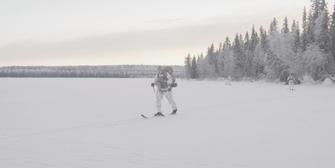
U.S. Elite Troops Hardened by War on Terror Retrain for Arctic Combat

The Wall Street Journal 23 févr. 2026 English

U.S. Green Berets underwent intense winter warfare training in northern Sweden as NATO increases focus on the strategically important Arctic region. Despite extensive combat experience, soldiers struggled with the extreme cold, highlighting a lack of institutional Arctic expertise compared with Nordic allies. As warming climates open new routes and increase competition, particularly with Russia, NATO is expanding training and coordination efforts to prepare for possible conflict scenarios. Experts note that while the likelihood of Arctic conflict remains low, strengthening military capability and partnerships in the region is essential to maintaining stability amid geopolitical tensions.

Arctic military strategy NATO–Russia tensions U.S. military training Arctic Russia Sweden NATO U.S. Military Subarctic Warfare Center Foreign Policy Research Institute Ryan P. Burke Lt. Gen. Richard E. Angle
Style rédactionnelInformatif

Primarily factual reporting with occasional subjective quotes from soldiers and experts.

The Road to Stability: An Australian Legacy in Afghanistan

Bit 18 mars 2023 English

The article discusses the impact of a road built by the Australian forces in Oruzgan, Afghanistan, which has improved security in the region. It covers the stories of local leaders, including the police commander Abdul Qavi and the controversial figure Matiullah Khan, who was killed in Kabul. The article also touches on the insider attack at Patrol Base Wahab, the death of Australian soldiers, and the challenges faced by the Afghan security forces post-NATO's combat mission. It highlights the mixed results of Australian aid, with some successful projects but also instances of corruption and poor construction. The piece reflects on the legacy of the Australian mission in Afghanistan, the ongoing tribal conflicts, and the uncertain future of the region following the death of Matiullah Khan.

Military and Defense International Relations Infrastructure Development Tribal Politics Corruption Insurgency Foreign Aid Education and Health in Afghanistan Afghanistan Oruzgan Kabul The Royal Australian Regiment

Inscrivez-vous gratuitement pour voir les 22

Autres journalistes à Kaboul

Voir tous les journalistes à Kaboul
Recruter Message
×

Inscrivez-vous pour envoyer un message à Sune Engel

Vous avez déjà un compte ? Se connecter
Vous cherchez du travail ? S'inscrire en tant que journaliste
Vérifiez votre e-mail pour finaliser l'inscription
Nous venons d'envoyer un e-mail à . Veuillez consulter votre boîte de réception et cliquer sur le lien pour vérifier votre adresse e-mail et finaliser votre inscription. Si vous ne voyez pas l'e-mail, pensez à vérifier votre dossier spam ou courrier indésirable.
Vous n'avez pas reçu l'e-mail ?

Inscrivez-vous pour débloquer les profils

Vous avez déjà un compte ? Se connecter
Vous cherchez du travail ? S'inscrire en tant que journaliste
Vérifiez votre e-mail pour finaliser l'inscription
Nous venons d'envoyer un e-mail à . Veuillez consulter votre boîte de réception et cliquer sur le lien pour vérifier votre adresse e-mail et finaliser votre inscription. Si vous ne voyez pas l'e-mail, pensez à vérifier votre dossier spam ou courrier indésirable.
Vous n'avez pas reçu l'e-mail ?