Hire journalists

Publishers & Broadcasters Content Marketing Teams PR & Comms Teams Risk & Intelligence Teams Find journalists Media Monitoring Pricing

For journalists

Journalism jobs Pay rates Create your free profile

About Susan

Susan Fourtané is a freelance Science & Technology Journalist and writer with nearly two decades of experience covering the technologies shaping our future. Since 2006, Susan has written for international technology, science, and business publications, covering everything from artificial intelligence, robotics, and automation to photonics, sensors, IoT, space exploration, immersive technologies, and the social and ethical implications of emerging technology. Her recent work has increasingly focused on photonics and deep technology, exploring how light-based technologies are transforming computing, communications, imaging, healthcare, manufacturing, and other industries. She has contributed to publications including EETimes, InformationWeek, Interesting Engineering, Light Reading, Fierce Education, Europa Science, and OnlySky. Alongside technology and science journalism, Susan writes about the future of society, education, work, and human life, with a particular interest in the ways technological change affects how we live, learn, work, and interact with the world around us. She is also the author and editor of independent publications exploring future science and technology, including Future Tech Insider, Future Science Insider, and Finland Explained. A former educator with a background in international business and communication, Susan brings a multidisciplinary perspective to her writing. She is particularly interested in making complex technological developments understandable without losing sight of the bigger picture: What does this technology mean for people, society, and the future? A long-time traveller and former digital nomad, she also writes about travel, culture, history, and the curious details of everyday life. Her interests extend beyond non-fiction to short fiction and flash fiction.

Languages
English
Seen in
Onlys Fierce Network

Work 9

English is becoming humanity's shared language

OnlySky 14 Aug 2026 English

English increasingly serves as a common language among people who do not share a native tongue, particularly in travel, science, aviation, business, education, and online communication. Most English conversations now involve non-native speakers, who are shaping a flexible global form of the language. Translation technology may ease communication but has not displaced English as a widely used default. The trend is more likely to expand multilingualism than to replace local languages, many of which remain at risk of disappearing.

English as a Lingua Franca Globalization Multilingualism Language Preservation Artificial Intelligence and Translation Europe United Kingdom Finland UNESCO Susan Fourtané Barbara Seidlhofer David Crystal
Reporting styleInformative

Mostly explanatory and evidence-based, with some speculation about English’s future as a global language.

How close are we to space tourism?

Onlys 12 May 2026 English

Space tourism is already available to wealthy customers, but reusable rockets and growing competition could broaden access over the coming decades. SpaceX, Blue Origin, Virgin Galactic and other companies are pursuing private flights, while firms including Vast Space and Axiom Space are developing commercial stations and ambitious proposals envision orbital hotels. Lunar trips and other destinations may follow, though projects such as DearMoon have been canceled. The industry is forecast to reach $10–15 billion by 2030, but safety, environmental impacts and affordability remain concerns; rocket travel may produce far higher emissions per passenger than long-haul flights. The author regards brief suborbital trips as poor value and hopes longer space-resort stays eventually become possible, while doubting they will be affordable in their lifetime.

Space Tourism Commercial Spaceflight Space Hotels Reusable Rockets Environmental Sustainability of Space Travel United States China United Kingdom NASA Stephen Hawking William Shatner Jeff Bezos
Reporting styleBalanced

Mostly explanatory and forward-looking, with some personal skepticism about the value and affordability of short space-tourism flights.

Artemis II Astronauts Reflect on Their Historic Mission

Onlys 4 May 2026 English

The four Artemis II astronauts reflected on their ten-day flight around the Moon, describing the awe of seeing Earth and the lunar far side, the mission's historic milestones, and the global response. They stressed teamwork, trust, and behavioral-health support, while recounting manageable toilet, heating, and alarm issues that did not threaten crew safety. The mission advanced plans for future lunar and Mars exploration, but questions remain about the billions of dollars spent per Artemis mission and the Space Launch System's lack of reusability compared with commercial alternatives.

Artemis II Space Exploration Lunar Missions Astronauts' Experiences NASA Mission Costs and Sustainability Moon United States Earth NASA Reid Wiseman Victor Glover Christina Koch
Reporting styleInterpretive

Combines reported mission details and astronaut quotations with reflective, philosophical commentary and a favorable framing of the mission.

Tech Trends: 2026–2030

Onlys 22 Dec 2025 English

Artificial intelligence is expected to evolve from a tool into autonomous cognitive infrastructure embedded across networks, cities, healthcare, supply chains, factories and government systems. By 2030, quantum-classical computing may support drug discovery, materials science, cryptanalysis and large-scale optimization, while AI-enabled biotechnology could produce personalized gene therapies, synthetic microbes, new foods, fuels and medicines. Robotics is projected to become more adaptive, with autonomous factories and swarm systems expanding across manufacturing, agriculture, construction and disaster response. Healthcare may shift toward continuous monitoring and predictive treatment through ambient sensors and digital health profiles. Autonomous transportation is also expected to become foundational infrastructure, including driverless freight, delivery robots, drones, flying taxis and potentially autonomous aircraft. The timeline remains subject to funding, regulation, public acceptance and technical bottlenecks, while the risks of misuse require close oversight.

Artificial Intelligence Emerging Technologies Quantum Computing Biotechnology Robotics and Automation Healthcare Technology Autonomous Transportation Clean Energy Space Exploration Finland Europe United States
Reporting styleInformative

Primarily forward-looking analysis and informed forecasting, with some enthusiastic and speculative language.

How Universities Can Better Prepare Students for a Future with AI

Fierce Network 3 Aug 2023 English

Universities should prepare students for a workforce in which AI is integrated into nearly every profession by teaching adaptability, critical thinking, creativity, and technology creation rather than focusing narrowly on specific tools. Cindy Casey of Gwynedd Mercy University describes hands-on AI and machine-learning labs, collaborative learning between faculty and students, and the need to address algorithmic bias, privacy, and ethics. She supports allowing students to use tools such as ChatGPT while updating curricula as technology evolves, arguing that excessive fear of misuse and cheating can leave graduates at a disadvantage.

Artificial Intelligence in Education Higher Education Machine Learning AI Ethics Future of Work United States Washington, D.C. Gwynedd Mercy University Capitol Technology University Cindy Casey Susan Fourtané Xiaomi
Reporting styleInformative

Mostly factual interview reporting, though it endorses broader AI adoption and hands-on learning in universities.

Medical Education Gets an Upgrade with 3D Medical Imagery

Fierce Network 3 Aug 2023 English

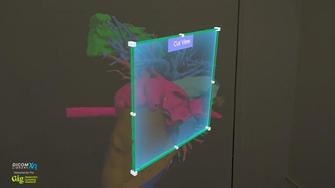
GigXR and DICOM Director launched DICOM XR Library, a cloud-based application that converts CT and MRI scans into interactive 3D and holographic images for medical and nursing education. Integrated with the Gig Immersive Learning Platform, the tool allows learners to examine anatomy, pathology and injuries, collaborate remotely, and practice diagnostic processes using mixed-reality headsets or mobile devices. It complements GigXR applications including HoloHuman, the Insight Series, HoloPatient and HoloScenarios, aiming to better prepare students for real-world clinical practice.

Medical Education Extended Reality Holographic Imaging Healthcare Technology Medical Simulation United States Cambridge University Hospitals NHS Foundation Trust Michigan Medicine Northwest Permanente David Pearlstone GigXR Inc. DICOM Director
Reporting styleInformative

Primarily factual reporting on a product launch, with promotional language drawn from the companies involved.

Holographic Healthcare Training Now Available for Medical Schools

Fierce Network 19 Jan 2023 English

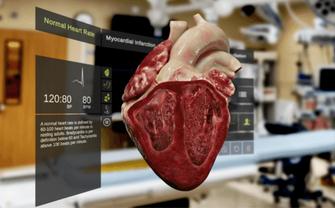
GigXR and ANIMA RES have partnered to provide medical schools with the Insight Series, a set of immersive holographic applications covering the heart, lungs and kidneys. Delivered through GigXR’s Immersive Learning Platform and accessible via mixed-reality headsets or mobile devices, the applications show healthy anatomy and disease effects, including heart attacks, atrial fibrillation, asthma, COPD and kidney disorders. Mark Cohen of Carle Illinois College of Medicine says the technology can complement cadavers and simulated patients by improving students’ understanding of anatomy, physiology and pathology while supporting future diagnostic and patient-education applications.

Holographic Technology Medical Education Extended Reality Healthcare Training Immersive Learning United States Urbana-Champaign, Illinois Carle Illinois College of Medicine University of Illinois Urbana-Champaign Mark Cohen Dennis Gabor GigXR Inc.
Reporting styleInformative

Mostly factual reporting, though it uses promotional language to describe the benefits of holographic medical training.

Post-work society: The future of life after jobs Technology is steadily becoming more capable of doing the work necessary for human survival. Is this a transition we should welcome, or one we should fear?

Link Onlys

onlys.ky

Link Onlys
Hire Message
×

Sign up to message Susan

Already have an account? Log in
Looking for work? Register as a Journalist
Verify your email to complete registration
We’ve just sent an email to . Please check your inbox and click the link to verify your email address and complete your registration. If you don’t see the email, be sure to check your spam or junk folder.
Didn’t receive the email?

Sign up to unlock profiles

Already have an account? Log in
Looking for work? Register as a Journalist
Verify your email to complete registration
We’ve just sent an email to . Please check your inbox and click the link to verify your email address and complete your registration. If you don’t see the email, be sure to check your spam or junk folder.
Didn’t receive the email?