Food Warehouse Automation Success Starts With the Right WMS
Food Logistics20 set. 2026English
Food warehouses are increasingly dependent on warehouse management systems (WMS) to coordinate automation, labor, inventory, equipment and data. Poorly integrated or outdated systems can create bottlenecks, increase reliance on manual workarounds and add complexity, while modern vendor-agnostic WMS platforms can dynamically adjust workflows and support real-time coordination. Food and beverage operations also require lot and expiration tracking, FEFO processes, traceability, temperature management and rapid responses to changing demand. Warehouse managers are advised to assess whether their WMS can adapt to disruptions, integrate diverse automation vendors, provide real-time visibility, scale without excessive IT work and remain sustainable as technology evolves.
Warehouse AutomationWarehouse Management SystemsFood and Beverage LogisticsSupply Chain TechnologyPerishable Goods ManagementJett ChitanandWarehouse management systems (WMS)
Estilo de reportagemEquilibrado
Industry analysis and guidance with a persuasive, solution-oriented tone rather than purely objective reporting.
OpinativoFactual
Why AI Insight Stalls in Food Logistics Operations
Food Logistics19 set. 2026English
Successful AI pilots in food logistics often fail to reach production because their recommendations remain outside the systems and workflows used by dispatchers, warehouse teams, carriers and shippers. Temperature-risk alerts are valuable only when they trigger timely, documented action across organizational boundaries. Rather than replacing legacy platforms, companies should integrate AI around specific high-cost operational decisions, define when human approval is required, preserve decision records for compliance, and measure success by faster responses and better documentation.
Artificial Intelligence in LogisticsFood Supply ChainCold Chain ManagementFood Safety ComplianceOperational Technology IntegrationUnited StatesU.S. Food and Drug Administration
Estilo de reportagemInformativo
Mostly factual and analytical, with practical recommendations about integrating AI into logistics workflows.
OpinativoFactual
EU Packaging Regulation Drives 13.7% Compliance Costs for Food Manufacturers
Food Logistics18 set. 2026English
The EU Packaging and Packaging Waste Regulation requires food and beverage products entering the EU market to carry a signed Declaration of Conformity, with PFAS tracking required for packaging that directly contacts food. Compliance already represents 13.7% of final product prices for European manufacturers, exceeding labor costs and manufacturing margins. Heat-related harvest disruptions and rising grain imports are increasing the importance of supply-chain visibility and regulatory readiness. The article argues that connected, AI-enabled industrial data platforms and stronger supplier-level traceability will help manufacturers manage compliance, with AI adoption currently higher in the UK and Ireland than elsewhere in Europe.
EU Packaging and Packaging Waste RegulationFood Manufacturing CompliancePFAS TrackingSupply Chain TraceabilityArtificial Intelligence in Regulatory ComplianceEuropean UnionUnited Kingdom and IrelandFranceU.S. Department of Agriculture
Estilo de reportagemEquilibrado
Mostly factual analysis, but it uses persuasive language to advocate AI-enabled industrial data platforms and improved traceability.
OpinativoFactual
How to Turn WMS Data into a Forecast
Food Logistics17 set. 2026English
Food distribution operators can turn existing WMS data into useful forecasts for shelf-life risk, dock capacity, and labor demand without buying new software. The recommended approach is to begin with one decision-relevant metric, define the forecast horizon, assign an owner to maintain data definitions, and prove the model before expanding it across systems. Ongoing governance is essential because changing products, customers, and facilities can make an otherwise functioning model inaccurate. Industry pressure for real-time data, customer scorecards, and the FDA’s July 2028 food-traceability compliance deadline make early investment in a working forecast pipeline increasingly valuable.
Warehouse Management SystemsSupply Chain ForecastingFood DistributionCold Chain LogisticsFood TraceabilityUnited StatesU.S. Food and Drug Administration (FDA)MHIGS1Arturo Torres Arpi AceroWarehouse management systems (WMS)Enterprise resource planning systems (ERP)
Estilo de reportagemInformativo
Mostly factual and evidence-based, with practical recommendations and prescriptive guidance for implementing forecasts.
OpinativoFactual
Eight months after the death of the FCT, Government requests analysis of the science and innovation system
Público24 fev. 2026Portuguese
The Education, Science and Innovation Ministry initiated a restructuring process that includes the dissolution of the Foundation for Science and Technology, merging it with the National Innovation Agency to form a new body. A government commission created in January, composed entirely of men and led by a professor married to the president of the dissolved foundation, was tasked with critically analyzing Portugal’s research and innovation ecosystem. The technical report from this group is scheduled to be publicly presented in Lisbon during the launch event for the new Agency for Research and Innovation.
Science PolicyResearch FundingGovernment ReformPortugalLisbonPortuguese GovernmentFundação para a Ciência e a Tecnologia (FCT)Agência Nacional de InovaçãoAgência de Investigação e InovaçãoFernando Alexandre
Estilo de reportagemInformativo
Mostly factual reporting about government actions with minimal subjective language.
OpinativoFactual
Contexto políticoCentro
Covers government organizational reforms without expressing partisan viewpoints.
Extrema-esquerdaExtrema-direita
New setback with NASA rocket again delays return to the Moon
Público23 fev. 2026Portuguese
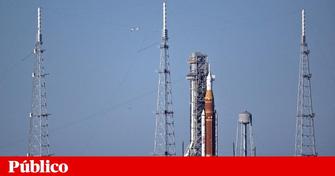
A newly discovered helium flow failure in the upper stage propulsion system of NASA’s Space Launch System has forced the agency to roll the rocket back to the Vehicle Assembly Building, delaying the Artemis II mission by at least one month. The problem emerged during routine post–wet dress rehearsal operations, despite the full rehearsal having completed successfully after earlier hydrogen leak fixes. NASA has ruled out the March launch window, with early and late April now under consideration. The Artemis program, supported by Europe, Canada, and Japan, has faced repeated delays related to fuel system issues. Artemis II aims to carry astronauts on a 10‑day lunar flyby as a precursor to a planned surface landing in 2027 or 2028 under Artemis III.
Space explorationNASA Artemis programRocket engineering issuesUnited StatesMoonPortugalNASACentro Espacial GoddardEuropean Space AgencyCanadian Space AgencyJapan Aerospace Exploration AgencyJared Isaacman
Estilo de reportagemFactual
Straightforward reporting on technical issues and delays without subjective commentary
OpinativoFactual
There are new chips in play: LightGen is the latest and comes with artificial intelligence
Público19 dez. 2025Portuguese
Integrated circuits remain essential across devices, but researchers are exploring photonic technologies that use light instead of electrons to boost speed and sustainability. A new Chinese prototype called LightGen suggests that photonic chips may become viable in the coming years, offering faster and more efficient processing, including for artificial intelligence applications.
Factual description of chip technology and photonics without subjective statements
OpinativoFactual
Infrastructure in the Azores for the Space Rider will cost 15 million euros
Público27 nov. 2025Portuguese
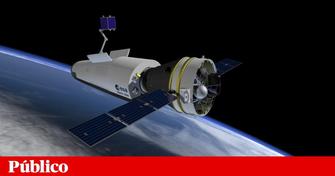
The European Space Agency and the Portuguese Government formalized an agreement for the Space Rider spaceplane to land on Santa Maria Island in the Azores, with the project budgeted at 15 million euros. The funds will support the creation of a new Space Technology Center and landing infrastructure, with the first Space Rider mission scheduled for 2028.
European space programSpace infrastructureAerospace technologyAzoresPortugalGermanyEuropean Space AgencyPortuguese GovernmentSpace Rider
Estilo de reportagemFactual
Information is presented factually with no subjective or opinionated language.
OpinativoFactual
Sword Health enters Greek health line in million-euro deal
Público27 nov. 2025Portuguese
Sword Health secured a new contract to provide an assistance and triage system for Greece’s recently established 1566 health line, marking its entry into the Greek healthcare system. The company, one of Portugal’s unicorn startups, previously failed to implement a similar AI-based model with Portugal’s Ministry of Health and INEM. If the initial deployment in Greece proves successful, the system may later expand to support the country’s emergency line using an adapted version of the earlier proposed technology.
Healthcare technologyInternational business expansionArtificial intelligence in public servicesGreecePortugalMinistério da Saúde (Portugal)INEMLinha SNS24Sword Health
Estilo de reportagemFactual
Straightforward factual reporting on a business and healthcare technology agreement.
OpinativoFactual
Portugal increases its contribution to a European Space Agency seeking autonomy
Público26 nov. 2025Portuguese
Portugal plans to nearly double its financial contribution to the European Space Agency, committing a total of 204.8 million euros through 2030, roughly 40 million per year. ESA leadership and member states are meeting in Bremen to determine priorities and budgets for the next three years as the agency seeks increased autonomy amid rising global space investments and a strategic distancing of the United States from Europe. Despite the Portuguese increase, concerns remain that overall European funding may still fall short of the agency’s target of 22 billion euros.
European Space PolicySpace Exploration FundingPortugal PoliticsPortugalGermanyEuropeEuropean Space AgencyUnited States
Estilo de reportagemInformativo
Primarily factual reporting about budget decisions with minimal subjective language
OpinativoFactual
Contexto políticoCentro
Discusses government funding decisions and international policy without taking a partisan stance
Extrema-esquerdaExtrema-direita
Veja todos os 153 trabalhos com uma conta gratuita
Respeitamos sua privacidade e usamos um número limitado de cookies para fornecer funcionalidades essenciais e aprimorar sua visita. Nenhum cookie de publicidade de terceiros está envolvido. Para mais detalhes, leia nossa Política de Cookies.