Gazeteci görevlendirin

Yayıncılar ve yayın kuruluşları İçerik pazarlama ekipleri Halkla ilişkiler ve iletişim ekipleri Risk ve istihbarat ekipleri Gazeteci bulun Medya İzleme Fiyatlandırma

Gazeteciler için

Gazetecilik iş ilanları Ücretler Ücretsiz profilinizi oluşturun

Tim hakkında

Tim Gosling, Çekya'da yaşayan gazeteci, editör ve analisttir. Orta ve Doğu Avrupa'da siyaset, iş dünyası, güncel gelişmeler ve futbolu takip ediyor. Al Jazeera, Deutsche Welle, Foreign Policy, Politico, The Times için düzenli yazıları bulunuyor. Economist Intelligence Unit için siyasi ve ekonomik analizler sağlıyor.

Diller
Arnavutça Hırvatça Lehçe İngilizce
Görüldüğü yerler
Balkan Insight Deutsche Welle Al Jazeera Foreign Policy The Times POLITICO Lietuvos Radijas ir Televizija Crossborderlocal Ipi Theaustralian Effect Magazine BBC Ceylon Today Euronews Goal.com Jutarnji list Onet.pl Next Nuclear News Lucianne Naturalgasworld

Çalışmalar 220

Czech Defense Spending Below NATO Target. Andrej Babiš: We Can’t Afford It

Deutsche Welle, republished by Gazeta.pl 26 Eyl 2026 Polish

Czech Prime Minister Andrej Babiš says the country cannot afford to raise defense spending faster, promising to reach 2% of GDP in 2027 but offering no further increase. Czechia spent 1.86% of GDP on defense last year and plans about 1.7% in 2026, below NATO’s targets and the levels reached by Poland and the Baltic states. The government’s 2027 budget includes a large deficit, with most new spending directed toward domestic priorities such as social programs rather than defense. Analysts link the choice to coalition politics, voter preferences and skepticism toward support for Ukraine. The debate comes amid warnings about Russian hybrid activity and the 2014 Vrbětice explosion, which Czech authorities attributed to Russia’s FSB. Critics also say Czechia needs a long-term strategy for its armed forces, not just higher spending.

Czech Defense Spending NATO Russia’s Hybrid Threats Czech Politics Ukraine War Czech Republic Europe United States ANO Freedom and Direct Democracy (SPD) Motorists for Themselves Civic Democratic Party (ODS)
Haber tarzıDengeli

Mostly factual reporting, with attributed criticism and analysis of the government’s spending priorities.

Siyasi bağlamMerkez sağ

The report is largely factual and presents competing perspectives, while highlighting security concerns and criticism of the government’s defense policy.
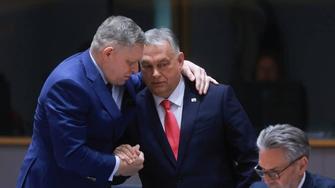
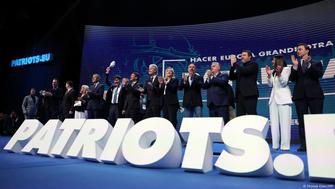
Czechia Is Dragging Its Feet on Defense Spending: “We Can’t Afford It”

Deutsche Welle 24 Eyl 2026 Polish

Czech Prime Minister Andrej Babiš says the country cannot afford to raise defense spending faster, planning to reach 2% of GDP in 2027 after cutting the 2026 allocation to about 1.7%. The position puts Prague at odds with US pressure and NATO’s higher spending targets, even as Czech and regional officials warn of Russian hybrid threats. The government’s 2027 budget provides for a large deficit and prioritizes domestic pledges on pensions, education, health care and infrastructure over faster military investment. Analysts link the choice to coalition politics, voter preferences and skepticism toward support for Ukraine; opposition figures criticize the government’s mixed signals, while the article notes the previous government also failed to meet NATO targets. A former military intelligence chief argues that Czechia also lacks a long-term strategy for the size and role of its armed forces.

Czech Defense Spending NATO Defense Spending Targets Russian Hybrid Threats Czech Politics Support for Ukraine Czechia Europe Russia NATO Czech government ANO Freedom and Direct Democracy (SPD)
Haber tarzıBilgilendirici

Mostly factual political analysis, with some evaluative framing of the government’s priorities and rhetoric.

Siyasi bağlamMerkez

The piece uses a largely analytical approach, presenting government, opposition and expert perspectives while emphasizing security and budget trade-offs.

How the Iran Deal Sets the Stage for More Conflict

Foreign Policy 22 Haz 2026 English

Negotiations following the U.S.-Iran truce face deep structural challenges stemming from vague terms, mistrust, and divergent priorities among the United States, Iran, Israel, and regional allies. Iran’s new leadership is more confrontational, its proxy network weakened, and its leverage tied to its ability to threaten regional shipping and Gulf states. Israel, operating under an ‘anti-solutionism’ doctrine, continues military actions that risk undermining diplomacy. Gulf states doubt U.S. security guarantees, while European and Asian allies express frustration with U.S. unilateralism. With unresolved disputes over nuclear activity, financial relief, security guarantees, and regional influence, the agreement is unlikely to produce lasting stability, instead setting the stage for prolonged, low-intensity conflict.

U.S.-Iran relations Middle East conflict Gaza war Nuclear negotiations Israel security Iran United States Israel U.S. government Iranian government Israeli government Hezbollah
Haber tarzıBilgilendirici

Mostly analytical but includes interpretive judgments about intentions and likely outcomes

Siyasi bağlamMerkez

Policy-focused analysis without partisan framing

Is the RTV fee a guarantee of media independence?

DW 21 Haz 2026 Croatian

The Czech government proposes eliminating the RTV fee and shifting funding for public broadcasters ČT and ČRo to the state budget, prompting warnings from experts and media organizations that the move threatens their independence. Critics argue the plan would cut budgets sharply, weaken oversight protections and open the door to political influence, echoing developments in Hungary, Poland and Slovakia. Opposition parties, journalists and civil society groups have launched protests, strikes and petitions, asserting the reform amounts to nationalization of public media, while the government denies any intention to undermine their autonomy.

Media independence Czech politics Public broadcasting Czech Republic Europe Prague Czech Television (ČT) Czech Radio (ČRo) Czech Government ANO SPD STAN
Haber tarzıBilgilendirici

Primarily factual reporting with some analytical and critical perspectives from experts.

Czech government causes alarm with plan to scrap license fee

DW 19 Haz 2026 English

Czechia’s government has advanced legislation to abolish the public broadcasting license fee and shift Czech Television and Czech Radio to direct state funding, prompting warnings of political interference and threats to media independence. The plan would reverse recent budget increases and impose major cuts, which broadcasters say would force layoffs and reduce regional and specialized programming. Critics, including media experts, opposition politicians and civil society groups, argue that the move mirrors illiberal trends seen in Hungary, Poland and Slovakia and lacks safeguards to prevent government influence. Significant public opposition has emerged, including mass protests and a planned strike by media staff, as pressure grows for the government to withdraw the proposal.

Media freedom Government policy Public broadcasting funding Czechia European Union Central and Eastern Europe Czech Television Czech Radio Czech government Reporters Without Borders Million Moments for Democracy STAN party
Haber tarzıDengeli

Primarily factual reporting with some quoted opinions and warnings

Siyasi bağlamMerkez sol

Defends public media independence and criticizes populist government policies

New Hungarian government prepares strategic shift, analyst: 'Ambitious but not impossible'

Jutarnji list 13 May 2026 Croatian

Hungary’s incoming government under Peter Magyar seeks to re‑align with the EU and accelerate preparations for eurozone entry by 2030 despite slow economic growth, a large deficit and partner skepticism. Experts highlight major hurdles in meeting Maastricht criteria, particularly fiscal consolidation, while noting potential benefits such as lower inflation, borrowing costs and currency stability. EU partners remain cautious given Hungary’s weak economic position and past institutional backsliding, though top EU officials view the change in direction positively. Public support for the euro is high, but concerns persist about readiness and the loss of monetary autonomy. Hungary aims to follow the successful path of Slovakia, though wider regional effects on other Visegrad countries are unlikely.

Eurozone accession EU–Hungary relations Hungarian economy Fiscal policy Hungary European Union Germany European Commission European Central Bank NATO Tisza party Economist Intelligence Unit
Haber tarzıBilgilendirici

Primarily factual reporting with expert commentary

Siyasi bağlamMerkez

Focuses on EU integration, fiscal policy and governance without partisan framing

Slovakia: Robert Fico's government fights on all fronts

DW 27 Eyl 2025 Albanian

Widespread protests against Prime Minister Robert Fico’s government reflect mounting dissatisfaction with its economic consolidation plan and concerns about its pro‑Russia stance and moves criticized as authoritarian. The European Socialists plan to expel Fico’s Smer party over democratic backsliding, though analysts say such international pressure has limited domestic impact. Opposition parties are attempting to use public anger to challenge the governing coalition, but internal divisions and voter distrust from past liberal-led governments complicate their efforts. Economic austerity measures, driven by a worsening fiscal situation and external pressures on Slovakia’s auto sector, risk deepening political instability. Analysts expect the fragile coalition to face further tests, while early elections remain unlikely before 2027.

Slovak politics Protests Economic policy EU relations Russia relations Slovakia European Union Russia Slovak government Smer Progressive Slovakia Party of European Socialists
Haber tarzıBilgilendirici

Mostly factual reporting with limited interpretive commentary

Siyasi bağlamMerkez

Focuses on political developments and conflicts without ideological advocacy

Hungarian PM Extends Influence Network in Europe While Clamping Down at Home

Balkan Insight 28 Tem 2025 English

Hungary’s ruling Fidesz has advanced a sweeping ‘transparency’ bill to investigate and prosecute foreign-funded NGOs, media and political movements, intensifying a decade-long clampdown on independent voices ahead of the 2026 election. In parallel, Budapest has built a taxpayer-funded influence network across Central and Eastern Europe and Brussels, centered on the Batthyany Lajos Foundation, Mathias Corvinus Collegium and the Danube Institute, to export illiberal narratives, host events such as CPAC, and fund sympathetic media including The European Conservative and Brussels Signal. Analysts say this strategy seeks to reshape the EU from within by amplifying Eurosceptic, anti-immigration and anti-LGBTQ positions and supporting like-minded parties in Slovakia, Poland, Czechia and beyond. Financial conduits and allied businesses, including MBH Bank, Mediaworks/V4NA, and firms like 4iG and MVM, help extend reach and resources. Brussels has hardened its stance—freezing funds, eyeing infringement actions and even Article 7—though unanimity rules blunt swift punishment, prompting experts to urge tighter control of EU money flows. Facing a slowing economy and EU pressure, Budapest briefly delayed the ‘transparency law’ but continues leveraging the Sovereignty Protection Office against critics while maintaining alliances to shield Hungary in the Council of the EU.

European Union politics Hungarian domestic politics Media freedom and civil society Populism and far-right Influence operations and foreign funding Rule of law in the EU Hungary European Union Central and Eastern Europe Government of Hungary Fidesz European Commission
Haber tarzıDengeli

Evidence-rich investigative analysis with critical framing and expert quotes; largely factual but interpretive and evaluative in tone.

Siyasi bağlamMerkez sol

Supportive of EU rule-of-law enforcement and civil society; critical of illiberal right-wing populism and influence operations.

Psychedelic Healing: Czechia Opens Mind to Magic Mushroom Therapy

Balkan Insight 2 Tem 2025 English

Czechia is on the brink of becoming the first European country to legalize psilocybin for medical purposes, following approval from the lower house and pending approval from the upper house and the president. This move is driven by the increasing number of people suffering from depression and anxiety, and the potential benefits of psychedelics in treatment-resistant cases. The legislation is expected to regulate psilocybin similarly to medicinal cannabis. Despite concerns about risks such as psychosis, the initiative is supported by a majority of Czechs and is seen as a step towards establishing Czechia as a leader in psychedelic therapy. The ongoing war in Ukraine and the mental health needs of its veterans and civilians are also influencing the push for psychedelic therapy. Psyres, an NGO, is actively involved in research and advocacy, aiming to remove the stigma around psychedelic therapy and promote its adoption across Europe.

Psychedelic Therapy Mental Health Legislation Czechia Ukraine Europe Psyres Czech National Institute of Mental Health Psyon NUDZ Bednarova Petr Pavel
Haber tarzıDengeli

Balanced discussion on the potential and challenges of psychedelic therapy.

Siyasi bağlamMerkez

Focus on legislative process and public health implications.

The Network of Right-Wing Populists in Central Europe

DW 9 Haz 2025 German

The article explores the network of right-wing populists in Central Europe, highlighting the influence of Viktor Orban and the CPAC Hungary 2025 event. It discusses the role of Hungary and Poland as central hubs for nationalist movements, supported by government-funded institutions and grassroots organizations. The article also examines the impact of these networks on European politics, including efforts to counter EU measures against Orban's government. Despite attempts to form international alliances, the success of these right-wing movements in Europe remains uncertain.

Right-Wing Populism European Politics Nationalism Hungary Poland Central Europe CPAC Fidesz AfD Vox Freiheitliche Partei Österreichs Danube Institute
Haber tarzıYorumlayıcı

The article contains subjective statements and opinions about right-wing populism and its impact on European politics.

Siyasi bağlamAşırı sağ

The article discusses right-wing populism and nationalism in Europe, focusing on figures like Viktor Orban and events like CPAC.

Ücretsiz bir hesapla 220 çalışmanın tümünü görün

İşe al Mesaj
×

Tim kişisine mesaj göndermek için kaydolun

Zaten bir hesabınız var mı? Giriş yap
İş mi arıyorsunuz? Gazeteci olarak kaydolun
Kaydı tamamlamak için e-postanızı doğrulayın
Az önce şu adrese bir e-posta gönderdik: . E-posta adresinizi doğrulamak ve kaydınızı tamamlamak için gelen kutunuzu kontrol edin ve bağlantıya tıklayın. E-postayı görmüyorsanız, spam veya gereksiz klasörünüzü kontrol etmeyi unutmayın.
E-postayı almadınız mı?

Profilleri açmak için kaydolun

Zaten bir hesabınız var mı? Giriş yap
İş mi arıyorsunuz? Gazeteci olarak kaydolun
Kaydı tamamlamak için e-postanızı doğrulayın
Az önce şu adrese bir e-posta gönderdik: . E-posta adresinizi doğrulamak ve kaydınızı tamamlamak için gelen kutunuzu kontrol edin ve bağlantıya tıklayın. E-postayı görmüyorsanız, spam veya gereksiz klasörünüzü kontrol etmeyi unutmayın.
E-postayı almadınız mı?