Journalisten engagieren

Verlage & Sender Content-Marketing-Teams PR- & Kommunikationsteams Risiko- & Intelligence-Teams Journalisten finden Medienbeobachtung Preise

Für Journalisten

Stellenangebote im Journalismus Honorare und Tarife Kostenloses Profil erstellen

Über Vichana

Vichana Sar ist ein erfahrener Journalist und Forscher mit Sitz in Phnom Penh, Kambodscha. Er ist als Forscher an der Royal Academy of Cambodia tätig und ist an drei angesehenen Universitäten als Dozent tätig. Mit dual Master’s degrees in Education and Public Management spezialisiert sich Vichana auf die Schnittstelle zwischen digitaler Governance, internationalen Beziehungen und regionaler Geopolitik. Als AIB Pass Holder setzt er sich dafür ein, evidenzbasierte Berichterstattung und tiefgehende Analysen zur sich wandelnden sozio-politischen Landschaft der Mekong-Region zu liefern.

Dienstleistungen
Sprachen
Englisch Khmer
Gesehen in
Opinion Asianews Cambodianess Lepetitjournal Phnompenhpost

Arbeiten 16

Undiplomatic rhetoric

Philippine Daily Inquirer 22. Okt. 2026 English

The editorial condemns Chinese Ambassador Jing Quan's warnings to the Philippines as threatening and undiplomatic, contrasting them with the country's years of alleged Chinese harassment in the West Philippine Sea and the 2016 arbitral ruling that rejected China's sweeping claims. It cites China's militarization, water-cannon attacks, obstruction of a humanitarian mission, and a China Daily video depicting Filipinos as monkeys. The piece argues that the Philippines is not the aggressor, criticizes Vice President Sara Duterte and Senator Robin Padilla for echoing or accommodating Beijing's position, and challenges Padilla to explain whether he defended Philippine sovereignty in his meeting with Jing.

Philippines-China relations South China Sea territorial disputes Diplomacy Freedom of expression Philippines China South China Sea Philippine Department of Foreign Affairs Government of China Philippine government United Nations Association of Southeast Asian Nations
BerichtsstilMeinungsbetont

Strongly opinionated editorial condemning China's conduct and criticizing Philippine officials who echo Beijing's position.

Politischer KontextMitte-links

Editorially nationalist and critical of China's authoritarian government and actions, while defending Philippine sovereignty and democratic freedoms.
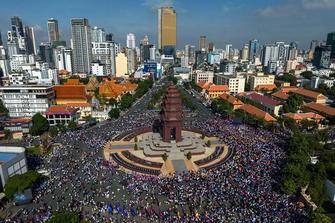

Diplomacy and Self-Respect

Philippine Daily Inquirer 22. Okt. 2026 English

Chinese Ambassador Jing Quan's forceful remarks and the Chinese Embassy's pointed social media posts drew criticism from Filipino lawmakers and raised concerns about intimidation. The author contrasts that rhetoric with the professionalism of Philippine diplomats and argues that appeals to the Philippines' economic dependence on China do not erase the coercive nature of the ambassador's statements. While maintaining relations with other countries matters, the Philippines should not sacrifice its self-respect or sovereignty to avoid displeasing a more powerful state.

Philippines-China Relations Diplomacy National Sovereignty Maritime Disputes Philippines China Chinese Embassy in Manila Philippine Department of Foreign Affairs Philippine House of Representatives Jing Quan Risa Hontiveros Clarita Carlos
BerichtsstilInterpretierend

Opinion column making a clear normative argument that the Philippines should defend its self-respect and sovereignty while maintaining diplomatic relations.

Politischer KontextMitte

The column takes a sovereignty-focused position on diplomacy without clearly aligning with a left- or right-wing political ideology.

The Fight for Our Nation’s Soul Needs Our Artists

Philippine Daily Inquirer 22. Okt. 2026 English

Joel Ruiz Butuyan argues that art is essential to confronting the enduring cultural effects of Rodrigo Duterte’s drug war. While legal proceedings and factual arguments have not substantially weakened support for the Dutertes, creative work can preserve victims’ memories, challenge the normalization of violence, and reach younger generations. He calls for the Dekada ng Sama-Samang Pag-alala exhibition to travel to schools and urges Filipino artists to create work that documents and denounces the killings.

Rodrigo Duterte’s drug war Art and cultural memory Human rights Disinformation Marcos dictatorship Philippines Quezon City International Criminal Court Ateneo de Manila University University of the Philippines Joel Ruiz Butuyan Rodrigo Duterte
BerichtsstilMeinungsbetont

Strongly opinionated column urging artists to confront the legacy of Duterte’s drug war through creative work.

Politischer KontextLinks

Critical of Duterte’s drug war and calls for artistic resistance and accountability for state violence.

Why the Philippines Is a Force for Peace in Southeast Asia

Philippine Daily Inquirer 22. Okt. 2026 English

Jun Abad argues that the Philippines contributes to peace in Southeast Asia through its founding role in ASEAN, commitments against force, efforts to negotiate a South China Sea code of conduct, and resolution of maritime boundaries with Indonesia. The column also points to continued cooperation with Malaysia despite the Sabah dispute, including Malaysia’s facilitation of peace talks with the Moro Islamic Liberation Front. It cites joint regional efforts against drug smuggling and other transnational crimes as further evidence of the Philippines’ security cooperation.

Philippine Foreign Policy Southeast Asian Diplomacy Maritime Disputes Regional Security Transnational Crime Southeast Asia Philippines South China Sea Association of Southeast Asian Nations (ASEAN) Malaysia Indonesia Vietnam
BerichtsstilInterpretierend

An argumentative opinion column making the case that the Philippines promotes regional peace, supported by historical and policy examples.

Politischer KontextMitte

The column advocates a Philippine foreign-policy position and regional cooperation without advancing a clear left- or right-wing ideological stance.

Navigating the global warming ‘overshoot’

Philippine Daily Inquirer 22. Okt. 2026 English

The column argues that exceeding the Paris Agreement’s 1.5°C warming threshold is increasingly unavoidable, with peak warming expected to reach 1.8°C even under optimistic current pledges. Citing a United Nations Environment Programme report, it says overshoot should prompt—not undermine—urgent mitigation and adaptation, since higher peak temperatures intensify risks such as extreme heat, droughts, floods, and stronger El Niño and La Niña impacts. For the Philippines, the column supports expanding renewable energy and notes targets to raise renewables’ share of power generation to 35% by 2030 and 50% by 2040. Achieving those goals requires further green-energy auctions, faster grid construction and integration, reduced regulatory delays, and adoption of smart grids and microgrids.

Climate Change Global Warming Overshoot Renewable Energy Greenhouse Gas Emissions Climate Adaptation Energy Infrastructure Philippines Global United Nations Environment Programme United Nations Framework Convention on Climate Change Department of Energy (Philippines) Philippine government
BerichtsstilInterpretierend

Opinion column urging urgent climate action and faster renewable-energy deployment, while drawing on climate reports and policy targets.

45 Years of Constructive Ideas

Philippine Daily Inquirer 22. Okt. 2026 English

Marking the Makati Business Club’s 45th anniversary, Guillermo M. Luz reviews its role in advocating economic liberalization, competition, privatization, public-private partnerships, democracy, and accountable government. Founded in 1981 amid concentrated economic power and political restrictions, MBC backed legislation and initiatives that helped open markets and strengthen public services and governance. Despite economic improvements, the Philippines still faces weak regional competitiveness, persistent governance problems, and worsening corruption. Luz argues that MBC remains relevant and calls for institutionalized collaboration among business, civil society, and government to address the country’s longstanding and emerging challenges.

Makati Business Club Philippine Economic Policy Good Governance Business and National Development Democracy and Rule of Law Philippines Philippine government Department of Education (Philippines) Department of Health (Philippines) National Citizens' Movement for Free Elections Guillermo M. Luz Benigno Aquino Jr.
BerichtsstilInformativ

A largely factual institutional history and policy assessment, with the author's favorable view of MBC's continuing mission.

Politischer KontextMitte-rechts

Supports open markets, liberalization, and private-sector participation, alongside democratic institutions and social-sector investment.

Comparable Fees Can Strengthen Retirement Saving in the Philippines

Philippine Daily Inquirer 22. Okt. 2026 English

The Philippines’ expanding Personal Equity and Retirement Account (PERA) options need clear, comparable pricing to help savers make informed choices. New Bangko Sentral ng Pilipinas guidelines require banks offering PERA time deposits to disclose rates, yields, fees, risks, and conditions, but disclosures should also distinguish which charges apply to each saver’s chosen arrangement. Standardized statements could identify fees, show their effects at different account sizes, and explain costs embedded in investment products, alongside investment risks and access rules. In particular, savers should understand that a deposit’s maturity does not itself mean they can withdraw money from their PERA. Better disclosure will not make saving affordable for everyone, but it could strengthen trust and make providers’ offerings easier to compare.

Retirement Saving Personal Equity and Retirement Account (PERA) Financial Fees and Disclosure Personal Finance Philippines Bangko Sentral ng Pilipinas Bureau of Internal Revenue Gustavo Pessoa PERA time deposits
BerichtsstilInformativ

Mostly explanatory, with a clear argument for standardized, comparable fee disclosures.

Expensive ‘Mistakes’: Cambodia Must End the Culture of ‘Hit, Run and Pay’

Asia News Network 31. Juli 2026 English

Vichana Sar argues that Cambodia’s recurring “hit, run and pay” pattern lets drivers who cause fatal crashes evade criminal responsibility when influential families pay compensation and victims’ relatives withdraw complaints. The Ministry of Justice has said compensation cannot exempt offenders from prosecution, but the article says police, courts and medical professionals must enforce that promise, including prosecuting doctors who knowingly issue false medical certificates. It also urges personal responsibility, less excessive drinking and peaceful consumer boycotts as means of challenging impunity. Equal enforcement of the law, the author concludes, is essential to restoring public confidence and preventing further tragedies.

Road safety Hit-and-run crashes Judicial accountability Drunk driving Medical ethics Cambodia Phnom Penh Cambodia Ministry of Justice Cambodian police Cambodian courts Vichana Sar
BerichtsstilInterpretierend

Argues for stronger criminal accountability and cultural change, using persuasive and moral language.

Roots, reactions, and the rocky road ahead for Thailand-Cambodia relations

Asia News Network 23. Juni 2025 English

The Thailand-Cambodia border dispute has escalated into a significant crisis, rooted in historical grievances and differing interpretations of colonial-era maps. Cambodia adheres to maps from the Franco-Siamese Conventions, while Thailand uses its national maps, leading to ongoing tensions. Recent skirmishes and diplomatic spats have further strained relations, with both countries leveraging economic and political tools. The conflict is complicated by geopolitical dynamics, with Cambodia aligning more with China and Thailand maintaining ties with the US. Despite the tensions, economic interdependence acts as a stabilizing factor, and there are calls for ASEAN and international involvement to encourage peaceful resolution. The future of relations hinges on both nations' willingness to engage in genuine dialogue and prioritize long-term stability over short-term political gains.

Thailand-Cambodia Relations Border Dispute Regional Stability Thailand Cambodia Preah Vihear International Court of Justice Thai Military Cambodian Government Hun Sen Paetongtarn Shinawatra Hun Manet
BerichtsstilAusgewogen

Balanced analysis with both factual reporting and subjective interpretations.

Politischer KontextMitte

Focus on diplomatic and legal resolution of international disputes.

Rocky Thailand-Cambodia relations

Philippine Daily Inquirer 17. Juni 2025 English

The border dispute between Thailand and Cambodia has escalated into a significant crisis, rooted in historical grievances and differing interpretations of border maps. The conflict intensified after a skirmish in the Emerald Triangle, leading to economic and diplomatic tensions. Thailand has imposed trade restrictions, while Cambodia has threatened to cut off essential services. The situation is further complicated by geopolitical dynamics, with Cambodia aligning more with China and Thailand maintaining ties with the US. The personal relationship between Cambodian Senate President Hun Sen and Thai Prime Minister Paetongtarn Shinawatra has deteriorated, impacting diplomatic efforts. A resolution requires both nations to engage in genuine dialogue and consider international legal rulings.

Thailand-Cambodia Border Dispute Geopolitical Tensions International Relations Thailand Cambodia China International Court of Justice Cambodian Senate Thai Military US Military Chinese Military Hun Sen
BerichtsstilInterpretierend

The article contains subjective statements and personal beliefs, particularly regarding the political dynamics and historical grievances.

Politischer KontextMitte

The article discusses international relations and geopolitical tensions without a clear political bias.

Alle 16 Arbeiten mit einem kostenlosen Konto ansehen

Weitere Journalisten in Phnom Penh

Engagieren Nachricht
×

Registrieren Sie sich, um Vichana eine Nachricht zu senden

Haben Sie bereits ein Konto? Anmelden
Suchen Sie Arbeit? Als Journalist registrieren
Verifizieren Sie Ihre E-Mail, um die Registrierung abzuschließen
Wir haben gerade eine E-Mail gesendet an . Bitte prüfen Sie Ihren Posteingang und klicken Sie auf den Link, um Ihre E-Mail-Adresse zu verifizieren und Ihre Registrierung abzuschließen. Falls Sie die E-Mail nicht sehen, prüfen Sie unbedingt Ihren Spam- oder Junk-Ordner.
E-Mail nicht erhalten?

Registrieren Sie sich, um Profile freizuschalten

Haben Sie bereits ein Konto? Anmelden
Suchen Sie Arbeit? Als Journalist registrieren
Verifizieren Sie Ihre E-Mail, um die Registrierung abzuschließen
Wir haben gerade eine E-Mail gesendet an . Bitte prüfen Sie Ihren Posteingang und klicken Sie auf den Link, um Ihre E-Mail-Adresse zu verifizieren und Ihre Registrierung abzuschließen. Falls Sie die E-Mail nicht sehen, prüfen Sie unbedingt Ihren Spam- oder Junk-Ordner.
E-Mail nicht erhalten?