Editori ed emittenti Team di content marketing Team di PR e comunicazione Team di risk e intelligence Giornalisti e professionisti dei media Monitoraggio dei media Prezzi

Su Vladimir

Vladimir Zivojinovic (b.1993) è un fotografo documentarista con base a Belgrado, Serbia. Si concentra su questioni di cronaca, sociali e umanitarie nei Balcani. Per tre anni ha lavorato per Ringier Axel Springer, e il suo lavoro è stato pubblicato in media nazionali come il quotidiano Blic, il settimanale NIN e la testata online Vice. Da gennaio 2018 lavora per Agence France-Press come stringer, e il suo lavoro è stato ripreso da testate estere quali la rivista francese Paris Match, Liberation, Vice UK, BBC, The Telegraph UK, La Repubblica, Independent UK, BILD, The Economist, European Commission, British GQ, ESPN. Ha inoltre collaborato con le ONG Oxfam International e Open Society Foundation. Premi 2016. Secondo posto all'INTERNATIONAL REPORTAGE AND MEDIA FESTIVAL, Apatin 2017. Terzo posto a BETA’S PHOTOGRAPH OF THE YEAR, Belgrado, Serbia 2018. Vincitore nella categoria "Cultural Heritage" e vincitore di un riconoscimento speciale del Festival al BALKAN PHOTO FESTIVAL, Sarajevo, Bosnia ed Erzegovina 2018. Selezionato per Joop Swart Masterclass | World Press Photo Academy

Servizi
Lingue
inglese tedesco serbo
Visto su
The New York Times BBC Barron News-Shield British GQ ESPN Libération Störungsmelder The New Humanitarian Vice Bild Ctvnews

Lavori 12

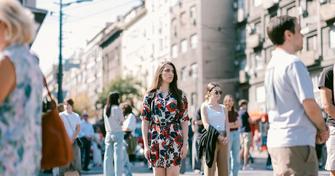
In Serbia, baton blows rain down but the student protest holds firm

Libération 1 ott 2025 French

Young Serbs have intensified street blockades since a major protest on June 28 to pressure President Aleksandar Vucic into calling early elections. During an August 14 demonstration in central Belgrade, physics student Dusan Cvetkovic was violently detained by plainclothes men arriving in an unmarked car, reflecting escalating confrontations between police forces and student protesters demanding political change.
Student protests Police violence Serbian politics Serbia Belgrade Serbian Police Presidency of Serbia Dusan Cvetkovic Aleksandar Vucic
Stile giornalisticoInformativo

Mostly factual reporting with some subjective descriptions from witnesses.

Contesto politicoCentro

Reports on political unrest without expressing ideological alignment.
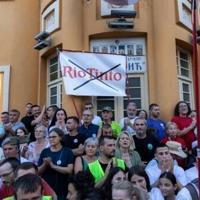
Protests in Serbia: A Country in Constant Protest

DIE ZEIT 2 lug 2025 German

Road blockades have spread across Serbian cities after students called for civil disobedience when President Aleksandar Vučić did not meet their demand for early elections. The student-led movement began after a railway station roof collapsed in Novi Sad in November, killing 16 people; protesters accuse the government of corruption and covering up responsibility. After months of demonstrations, strikes, and government efforts to contain the movement, citizens organized at least 181 road blockades in one day. In Belgrade, residents have formed neighborhood committees inspired by student assemblies and say they will sustain the protests until the government falls.

Protests in Serbia Serbian politics Student movement Civil disobedience Government corruption Serbia Belgrade Novi Sad Government of Serbia CRTA University of Belgrade Aleksandar Vučić
Stile giornalisticoInformativo

Mostly factual reporting, with some descriptive and interpretive language about the protests and government.

Contesto politicoCentro

Reports on anti-government protests and allegations of authoritarianism without endorsing a party or political platform.

You Can Now Subscribe to VICE Magazine

VICE 1 mag 2025 English

VICE promotes the return of its print magazine in 2026 after a seven-year hiatus and invites readers to subscribe. The print-and-digital plan costs $70 per year and includes four quarterly issues, access to members-only articles and columns, and early access to new documentaries. A digital-only membership costs $20 annually or $2 monthly and includes the online content and documentaries. The summer 2026 issue is sold out; new print subscribers will receive the fall issue, The Optimized Issue.

VICE Magazine relaunch Magazine subscriptions Digital media membership VICE VICE Magazine VICE digital membership VICE print and digital subscription
Stile giornalisticoInterpretativo

Promotional copy uses enthusiastic, subjective language to encourage subscriptions.

Thousands of demonstrators in Loznica protesting the mine last month

News Shield 16 lug 2024 English

Serbia's government announced the resumption of operations at a controversial lithium mining project following a court ruling that overturned the previous cancellation of its permits. This decision comes amid ongoing protests in Loznica against the mining activities.

Lithium Mining Protests Court Ruling Serbia Loznica Serbia's government
Stile giornalisticoInformativo

The text is mostly factual, reporting on a government decision and court ruling.

A Land Once Emptied by War Now Faces a Peacetime Exodus

The New York Times 28 feb 2024 English

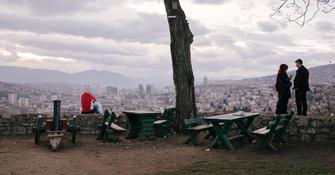
Bosnia, once ravaged by war, now faces a new challenge as its population continues to dwindle in peacetime. Fikret Puhalo, a sheep farmer who returned to his village after the war, describes a community that has shrunk dramatically, with no new births since his return. The village, once home to over 400 people, now has only 15 residents, highlighting the ongoing demographic crisis.

Emigration Post-War Recovery Demographic Changes Bosnia Fikret Puhalo
Stile giornalisticoInformativo

The article is largely factual but includes some subjective observations from the main subject, Fikret Puhalo.

After a School Shooting in Serbia, Belgrade Is Consumed With Grief

The New York Times 4 mag 2023 English

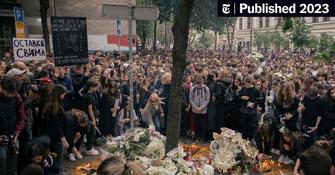
A 13-year-old boy killed eight children and a school guard in a shooting at Vladislav Ribnikar primary school in Belgrade, Serbia, causing widespread grief and shock. The incident, which also injured six children and a teacher, has led to a national mourning period and raised questions about gun control in Serbia. President Aleksandar Vucic has proposed measures to regulate gun ownership, including a moratorium on new licenses and enhanced surveillance of shooting ranges. The shooter, who used his father's pistols, will not face criminal charges due to his age. The tragedy has prompted a significant public response, with many donating blood and expressing solidarity with the victims.

School Shooting Gun Control Public Mourning Belgrade Serbia Serbian Government French Foreign Ministry Aleksandar Vucic Luka Zivkovic Elena Anita Lainovic Ivana Savic
Stile giornalisticoEquilibrato

The article contains a mix of factual reporting and subjective statements, particularly in quotes from individuals expressing their emotions and opinions.

Srebrenica and Bratunac: Commemoration for the Serbian victims killed at the beginning of the war in Bosnia

BBC 12 lug 2018 Serbian

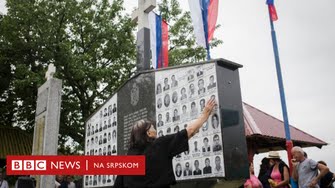
Hundreds gathered for a memorial service to commemorate Serbian victims killed in 1992 in villages around Bratunac and Srebrenica. It is believed that 69 civilians were killed on this day in 1992. Officials and families first lit candles and laid wreaths at the Bratunac cemetery. The 26th anniversary was marked by speeches emphasizing that no one has been held accountable for these murders. The Center for the Study of War and War Crimes in Bosnia and Herzegovina reports that 2,682 Serbs died in the Podrinje area. Naser Orić, a commander of the Army of Bosnia and Herzegovina, was acquitted by The Hague Tribunal and the Court of Bosnia and Herzegovina but is facing a retrial after an acquittal was overturned earlier in 2018. Serbia issued a warrant for Orić in 2014 for suspected war crimes against Serbs in Srebrenica in 1992.

War Crimes Commemoration Balkan Conflict Srebrenica Bratunac Bosnia and Herzegovina Centar za istraživanje rata i ratnih zločina Apelaciono veće Suda Bosne i Hercegovine Radojka Filipović Neđa Stojanović Ivko Stojanović Naser Orić

"Join us comrade!" - Yugotour and the Resurgence of Yugoslav Nostalgia

Ctvnews 19 giu 2018 English

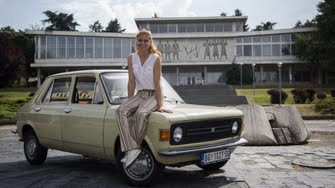
The article discusses the resurgence of interest in the former Yugoslavia, particularly through the lens of Yugotour, a travel agency in Belgrade that offers tours in the iconic Yugo car. The Yugo, a symbol of the bygone era, is used to take tourists on a journey to significant sites from Yugoslavia's past, culminating at the Museum of History of Yugoslavia and Tito's mausoleum. The article highlights the nostalgia for the communist period, known as 'Yugonostalgia,' and the commercialization of this sentiment. It also touches on the history of the Yugo car, its production, and its reputation. The piece includes perspectives from tourists and locals, illustrating the complex legacy of Yugoslavia and the interest in its history and cultural artifacts.

Tourism History Culture Nostalgia Serbia Yugoslavia Belgrade Yugotour

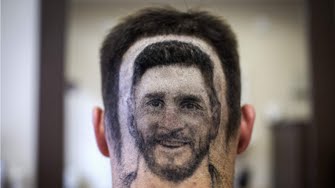
Hairy World Cup! - Fan now wears Messi on the back of his head

Bild 14 giu 2018 German

Mario Hvala, a hairdresser from Novi Sad, Serbia, specializes in creating hair tattoos of famous personalities, including Lionel Messi, Cristiano Ronaldo, Donald Trump, and Vladimir Putin. His unique service has gained popularity, especially after Serbia qualified for the World Cup in Russia. A fan named Aleksa Maricevic spent nearly seven hours getting a Messi hair tattoo. While a regular haircut at Hvala's studio costs 8 euros, the hair tattoo service is priced at 150 euros.

Sports Entertainment & Celebrity Serbia Russia Mario Hvala Donald Trump Vladimir Putin Cristiano Ronaldo Lionel Messi Aleksa Maricevic Thomas Müller Toni Kroos

Lessons from Kosovo? How a European hotbed of Islamist extremism deals with returning fighters

The New Humanitarian (IRIN) 2 mar 2018 English

Kosovo faces the challenge of managing citizens who joined Islamist extremist groups in Syria and Iraq, balancing relatively lenient sentencing with an emphasis on deradicalisation. Despite having Europe’s highest per-capita number of foreign fighters, authorities focus on short prison terms, community‑based prevention initiatives, and early‑intervention programmes. Persistent economic hardship, unemployment, corruption, and unresolved tensions from the 1990s conflict contribute to an environment vulnerable to radicalisation. Returnees describe disillusionment with extremist groups, while officials highlight Kosovo’s efforts to counter radicalism as it seeks closer alignment with the European Union. Similar challenges appear in neighbouring Serbia’s Sandžak region, where families grapple with the consequences of radicalisation. The article underscores the complexity of extremist recruitment and the differing national approaches to managing returning fighters.

Islamist extremism Foreign fighters Kosovo politics Deradicalisation Kosovo Syria Serbia Islamic State Ahrar al-Sham Nusra Front KFOR NATO
Stile giornalisticoInformativo

Mostly factual reporting with limited interpretive commentary

Contesto politicoCentro

Focuses on policy approaches to extremism without partisan framing

Registrati gratis per vederli tutti e 12

Ingaggia Messaggio
×

Registrati per inviare un messaggio a Vladimir

Hai già un account? Accedi
Cerchi lavoro? Registrati come giornalista
Verifica la tua email per completare la registrazione
Abbiamo appena inviato un'email a . Controlla la tua casella di posta e clicca sul link per verificare il tuo indirizzo email e completare la registrazione. Se non vedi l'email, assicurati di controllare la cartella spam o posta indesiderata.
Non hai ricevuto l'email?

Registrati per sbloccare i profili

Hai già un account? Accedi
Cerchi lavoro? Registrati come giornalista
Verifica la tua email per completare la registrazione
Abbiamo appena inviato un'email a . Controlla la tua casella di posta e clicca sul link per verificare il tuo indirizzo email e completare la registrazione. Se non vedi l'email, assicurati di controllare la cartella spam o posta indesiderata.
Non hai ricevuto l'email?