Engager des journalistes

Éditeurs et diffuseurs Équipes de marketing de contenu Équipes RP et communication Équipes risques et renseignement Trouver des journalistes Veille médias Tarifs

Pour les journalistes

Offres d'emploi en journalisme Tarifs Créez votre profil gratuit

À propos de Shaun

Shaun Waterman est un journaliste primé qui a travaillé pour la BBC, United Press International, Newsweek et POLITICO, et un expert en cybersécurité, en technologie et en menaces émergentes qui est intervenu lors de conférences de premier plan comme Hacker Halted et l'Aspen Security Forum. Shaun est aussi un responsable de rédaction expérimenté et un dirigeant d'entreprise qui, au cours des dix dernières années, a lancé et dirigé deux des bulletins quotidiens sur la cybersécurité les plus respectés et les plus lus à DC — POLITICO Pro's Morning Cybersecurity et Scoop News Group's CyberScoop. Shaun est devenu Homeland and National Security Editor de UPI peu après Sept. 11, 2001, couvrant les efforts de lutte contre le terrorisme des agences de renseignement américaines et le Department of Homeland Security dès sa mise sur pied en 2003. Cette année-là, il est devenu le premier journaliste des médias nationaux à écrire sur la possibilité d'une cyberattaque contre le réseau électrique américain. Ses reportages sur la Sept. 11 Commission et sur le processus laborieux par lequel certaines de ses recommandations sont finalement devenues loi dans le 2004 Intelligence Reform and Terrorism Prevention Act lui ont valu un prix "Dateline Washington" de la Society of Professional Journalists. En 2009-10, Shaun a réalisé un rapport majeur sur la cybersécurité des infrastructures critiques au Center for Strategic and International Studies, un think tank de premier plan à Washington. De 2010 à 2013, il a écrit sur le renseignement, la sécurité nationale et les conflits cyber émergents en tant que journaliste en poste pour The Washington Times, ce qui lui a valu un second prix "Dateline Washington". Depuis qu'il a été recruté par POLITICO en 2014 pour lancer leur service d'information Pro Morning Cybersecurity, Shaun a principalement travaillé et exercé en freelance pour la presse spécialisée en défense et en informatique fédérale. Avant de rejoindre UPI, Shaun a travaillé comme organisateur communautaire, comme journaliste pour le magazine d'investigation Private Eye et comme producteur senior pour la British Broadcasting Corporation. En 1999, il a été nommé pour diriger le bureau des informations radio américaines de la BBC à Washington.

Langues
anglais
Vu dans
Readme Newsweek

Travaux 19

What the New AI Executive Order Means for Federal Security Testing

Synack 11 juin 2026 English

A new White House executive order emphasizing AI-enabled defensive cybersecurity signals that federal agencies must keep pace with increasingly capable AI-driven offensive tools. While the order directs CISA to expand programs supporting advanced defensive capabilities, it does not impose specific testing deadlines. Rapid gains in AI’s ability to exploit vulnerabilities have widened the gap between traditional periodic testing and actual threat speed. Synack argues that continuous validation combining AI-led and human expertise is necessary to match evolving risks, recommending more frequent testing, AI‑augmented methods, and access to frontier models. Continuous penetration testing services such as Sara AI Pentesting and the Synack Red Team are presented as ways agencies can meet emerging federal expectations and proactively defend against fast‑moving threats.

Artificial Intelligence Cybersecurity Federal Policy United States White House CISA Federal government Synack Democracy Live Sara AI Pentesting Synack Red Team Glasswing Readiness Assessment
Style rédactionnelInterprétatif

Promotional tone advocating specific security approaches

CISA cyber reporting mandate faces tough road

README (Synack) 10 avr. 2024 English

Proposed CISA rules requiring critical infrastructure operators to report cyber incidents within 72 hours face opposition from industry groups citing burdensome obligations and overlapping federal and state requirements. Critics warn that small and rural organizations may struggle with data retention, multi-stage review processes, and repeated supplemental reporting. Supporters argue that broad application is essential to defending the full spectrum of critical infrastructure and that harmonization efforts are underway through the Cyber Incident Reporting Council. Lawmakers call for streamlined regulations that avoid duplication while ensuring clarity. Success will depend on CISA demonstrating value through timely analysis, automation, and adequate funding as it prepares to handle an estimated 25,000 annual reports when the rule takes effect in 2026.

Cybersecurity Government Regulation Critical Infrastructure United States CISA Department of Homeland Security U.S. Congress SEC U.S. Department of Health and Human Services Institute for Security and Technology Megan Brown Paul Rosenzweig
Style rédactionnelInformatif

Generally factual reporting with some quoted viewpoints and analysis

Lawmakers to Biden Administration: Sanction Chinese Internet Device Company

Newsweek 8 janv. 2024 English

A bipartisan congressional committee urged the defense and treasury departments to consider placing Chinese IoT-module maker Quectel on U.S. lists associated with Chinese military companies. The lawmakers cited alleged links to China's defense industrial base, military-linked suppliers, and government programs; Treasury-list placement could restrict U.S. investment in the company, while the Defense Department list does not itself specify consequences. Quectel denied the allegations, saying its products are for civilian use and that it does not sell to military manufacturers. China’s embassy criticized the U.S. approach, while the FCC is separately seeking federal agencies’ views on whether Quectel should be added to its Covered List.

U.S.-China Relations Chinese Technology Companies National Security Internet of Things Economic Sanctions United States China Shanghai House Select Committee on the Strategic Competition Between the United States and the Chinese Communist Party U.S. Department of Defense U.S. Department of the Treasury Federal Communications Commission
Style rédactionnelFactuel

Primarily factual reporting, presenting lawmakers' concerns alongside responses from Quectel and the Chinese government.

Contexte politiqueCentre

Reports a bipartisan call for sanctions and includes responses from the company and Chinese officials without endorsing a political position.

U.S. Prosecutors Call Huge Cryptocurrency Fraud Seizure a “Game Changer”

Newsweek 7 déc. 2023 English

Tether froze $225 million in USDT across 37 wallets linked to alleged pig-butchering scams, marking the largest seizure of suspected online-scam proceeds and the first such freeze in standalone wallets. U.S. investigators and experts say the action demonstrates that a centralized stablecoin issuer can help trace and immobilize funds beyond the reach of ordinary exchange controls. In a separate case, Tether burned and reissued $9 million in tokens to a Secret Service-controlled wallet for eventual distribution to 70 victims. The article places the moves against surging investment-fraud losses and growing cooperation between crypto firms and law enforcement, while noting that Binance's recent guilty plea and $4.3 billion penalty concerned money laundering and compliance, not fraud proceeds. Experts say these developments could bring stricter expectations and enforcement for the cryptocurrency industry.

Cryptocurrency Online Fraud Pig-Butchering Scams Law Enforcement Consumer Protection United States Southeast Asia British Virgin Islands U.S. Secret Service Federal Trade Commission Santa Clara County District Attorney's Office Shawn Bradstreet
Style rédactionnelInformatif

Mostly factual reporting, though it uses evaluative descriptions such as calling the seizure a “game changer” and a wake-up call.

China's Plan to Rule the World's Smart Devices, FCC Urged to Act

Newsweek 10 août 2023 English

The article discusses concerns over the use of Chinese-made components in devices certified for the FirstNet public safety network in the U.S., highlighting potential security risks. It details the growing ubiquity of Chinese cellular connectivity modules in the Internet of Things and the implications for national security, as these components could potentially send data back to China. The article emphasizes the strategic importance of technology in the U.S.-China rivalry, with Chinese companies like Quectel and Fibocom dominating the global market for IoT modules. U.S. officials and experts express skepticism about the security of these modules, urging regulatory action to mitigate risks. The piece underscores the broader geopolitical contest over technology and the need for the U.S. to safeguard its critical infrastructure from potential adversaries.

Technology National Security US-China Relations United States China Chinese Communist Party FirstNet Authority Federal Communications Commission House Select Committee on Strategic Competition Cybersecurity and Infrastructure Security Agency Mike Gallagher Raja Krishnamoorthi
Style rédactionnelInterprétatif

The article presents a mix of factual reporting and subjective concerns about Chinese technology, with a focus on potential security risks.

Contexte politiqueCentre droit

The article reflects concerns about national security and technological dominance, aligning with a more conservative perspective on foreign policy.

Five Teams of Hackers Will Compete to Breach U.S. Satellite in Space

Newsweek 23 juin 2023 English

Five finalist teams will compete at DEFCON in Hack-A-Sat 4, the first cybersecurity contest conducted on a satellite in orbit. The U.S. Space Force and Air Force Research Laboratory created the Moonlighter satellite specifically for the competition, with safeguards that prevent it from changing orbit and allow controllers to regain control. The contest responds to growing reliance on satellite services and attacks such as the disruption of Viasat's KA-SAT network. Earlier ethical hacking of the European Space Agency's OPS-SAT showed that orbiting systems can be vulnerable, while military assessments warn that cyberattacks could disable satellite capabilities in a future conflict.

Satellite Cybersecurity Space Security Ethical Hacking Hack-A-Sat Competition Cyberwarfare United States Europe China U.S. Space Force Air Force Research Laboratory European Space Agency The Aerospace Corporation
Style rédactionnelInformatif

Primarily factual reporting, with some emphatic language about the seriousness of satellite cyber threats.

Pentagon Hacking Fears Fueled by Microsoft’s Monopoly on Military IT

Newsweek 16 mai 2023 English

The Defense Department plans to replace its multi-vendor Endpoint Security Solutions program with Microsoft Defender, adding to its reliance on Microsoft for desktop operating systems, cloud services and workplace software. Officials argue that an integrated security system can better protect the department’s networks, while former defense officials and cybersecurity experts warn that concentrating software, cloud infrastructure and security with one vendor could create a single point of failure. Critics also cite Microsoft vulnerabilities, the $543 million cost of the Defender upgrade and the risk of reduced competition and innovation. Microsoft disputes claims that its products are inherently less secure and says its scale helps it detect threats. The decision raises questions about whether government procurement aligns with the Biden administration’s push for secure-by-design software and less reliance on paid security add-ons.

Cybersecurity U.S. Department of Defense IT procurement Microsoft software vulnerabilities Government technology monopolies Software security policy United States Russia China U.S. Department of Defense Cybersecurity and Infrastructure Security Agency National Security Agency White House
Style rédactionnelÉquilibré

Mostly reported analysis drawing on interviews, data and competing arguments, but the framing emphasizes risks from Microsoft dependence.

Ukraine Scrambles to Draft Cyber Law, Legalizing Its Volunteer Hacker Army

Newsweek 14 mars 2023 English

Ukraine is drafting legislation to bring its loosely organized IT Army of volunteer hackers into a formal cyber reserve, aiming to strengthen national defenses and resolve uncertainty about the volunteers' legal status. Officials favor an Estonian-style model that identifies technically skilled conscripts, trains them, and retains them as reservists. The International Committee of the Red Cross warns that civilian participation in offensive cyber operations can expose volunteers to attack and complicate accountability under international humanitarian law. The proposed framework could influence other democracies, but its timeline and legal details remain unsettled amid bureaucratic friction and unresolved questions about how international law applies in cyberspace.

Ukraine's cyber reserve Volunteer hackers Cybersecurity International humanitarian law Military cyber operations Ukraine Estonia United States IT Army of Ukraine Government of Ukraine National Coordination Center for Cybersecurity Ministry of Defense of Ukraine
Style rédactionnelInformatif

Mostly factual reporting, with some interpretive framing about the significance and risks of Ukraine's proposed cyber force.

Biden's Toxic Burn Pits Bill Leaves Civilian Victims to Suffer

Newsweek 21 oct. 2022 English

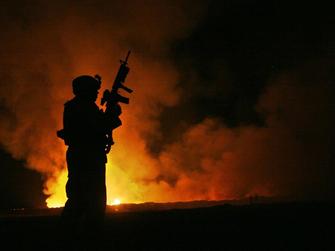
The article discusses the exclusion of civilian employees from the benefits provided by the Honoring Our PACT Act, which offers healthcare and disability benefits to military personnel affected by toxic burn pits in Iraq and Afghanistan. Civilians, who were exposed to the same conditions, face significant challenges in proving their claims for compensation due to stringent requirements and lack of documentation. The article highlights the struggles of individuals like Debora Pfaff, who developed chronic health issues after deployment, and the ongoing advocacy efforts to address these gaps. Despite the PACT Act's passage, many civilians remain without support, and advocacy groups continue to push for legislative changes to include them.

Toxic Exposure Veterans Affairs Legislation Iraq Afghanistan United States Department of Defense U.S. intelligence agencies State Department Treasury U.S. Agency for International Development Department of Veterans Affairs
Style rédactionnelInterprétatif

The article presents a critical view of the legislation, highlighting the exclusion of civilians and the challenges they face.

Contexte politiqueCentre gauche

The article discusses legislation passed under a Democratic administration and highlights issues with its implementation.

Inside the Conti leaks rattling the cybercrime underground

README / Synack 12 mars 2022 English

Leaked internal chats from the Conti ransomware gang revealed detailed insights into its operations, leadership, infrastructure and financial structure, exposing a professionalized criminal enterprise of significant scale. The leaks emerged after Conti publicly aligned itself with Russia following the invasion of Ukraine, triggering backlash and internal fractures across the Russian‑speaking cybercrime ecosystem. Despite initial disruption, Conti quickly rebuilt systems and continued attacks, including on healthcare targets. Analysts warn the leaks may reshape the cybercrime landscape, destabilizing long‑standing norms in the region while offering major investigative opportunities for global law enforcement.

Cybercrime Ransomware Russia-Ukraine War Cybersecurity Russia Ukraine United States Conti CISA FBI U.S. Cyber Command Justice Department
Style rédactionnelInformatif

Mostly factual investigative reporting with limited subjective interpretation

Contexte politiqueCentre

Covers geopolitical impacts of the Russia‑Ukraine conflict without expressing partisan positions

Voir les 19 réalisations avec un compte gratuit

Recruter Message
×

Inscrivez-vous pour envoyer un message à Shaun

Vous avez déjà un compte ? Se connecter
Vous cherchez du travail ? S'inscrire en tant que journaliste
Vérifiez votre e-mail pour finaliser l'inscription
Nous venons d'envoyer un e-mail à . Veuillez consulter votre boîte de réception et cliquer sur le lien pour vérifier votre adresse e-mail et finaliser votre inscription. Si vous ne voyez pas l'e-mail, pensez à vérifier votre dossier spam ou courrier indésirable.
Vous n'avez pas reçu l'e-mail ?

Inscrivez-vous pour débloquer les profils

Vous avez déjà un compte ? Se connecter
Vous cherchez du travail ? S'inscrire en tant que journaliste
Vérifiez votre e-mail pour finaliser l'inscription
Nous venons d'envoyer un e-mail à . Veuillez consulter votre boîte de réception et cliquer sur le lien pour vérifier votre adresse e-mail et finaliser votre inscription. Si vous ne voyez pas l'e-mail, pensez à vérifier votre dossier spam ou courrier indésirable.
Vous n'avez pas reçu l'e-mail ?