Ingaggia giornalisti

Editori ed emittenti Team di content marketing Team di PR e comunicazione Team di risk e intelligence Trova giornalisti Monitoraggio dei media Prezzi

Per i giornalisti

Offerte di lavoro nel giornalismo Tariffe Crea il tuo profilo gratuito

Su Zuza

Zuza Nazaruk è una giornalista con sede a Rotterdam, Paesi Bassi.

Lingue
olandese inglese francese polacco
Visto su
DutchNews.nl Balkan Insight Euronews Deutsche Welle KyivPost Follow the Money - Platform for investigative journalism Vers Beton Morocco World News Stichting Jason Unbias The News ZAM Allafrica Ca Malaysia Nz Ozoneeg Equaltimes Groene

Lavori 59

Acquittal Fuels Doubts over Transfer of Bosnian War Crimes Cases to Serbia

Balkan Insight 22 ott 2026 English

The acquittals in Serbia of Zeljko Novakovic and Milenko Karlica, whose Bosnian war-crimes cases were transferred from Bosnia and Herzegovina, have intensified doubts about the 2013 case-transfer protocol. Legal analyst Marijana Cestic Jelovac says Serbian prosecutors narrowed the charges, failed to use evidence adequately and did not consider the broader context of the attack that killed 24 Bosniak civilians in Alici and Ekici in 1992. Survivors and victims’ representatives point to delays and weak outcomes in other Serbian war-crimes trials, while advocates call for joint investigations, better communication with witnesses and fuller use of evidence to strengthen accountability and public trust.

Bosnian War Crimes War Crimes Trials Judicial Cooperation Victims’ Rights Bosnia and Herzegovina Serbia Bosanski Novi Court of Bosnia and Herzegovina Serbian War Crime Court Humanitarian Law Centre Association of Victims and Witnesses of Genocide in Bosnia Bosnian Serb forces
Stile giornalisticoInterpretativo

Critical reporting emphasizes procedural failures and doubts about transferring war-crimes cases to Serbia, while grounding criticism in expert and survivor testimony.
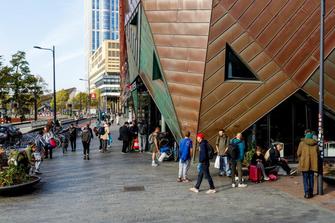
Held Together with Wire: Inside Romania's Neglected Arms Industry

Balkan Insight 22 ott 2026 English

Romania's state-owned arms industry is strategically important to NATO's eastern flank but many Romarm factories are idle, obsolete, insecure or poorly managed. The investigation details politically connected executives, corruption allegations and convictions, wasted investments, unsafe facilities, and email fraud that diverted payments from defence plants. Despite these shortcomings, Romania plans substantial defence spending, including EU SAFE loans and a €535 million Rheinmetall gunpowder-plant project. Critics warn that new funding could be squandered unless governance and management problems are addressed.

Romanian Arms Industry Defence Industry Corruption Government Procurement Cybersecurity NATO Defence Military Spending Romania European Union Germany Romarm Romanian Ministry of Defence
Stile giornalisticoInformativo

Investigative reporting is largely evidence-based, while its framing and quoted criticism emphasize neglect and mismanagement.

Contesto politicoCentro

The piece is an investigative account of public-sector governance and defence spending, critical of multiple political administrations without endorsing a partisan position.

Dzimi’s Diggers: Big Contract Follows Show of Loyalty to Serbia’s Ruling Party

Balkan Insight 22 ott 2026 English

Dzimi Commerce, co-owned until recently by ruling-party supporter Mile Samardzija, won a two-year, €1.1 million contract from NIS subsidiary Naftagas after its machinery was deployed around Serbia’s presidency building ahead of anti-government protests. Records reviewed by BIRN show the company invoiced 70 percent of the contract within ten months and logged machines for as many as 21–24 hours a day; employees questioned whether the recorded hours reflected actual work. Experts say the case illustrates politically connected, privileged business and the possible use of resulting funds for party purposes. Documents also describe a bitter ownership dispute in which co-owner Ljiljana Teslic accused Samardzija of threats and of trying to force her out with SNS support. Police filed a complaint, but prosecutors dismissed it.

Political Patronage Public Contracts Corruption in Serbia Serbian Politics Student Protests Serbia Belgrade Vojvodina Serbian Progressive Party (SNS) Serbian government European Commission European Union
Stile giornalisticoInterpretativo

Investigative reporting presents allegations and evidence of political favoritism and possible abuse of public contracts, while including responses and expert commentary.

Contesto politicoCentro

Investigative, evidence-led coverage scrutinizes alleged political patronage without endorsing a political faction.

Croatian Football Fans' Pro-Nazi Chants Prompt Arrests

Balkan Insight 16 ott 2026 English

Police in Split arrested several Torcida supporters after they marched before Hajduk Split's match against Ajax chanting antisemitic and pro-Hitler slogans. Authorities are investigating the incident as hate speech, with further arrests expected. Croatia's government, the mayor of Split, political parties and Israel's embassy condemned the chants; President Zoran Milanović said condemnation must be accompanied by measures and sanctions against the glorification of Nazism and Ustasha ideology. During the match, which Hajduk won 2–1, play was stopped for 12 minutes after fans set off flares and firecrackers, and the club could face a heavy UEFA fine. Hajduk apologized to Ajax and its players but did not specifically address the pre-match chants.

Antisemitism Neo-Nazism Football Hate Speech Police Arrests Split Croatia Israel Torcida Croatian Government Israeli Embassy in Zagreb UEFA
Stile giornalisticoFattuale

Primarily factual reporting, presenting statements and events with limited evaluative language.

Albania PM Defiant as Protests Spread to Provincial Cities

Balkan Insight 16 ott 2026 English

Student-led and civic protests against Prime Minister Edi Rama's government entered a third day in Tirana and spread to Durres, Shkoder, Korce and Elbasan, with clashes, tear gas, water cannons, arson and looting reported. Protesters are demanding Rama's resignation, improved university conditions and action on the high cost of living. Rama blamed the opposition and unidentified foreign actors for the violence, rejected calls to step down and said any change of government should occur through elections. The protests began as environmental demonstrations in June and developed into a broader anti-government movement.

Anti-government protests in Albania Police violence and civil unrest Student protests Albania's European Union accession Albania Tirana Durres Albanian government Socialist Party of Albania Flamingo Revolution European Union Albanian police
Stile giornalisticoEquilibrato

Mostly factual reporting, while presenting Rama's claims and protesters' grievances without endorsing either side.

Contesto politicoCentro

Reports on the government's response and protesters' demands without clear partisan advocacy.

The 'blood' mixes with everything

ZAM Magazine 20 nov 2025 English

Western efforts to ensure responsible sourcing of minerals essential for green technologies fail to prevent conflict minerals from eastern Congo entering global supply chains. Armed groups such as M23 continue to control major mining areas, financing violence through taxation and smuggling. Certification schemes like ITSCI and assessments by the Responsible Minerals Initiative are shown to be ineffective, enabling smelters with questionable practices to receive compliance status. Major companies including Volkswagen and Apple face criticism for relying on suppliers implicated in conflict mineral trade, with the DRC filing legal complaints against Apple. Humanitarian consequences for miners and civilians remain severe, raising debates over whether disengaging from the region worsens poverty or perpetuates conflict. Experts call for stronger political pressure on regional governments and genuine transparency in supply chains, while affected Congolese voices emphasize the urgent need for peace and fair trade.

Conflict minerals DRC–Rwanda conflict Corporate supply chain ethics Democratic Republic of Congo Rwanda European Union M23 ITSCI Responsible Minerals Initiative DRC government European Commission Global Witness
Stile giornalisticoEquilibrato

Investigative reporting with factual grounding but clear critical framing and evaluative judgments

The Price of Clean Streets: How the Netherlands Deports Homeless Eastern Europeans

Balkan Insight 6 ott 2025 English

The Netherlands has sharply increased the removal of homeless EU citizens, especially Poles and Romanians, using nuisance reports to question their lawful residence. Authorities argue removals can control public-order problems and, with rehabilitation support, help migrants rebuild their lives; lawyers and homelessness organizations warn that homelessness alone is not a lawful basis for expulsion and that deportation shifts rather than solves the problem. Many deportees return quickly through the EU’s open borders, while weak coordination with home countries and exploitative temporary-work systems contribute to repeated homelessness and addiction. A Barka Foundation program, funded by the Dutch Ministry of Justice, offers voluntary rehabilitation and practical support in Poland and Romania, but advocates say lasting change requires cross-border follow-up and reform of precarious work and housing arrangements.

Deportation of EU Citizens Homelessness Migration Policy Temporary Work and Labor Exploitation Addiction and Rehabilitation Freedom of Movement in the European Union Netherlands Poland Romania Dutch Immigration and Naturalisation Service (IND) Dutch Repatriation and Departure Service (DTenV) Barka Foundation
Stile giornalisticoInterpretativo

Investigative reporting presents evidence and competing perspectives, but uses evaluative framing and includes strongly critical assessments of the deportation policy.

Contesto politicoCentro-sinistra

Focuses on migrant rights, social protection, and criticism of structural labor exploitation, while also presenting government and legal arguments.

The Price of Clean Streets: How the Netherlands Deports Homeless Eastern Europeans

Balkan Insight 6 ott 2025 English

Homeless EU migrants in the Netherlands, mainly from Poland and Romania, face rising deportations based on nuisance reports and failure to meet legal residence requirements. The system often targets individuals struggling with addiction and homelessness, while temporary work agency abuses contribute to their vulnerability. Deportations are costly and frequently ineffective because many migrants immediately return due to open EU borders. NGOs argue the policy conflicts with EU free movement rules and shifts responsibility abroad. A new Dutch-funded rehabilitation program through the Barka Foundation offers structured support in home countries, but experts call for broader reforms and coordinated responses to address systemic issues driving homelessness and repeated returns.

EU migration Homelessness Deportation policy Labour exploitation Netherlands Poland Romania Dutch Immigration and Naturalisation Service Dutch Repatriation and Departure Service Barka Foundation FEANTSA Pauluskerk
Stile giornalisticoInformativo

Mostly factual reporting with some expert perspectives and evaluative statements.

Contesto politicoCentro-sinistra

Focus on migrant rights, criticism of restrictive state policies, and emphasis on social protections.

The dark side of open borders – how the Netherlands deports hundreds of homeless Eastern Europeans each year

Vers Beton 6 ott 2025 Dutch

The Netherlands increasingly deports homeless EU migrants, primarily from Poland and Romania, with Rotterdam sending 93 people back last year under the Action Plan for Rough Sleepers. Although free movement exists within the EU, member states can still expel EU citizens, and some individuals are deported repeatedly because they can easily return. Experts argue that the Dutch state contributes to the conditions causing homelessness by allowing labor exploitation, including temporary agencies tolerating drug use to increase productivity. European institutions collect no data on internal EU deportations and provide no oversight.

EU migration Deportation policy Homelessness Labor exploitation Netherlands Poland Romania Rotterdam European authorities
Stile giornalisticoInformativo

Primarily factual investigative reporting with some critical framing of government policies.

Contesto politicoCentro-sinistra

critical perspective on state migration policy and emphasis on social responsibility

DW investigation: Volkswagen’s blood‑stained supply chain

DW (Deutsche Welle) 5 ott 2025 Chinese

An investigation reveals that Volkswagen’s electric‑vehicle supply chain includes at least seven smelters linked to conflict minerals originating from the Democratic Republic of Congo, some associated with armed groups accused of severe human‑rights abuses. Experts warn the company risks indirectly financing violence despite its membership in the Responsible Minerals Initiative, with many suppliers lacking proper certification. EU regulations have had limited impact because major automakers do not import minerals directly. Other manufacturers do not disclose their mineral sources, while Congo has also filed a legal case against Apple over smuggled minerals. Critics urge the auto industry to strengthen due‑diligence efforts amid ongoing conflict in mineral‑rich regions.

Conflict minerals Automotive industry Corporate supply chains Human rights abuses Democratic Republic of Congo Germany Rwanda EU RSF M23 UN RMI
Stile giornalisticoInformativo

Mostly factual investigative reporting with limited analytical commentary

Vedi tutti i 59 lavori con un account gratuito

Ingaggia Messaggio
×

Registrati per inviare un messaggio a Zuza

Hai già un account? Accedi
Cerchi lavoro? Registrati come giornalista
Verifica la tua email per completare la registrazione
Abbiamo appena inviato un'email a . Controlla la tua casella di posta e clicca sul link per verificare il tuo indirizzo email e completare la registrazione. Se non vedi l'email, assicurati di controllare la cartella spam o posta indesiderata.
Non hai ricevuto l'email?

Registrati per sbloccare i profili

Hai già un account? Accedi
Cerchi lavoro? Registrati come giornalista
Verifica la tua email per completare la registrazione
Abbiamo appena inviato un'email a . Controlla la tua casella di posta e clicca sul link per verificare il tuo indirizzo email e completare la registrazione. Se non vedi l'email, assicurati di controllare la cartella spam o posta indesiderata.
Non hai ricevuto l'email?