Gazeteci görevlendirin

Yayıncılar ve yayın kuruluşları İçerik pazarlama ekipleri Halkla ilişkiler ve iletişim ekipleri Risk ve istihbarat ekipleri Gazeteci bulun Medya İzleme Fiyatlandırma

Gazeteciler için

Gazetecilik iş ilanları Ücretler Ücretsiz profilinizi oluşturun

Cristina hakkında

Cristina Papaleo, Bonn, Almanya merkezli bir gazeteci ve editördür. Almanya'da faaliyet gösteren uluslararası medya Deutsche Welle (DW) için çalışıyor. İspanyolca (ana dili), Almanca, İngilizce ve Portekizce konuşuyor.

Diller
İngilizce Almanca Portekizce İspanyolca
Görüldüğü yerler
Deutsche Welle Es Us Hecho en California con Marcos Gutierrez - "Más que una programación, un movimiento" El Cohete a la Luna G1 Bol Notiar

Çalışmalar 100

Luciana Peker: Despite the rise of the far right, “feminism is not dead”

DW 2 Eki 2026 Spanish

Journalist and feminist activist Luciana Peker says she left Argentina after serious threats and attacks, including from people now in Javier Milei’s government. She describes a global far-right backlash against feminist advances and warns that it threatens women’s rights, democracy, and freedom of expression. Peker links political developments in Latin America and Europe, criticizing the far right’s influence in Germany and warning that European support for extractive economic relations reinforces colonial inequalities. She calls for journalists to organize, protect themselves, and seek international cooperation, while insisting that feminism remains a powerful collective movement despite the far-right’s rise.

Feminism and gender rights Far-right politics Freedom of the press Latin American politics Democracy and human rights Latin America Argentina Europe #NiUnaMenos Government of Argentina Amnesty International Friedrich Ebert Foundation
Haber tarzıYorumlayıcı

An interview with strongly expressed political judgments and advocacy on feminism, the far right, and press freedom.

Siyasi bağlamSol

The interview strongly criticizes far-right politics and supports feminist movements, gender rights, and press freedom.
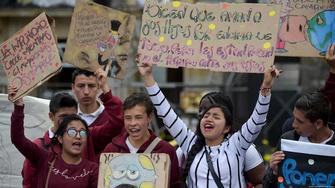

Venezuela: “The more partners in democratization, the better”

Deutsche Welle 4 Eyl 2026 Spanish

U.S.-overseen negotiations between Venezuela’s opposition and the Chavista government aim to establish conditions for a democratic transition and freer elections. Analysts say opposition divisions remain significant but are less pronounced at the negotiating table, where figures aligned with María Corina Machado are represented. Machado’s exclusion is debated, though commentators argue the talks need not undermine her influence and that a coordinated opposition strategy would be more effective. Experts emphasize prioritizing electoral conditions and constitutional institutional changes, while warning that delayed elections or a lack of political organization would prompt further criticism. They expect the opposition to be reshaped as political differences emerge, and one analyst expresses optimism that expanded participation and reduced censorship could foster democratic opening.

Venezuelan Politics Democratic Transition Opposition Politics U.S. Foreign Policy Venezuelan Presidential Election Venezuela United States Panama Venezuelan opposition Chavismo Vente Venezuela Voluntad Popular
Haber tarzıBilgilendirici

Primarily reported analysis with attributed expert views, though it includes forecasts and interpretations.

Siyasi bağlamMerkez

The article presents competing assessments of the negotiations and opposition divisions without endorsing a partisan position.

Representatives of the Opposition in Venezuela: Who Are They?

DW 31 Ağu 2026 Spanish

Venezuela's opposition is described as fragmented over whether to negotiate with the interim government or prioritize pressure for a transition based on the disputed 2024 election. María Corina Machado and Edmundo González Urrutia are presented as central figures, though neither is included in the negotiations described. Primero Justicia and Voluntad Popular are participating in talks, while Acción Democrática is portrayed as closer to Machado's position and Un Nuevo Tiempo as more pragmatic. The article also outlines the roles of the Plataforma Unitaria Democrática and smaller or locally focused parties, noting that opposition groups broadly seek democratic elections but differ over how to achieve them.

Venezuelan Opposition Venezuelan Politics Political Negotiations Elections in Venezuela Democratic Transition Venezuela United States Plataforma Unitaria Democrática Primero Justicia Voluntad Popular Vente Venezuela Acción Democrática
Haber tarzıBilgilendirici

Primarily an explanatory political overview, though it includes some interpretive descriptions of parties and negotiating strategies.

Siyasi bağlamMerkez

The text offers a broadly descriptive account of competing opposition strategies and parties, without clearly endorsing a partisan position.

Colombia’s withdrawal from the ICC would be “a major setback for victims” of crimes against humanity

DW 25 Ağu 2026 Spanish

Reports that Colombia’s incoming government is reportedly considering withdrawal from the International Criminal Court, although the information has not been confirmed. Experts warn that leaving could weaken the Special Jurisdiction for Peace and undermine accountability for crimes committed during the decades-long conflict, including forced disappearances and killings of civilians falsely presented as combat deaths. Withdrawal would not take effect immediately and would require domestic legislative debate and formal notification, with a one-year delay after acceptance. Interviewees argue that the move would damage victims’ rights, Colombia’s international credibility, and democratic institutions, while the JEP and other domestic mechanisms would continue operating.

International Criminal Court Human Rights Transitional Justice Colombian Peace Process Forced Disappearances Colombia Latin America The Hague International Criminal Court (ICC) Special Jurisdiction for Peace (JEP) Search Unit for Missing Persons (UBPD) FARC-EP
Haber tarzıYorumlayıcı

Mostly reported analysis, but it foregrounds critical expert assessments of a possible withdrawal and its consequences for victims and democracy.

Siyasi bağlamMerkez sol

The report emphasizes human-rights protections and expert criticism of a possible withdrawal, while presenting the issue primarily through attributed analysis.

De la Espriella and the JEP: “Colombia has more truth and memory than ever”

DW (Deutsche Welle) 7 Tem 2026 Spanish

Colombian president-elect Abelardo de la Espriella has pledged to dismantle the Special Jurisdiction for Peace (JEP), revoke benefits for armed groups, and revive arrest warrants, raising concerns about the future of transitional justice and the 2016 peace agreement. Experts say abolishing or restricting the JEP would require major constitutional changes and could face resistance in Congress; they also warn of legal uncertainty for former combatants and military personnel who submitted to the court, and harm to victims awaiting justice. The JEP is nearing the final phase of its work and is regarded internationally as an important innovation, but faces funding shortfalls as international support weakens. Germany and Colombian civil society are identified as important sources of continued support for peacebuilding.

Colombia's peace process Transitional justice Special Jurisdiction for Peace (JEP) Armed conflict Human rights Political transition Colombia Germany United States Colombian government FARC-EP Autodefensas Unidas de Colombia (AUC)
Haber tarzıBilgilendirici

Mostly factual reporting, with expert assessments and concern about the potential consequences of dismantling or underfunding the JEP.

Siyasi bağlamMerkez

The article presents competing political positions and expert assessments without endorsing a party or ideological platform, while emphasizing institutional and victims' concerns.

Peter Thiel’s presence in Argentina raises fears of state surveillance

Deutsche Welle (DW) 15 Haz 2026 Portuguese

Peter Thiel’s reported plans to establish himself in Argentina, alongside his meeting with President Javier Milei, have intensified concerns about state surveillance and data protection. Critics point to Palantir’s Gotham platform, which can link extensive databases, and to the government’s proposed AI-based Social Digital Twin, which would combine personal information including health, mobility and protest participation. Experts also cite weakened data safeguards, fragmented public databases and intelligence reforms that reduce judicial oversight. They warn that any agreement with Palantir could enable mass surveillance, illegal intelligence gathering and discriminatory decisions, calling for independent scrutiny.

State surveillance Data privacy Artificial intelligence Democracy Palantir Technologies Argentina United States Venezuela Argentine government Observatório de Direito Informático Argentino (ODIA) Center for Legal and Social Studies (CELS) ICE
Haber tarzıYorumlayıcı

Primarily reports concerns raised by experts and civil-society groups, while framing the potential surveillance risks in strongly critical terms.

Siyasi bağlamMerkez sol

Critical of the Milei government’s surveillance and intelligence policies, with emphasis on civil liberties and democratic oversight.

Peter Thiel in Argentina: Total Surveillance Like in China?

DW 12 Haz 2026 Spanish

Peter Thiel’s reported move to Argentina and his ties to Palantir have raised concerns among civil-rights groups and local experts about possible government use of large-scale data analysis and surveillance. The article links those concerns to Javier Milei’s intelligence reforms, weak data protections, and a planned AI platform that would combine personal information, including health, mobility, and protest data. Experts say Argentina would not simply replicate China’s surveillance model, but warn that opaque state initiatives and potential data transfers could threaten privacy, enable discriminatory decisions, and weaken democratic oversight. They call for public debate and independent controls over any surveillance technology contracts.

Mass surveillance Data privacy Artificial intelligence Argentina under Javier Milei Democracy and civil liberties Argentina China United States Government of Argentina Argentine intelligence services Amnesty International Observatorio de Derecho Informático Argentino (ODIA)
Haber tarzıYorumlayıcı

Critical and cautionary toward potential government surveillance, emphasizing risks to privacy, democracy, and civil liberties.

Siyasi bağlamMerkez sol

Civil-liberties-focused critique of the Milei government’s surveillance policies and concentration of state data, without explicit party advocacy.

Argentina 50 Years After the Coup: The Struggle to Keep the Recent Past from Repeating Continues

Yahoo Noticias 24 Mar 2026 Spanish

On the 50th anniversary of Argentina's 1976 coup, the article recalls the dictatorship's systematic disappearances, torture, killings, and child appropriation, as well as the human rights groups that exposed these crimes and helped secure landmark trials. A cited survey finds that most respondents view the dictatorship negatively and support continuing prosecutions, although significant disagreement persists over its legacy. Interviewees warn that the Milei government is promoting a selective account of the past and describe authoritarian tendencies and economic continuities, while stressing that today's Argentina is not equivalent to the dictatorship. Mass demonstrations and ongoing legal cases underscore the continuing demand for truth, justice, and democratic protections.

Argentine military dictatorship Human rights Forced disappearances Historical memory Democracy in Argentina Argentina Buenos Aires Latin America Argentine Armed Forces Center for Legal and Social Studies (CELS) Mothers of the Plaza de Mayo Grandmothers of the Plaza de Mayo
Haber tarzıBilgilendirici

Primarily factual historical reporting, with perspectives and critical assessments attributed to interviewees.

Siyasi bağlamMerkez sol

The report emphasizes human rights and democratic accountability and includes substantial criticism of Milei's government, while presenting the assessments as attributed viewpoints.

Environmental education changes children’s minds in Latin America

Yahoo Noticias 4 Kas 2025 Spanish

Environmental education has expanded across Latin America, driven by academic institutions, NGOs, and international frameworks such as the Agenda 2030 and the Agreement of Escazú. Experts highlight its evolution from conservation-focused instruction toward a holistic model integrating sustainability, community engagement, and socio-environmental awareness. In Argentina, educators like Jorgelina Gavotti develop hands‑on interdisciplinary projects that address local environmental challenges, including water purification, forest recovery, and waste reduction. Regional specialists emphasize the need for greater investment, standardized implementation, and legal frameworks to strengthen environmental education systems, noting its role in building resilient, equitable, and sustainable societies.

Environmental education Sustainable development Latin America Argentina Uruguay UNESCO CONICET UNICEF United Nations Verónica Cáceres Jorgelina Gavotti Zelmira May
Haber tarzıOlgusal

The article is largely factual, presenting data, expert statements, and descriptive reporting without persuasive or subjective framing.

Adam Isacson: Colombia’s justice system must 'cut off the oxygen to drug trafficking'

Yahoo Noticias (via DW) 21 Eki 2025 Spanish

US anti-narcotics aid to Colombia has failed to reduce drug production despite decades of investment, according to Adam Isacson of WOLA, who argues that current US threats to cut assistance and impose tariffs would benefit drug traffickers by weakening Colombia’s legal agricultural sector. Cocaine production is rising again, while fentanyl flows from Mexico to the United States are declining. Isacson highlights persistent corruption, slow implementation of rural state-building programs, and collaboration between political and economic elites and organized crime as major obstacles. He calls for a strengthened justice system capable of investigating financial networks and protecting investigators. The escalating political conflict between the Trump administration and President Petro may influence Colombia’s 2026 elections amid deep national polarization.

US-Colombia relations Drug trafficking Narcotics policy Colombia United States Mexico WOLA FARC dissidents UNODC US Government Colombian Government Adam Isacson
Haber tarzıBilgilendirici

Largely factual analysis with some expert interpretations.

Ücretsiz bir hesapla 100 çalışmanın tümünü görün

Bonn şehrindeki diğer gazeteciler

İşe al Mesaj
×

Cristina kişisine mesaj göndermek için kaydolun

Zaten bir hesabınız var mı? Giriş yap
İş mi arıyorsunuz? Gazeteci olarak kaydolun
Kaydı tamamlamak için e-postanızı doğrulayın
Az önce şu adrese bir e-posta gönderdik: . E-posta adresinizi doğrulamak ve kaydınızı tamamlamak için gelen kutunuzu kontrol edin ve bağlantıya tıklayın. E-postayı görmüyorsanız, spam veya gereksiz klasörünüzü kontrol etmeyi unutmayın.
E-postayı almadınız mı?

Profilleri açmak için kaydolun

Zaten bir hesabınız var mı? Giriş yap
İş mi arıyorsunuz? Gazeteci olarak kaydolun
Kaydı tamamlamak için e-postanızı doğrulayın
Az önce şu adrese bir e-posta gönderdik: . E-posta adresinizi doğrulamak ve kaydınızı tamamlamak için gelen kutunuzu kontrol edin ve bağlantıya tıklayın. E-postayı görmüyorsanız, spam veya gereksiz klasörünüzü kontrol etmeyi unutmayın.
E-postayı almadınız mı?