Alexandre De Santi
Porto Alegre, Brasile
Sono uno scrittore ed editor freelance con esperienza. Sono l'autore di "Cura Espiritual: Uma Investigação", un libro sulla guarigione spirituale, e di "Chico Xavier", una biografia sul medium Chico Xavier, la personalit…
Visto su The Intercept, South Africa Today - South Africa Today, News source, provides breaking news on South Africa, world, Africa, sport, travel and more, Mongabay +3 altri
Amazon riverfolk warn blasting rocks for shipping route will kill fisheries
Stile giornalistico, Interpretativo: Primarily factual reporting but strongly framed through community perspectives and critiques of government actions.
Contesto politico, Sinistra: Focuses on environmental justice, traditional peoples' rights, and critiques of state-led extractive infrastructure.
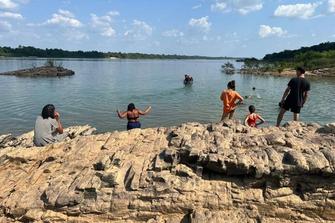
Riverfolk communities along the Tocantins River warn that Brazil’s plan to blast the Lourenção Rocks to open an industrial shipping channel threatens a critical fishery, traditional livelihoods, and local biodiversity. Residents say government agencies have minimized their presence, ignored required consultations, and failed to study ecological risks such as fish mortality, sediment contamination, and impacts of dredging. Experts argue that the project’s environmental assessments are insufficient and that proposed mitigation measures are scientifically inadequate for the unique deep-water ecosystem. A federal judge upheld the project’s license despite community objections, prompting appeals and criticism from advocacy groups. Concerns also extend to Quilombola territories, where dredging could lower water tables. Compensation proposals are seen as inadequate compared to current fishing incomes, and scientists insist that proper baseline studies cannot be completed before construction. Community leaders emphasize that blasting will destroy essential fish habitats, threatening food security and cultural practices for thousands of riverfolk and traditional communities.
Amazon villages build autonomous energy systems after mega-dam failed pledges
Stile giornalistico, Informativo: Primarily factual reporting with some analytical interpretation about policy failures and energy inequality.
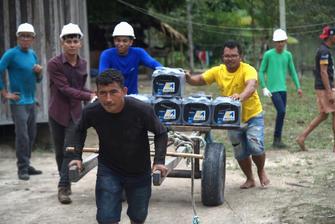
Nearly one million people in the Brazilian Amazon remain without reliable electricity despite the presence of major hydropower facilities such as the Belo Monte complex, whose promises of affordable energy and local development never materialized. Communities near the dam continue to face high tariffs, outages, and economic disruption, particularly those dependent on fishing. Research shows that energy from Belo Monte largely serves distant urban centers while local populations bear rising costs and diesel dependence. In response, researchers and riverine communities in Pará have developed autonomous energy systems combining solar power and river-driven hydrokinetic turbines, significantly improving energy access, communication, food storage, and quality of life. These community-run systems now support around 200 people and demonstrate a locally driven alternative to exclusionary energy policies.