Monica Pileggi ist eine Journalistin mit Sitz in São Bernardo do Campo, Brasilien.
Ich bin eine mehrsprachige Fachkraft und arbeite derzeit als freiberufliche Multimedia-Journalistin. Zuvor arbeitete ich als Kommunikationsberaterin für CDP Latin America und für verschiedene brasilianische Nachrichtenagenturen sowie Print- und Online-Publikationen, in denen ich Themen von Wissenschaft, Umwelt und Nachhaltigkeit bis hin zu Wirtschaft und Ökonomie behandelt habe. Ich habe unter anderem als Redakteurin, Reporterin, Kommunikationsberaterin und TV-Produzentin gearbeitet.
System uses artificial intelligence to detect wild animals on the road and prevent accidents
Agencia14. März 2024Portuguese
Researchers have trained a computational vision model to identify Brazilian wildlife mammals in real-time, which are frequently hit on the country's roads. The group is seeking partnerships with concessionaires to test the application in real situations.
System uses artificial intelligence to detect wild animals on the track and prevent accidents
Agencia14. März 2024Portuguese
Researchers have trained a computational vision model to identify Brazilian wildlife mammals in real-time, which are frequently hit on the country's roads. The group is seeking partnerships with concessionaires to test the application in real situations.
Artificial IntelligenceWildlife ConservationRoad SafetyBrazilUSP de São Carlos
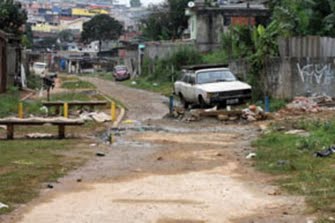
The divided power in the peripheries
Revista Pesquisa FapespPortuguese
Urban peripheries in Brazil are shaped by three overlapping normative regimes—state, religious, and criminal—whose conflicting logics often drive violence. Research led by Gabriel de Santis Feltran shows that residents view all three as legitimate sources of governance, with religious communities and criminal organizations sometimes exerting more influence than the state. The PCC’s evolution and its varied impacts in São Paulo are contrasted with the more fragmented criminal landscape in Rio de Janeiro. Scholars highlight how mass incarceration, differing security policies, and the presence of groups such as UPPs shape local power dynamics. The study emphasizes the complexity of these environments and the need for broader, comparative research to understand marginalization, crime, and governance in Brazilian cities.
Urban violenceCrimeReligion in societySocial marginalizationBrazilSão PauloRio de JaneiroPrimeiro Comando da Capital (PCC)Igrejas EvangélicasUniversidade de São Paulo (USP)Centro de Estudos da Metrópole (CEM)Unidades de Polícia Pacificadora (UPPs)
BerichtsstilInformativ
Research‑based analysis with interpretation but largely factual
MeinungsbetontFaktenbasiert
A small expedition to understand huge trees
RevistapesquisaPortuguese
From a drone's eye view, the tallest canopies that stand out from the forest's canopy layer can be seen, reaching heights between 60 and 80 meters. The dark waters of the Amapari river help make the Tumucumaque Mountains National Park a mosquito-free area.
EnvironmentScienceParque Nacional Montanhas do TumucumaqueAmapariBrazilRevista Pesquisa FAPESP
Wir respektieren Ihre Privatsphäre und verwenden eine begrenzte Anzahl von Cookies, um wesentliche Funktionen bereitzustellen und Ihren Besuch zu verbessern. Es werden keine Werbe-Cookies von Dritten verwendet. Weitere Einzelheiten finden Sie in unserer Cookie-Richtlinie.