The divided power in the peripheries
Revista Pesquisa Fapesp
Portuguese
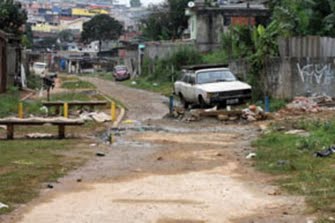
Urban peripheries in Brazil are shaped by three overlapping normative regimes—state, religious, and criminal—whose conflicting logics often drive violence. Research led by Gabriel de Santis Feltran shows that residents view all three as legitimate sources of governance, with religious communities and criminal organizations sometimes exerting more influence than the state. The PCC’s evolution and its varied impacts in São Paulo are contrasted with the more fragmented criminal landscape in Rio de Janeiro. Scholars highlight how mass incarceration, differing security policies, and the presence of groups such as UPPs shape local power dynamics. The study emphasizes the complexity of these environments and the need for broader, comparative research to understand marginalization, crime, and governance in Brazilian cities.