الناشرون وهيئات البث فرق تسويق المحتوى فرق العلاقات العامة والاتصال فرق المخاطر والاستخبارات الصحفيون والمهنيون الإعلاميون الرصد الإعلامي الأسعار

نبذة عن Muhammad

Muhammad Ali صحفي، وبعد قضائه ما يقرب من 18 عاماً في خنادق الصحافة، يبدو أنه 'أتقن' الفنون المظلمة للبحث والتحقيق، والممارسة النبيلة جدًا للكتابة الأخلاقية.

اللغات
الأردية الإنجليزية
ظهر في
BeyondNewsReport

الأعمال 12

Will a Kim Jong Un–Trump Summit Reshape South and North Korea Relations?

BeyondNewsReport 20 أكتوبر 2026 English

A possible Donald Trump–Kim Jong Un meeting during or after the November 2026 APEC summit in China remains unconfirmed, but could reshape security calculations on the Korean Peninsula. South Korea fears that bilateral US–North Korea negotiations might sideline Seoul, weaken joint military readiness, or accept limits on North Korean missiles while leaving South Korea exposed to shorter-range nuclear weapons. Pyongyang could gain recognition, sanctions relief, and leverage, while Washington might seek an ICBM freeze and a diplomatic achievement. The analysis highlights North Korea’s expanding hypersonic and AI-enabled weapons capabilities, regional maneuvering by China and Russia, and South Korea’s efforts to strengthen its economic position through critical-mineral supply-chain cooperation with the IFC. It concludes that any diplomatic breakthrough would depend on technical verification and addressing both alliance concerns and rapidly evolving weapons threats.

North Korea–United States relations South Korea–North Korea relations Nuclear weapons and arms control Hypersonic weapons East Asian geopolitics Military alliances Korean Peninsula China United States North Korea South Korea Russia
أسلوب التغطيةتفسيري

Analytical but strongly framed, using assertive predictions and evaluative language about the risks and stakes of a potential summit.

السياق السياسيوسط

Geopolitical analysis focused on strategic risks and incentives across governments, without clear partisan advocacy.
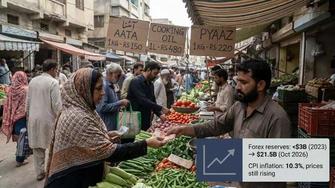
Pakistan Economy: Why Economic Growth Hasn’t Fixed Daily Life

BeyondNewsReport 18 أكتوبر 2026 English

Pakistan’s foreign reserves have recovered and GDP growth has returned, but the article argues that these gains have not eased household pressures. Inflation is slowing rather than lowering prices, while energy tariffs, indirect taxes, weak real wages, and population growth weigh on living standards. The piece says reserve gains and stabilization remain fragile, with limited job creation and poverty estimated at 39%–43.5%. It attributes the gap partly to failure to broaden direct taxation and reform loss-making state enterprises, and argues that fuel discounts offer only temporary relief. Without deeper reforms, Pakistan risks repeating its cycle of IMF support, austerity, and renewed crisis; forecasts point to continued modest growth and inflation above the central bank’s medium-term target.

Pakistan's Economy Cost of Living Economic Growth Inflation Structural Reform International Monetary Fund Programs Poverty and Unemployment Pakistan South Korea Vietnam State Bank of Pakistan Government of Pakistan
أسلوب التغطيةتفسيري

Uses critical and persuasive language to argue that macroeconomic stabilization has not improved ordinary people’s lives.

السياق السياسييسار الوسط

Critiques austerity and regressive taxation while advocating structural reforms and stronger social protections.

Why Is a K-Shaped Economy Bad for Malaysia’s GDP?

Beyond News Report 13 أكتوبر 2026 English

Malaysia’s projected GDP growth is described as concentrated in high-tech exports and data centers, with limited benefits reaching ordinary workers, small businesses, and lower-income regions. The article attributes this K-shaped economy to stagnant real wages, high household debt, a low employee-compensation share, skills mismatches, reliance on low-cost foreign labor, brain drain, and a large informal workforce. It warns that weak social protection and a narrow tax base could increase future welfare liabilities, while high operating expenditure crowds out development spending. Recommended responses include aligning education with industry needs, extending protections to informal workers, strengthening domestic supply chains and SMEs, broadening taxation, and directing investment toward lagging regions.

K-Shaped Economy Malaysia's Economic Growth Income Inequality Household Debt Labor Market Fiscal Policy Social Safety Nets Data Centers and Semiconductors Malaysia Klang Valley Penang International Monetary Fund
أسلوب التغطيةتفسيري

Strongly prescriptive economic analysis argues that inequality, labor-market distortions, and fiscal choices make growth unsustainable and recommends structural reforms.

Digital Neocolonialism: How Stablecoins Are Cementing US Dollar Hegemony In Emerging Markets

BeyondNewsReport 12 أكتوبر 2026 English

Dollar-pegged stablecoins such as USDT and USDC have become a way for people in emerging markets to protect savings from inflation and currency depreciation, but their convenience may accelerate digital dollarization. The article argues that this can drain deposits from local banks, weaken central-bank policy, reduce tax collection and blunt the effects of government spending. Because issuers back tokens largely with US Treasury bills, wider adoption also helps finance US public debt and reinforces the dollar’s network advantage. Stablecoins may help sanctioned states bypass conventional banking channels, but centralized issuers can freeze assets, leaving users exposed to US sanctions leverage. The euro and digital renminbi are portrayed as weak challengers, while Nigeria’s regulatory approach is cited as a possible way to benefit from stablecoin use without fully surrendering monetary sovereignty.

Stablecoins US Dollar Hegemony Digital Dollarization Emerging Market Economies Monetary Sovereignty Economic Sanctions Emerging markets United States Iran U.S. Department of the Treasury Office of Foreign Assets Control International Monetary Fund
أسلوب التغطيةتفسيري

Strongly framed analysis uses persuasive language such as “digital neocolonialism” and presents dollar dominance as an unmitigated victory.

السياق السياسييسار الوسط

Critical of US financial dominance and its effects on emerging economies, while primarily presenting an economic and institutional analysis rather than a partisan argument.

Qatar Economy 2026: Country Risk Analysis and GDP Contraction

BeyondNewsReport 11 أكتوبر 2026 English

Qatar faces a major economic shock in 2026 as regional conflict and threats to the Strait of Hormuz disrupt export routes and damage gas production. The text cites a World Bank forecast of a 20.9% contraction in Qatar’s GDP and projects government debt rising to 64.1% of GDP. Qatar’s sovereign bond spread widened from 2.9 to 48.5 basis points, raising financing costs and reducing the appeal of long-term investment. Expansion of the domestic debt market, increased sukuk issuance, and Euroclear settlement links are described as efforts to diversify funding and strengthen resilience, while uncertainty threatens expected gains from the North Field East LNG expansion.

Qatar economy Sovereign debt and bond spreads Foreign direct investment Islamic finance and sukuk Geopolitical risk Natural gas exports GDP contraction Qatar Middle East Strait of Hormuz Qatar Investment Authority World Bank
أسلوب التغطيةإخباري

Primarily analytical and factual, but presents forecasts and uses emphatic language such as “collapse” and “strangles.”

EU China Trade Deal: Will The EU Reduce The Trade Gap?

BeyondNewsReport 8 أكتوبر 2026 English

EU and Chinese officials are negotiating over the EU’s widening trade deficit, with Beijing reportedly open to discussing the imbalance and potential purchases of European goods. The talks are complicated by disputes over Chinese industrial policy, market access, and export controls on critical raw materials. France and Germany are urging the EU to adopt faster trade measures, potentially leading to definitive duties by December and heightened tensions in 2027. China is countering through investigations, export restrictions, factory investment in Europe, negotiations, and a WTO challenge. The outcome of an upcoming EU member-state vote could determine whether diplomacy continues or the bloc gains a mandate for stronger action.

EU-China Trade Relations Trade Deficit Trade Policy Economic Tensions Rare Earth Export Controls European Union China Beijing European Commission Ministry of Commerce of the People's Republic of China World Trade Organization Maroš Šefčovič
أسلوب التغطيةتفسيري

Uses forceful, evaluative language to characterize EU pressure and the likelihood of compromise, alongside reported facts and analysis.

السياق السياسيوسط

Economic and diplomatic analysis of EU-China trade tensions; it does not clearly advocate a partisan political position.

TITR: Is the Middle Corridor Commercially Viable?

BeyondNewsReport 29 سبتمبر 2026 English

The Trans-Caspian International Transport Route has grown from 0.8 million to 4.5 million tons of cargo and aims to handle 300,000 TEUs by 2029, but long-term viability depends on competitive tariffs, faster transit and coordinated administration. The planned TRIPP branch through Armenia is presented as a complement to Georgia’s existing route, though construction is not expected to begin before 2027. Investment initiatives include the EU Global Gateway and a US-backed enterprise fund, while Kazakhstan is using the corridor to diversify exports. Major obstacles include multi-stage Caspian cargo transfers, handling costs, customs delays, environmental and water pressures, sanctions exposure and regional security risks. Digitized customs, unified tariffs and automated border clearance are identified as key reforms to make the corridor a durable trade route rather than a temporary response to geopolitical disruption.

Middle Corridor Eurasian Trade and Transport Infrastructure Investment Central Asian Geopolitics Water Security Central Asia Caspian Sea South Caucasus Kazakhstan Azerbaijan Uzbekistan Armenia
أسلوب التغطيةمتوازن

Analytical framing with a clear argument that reforms and investment are needed to make the corridor commercially durable.

السياق السياسيوسط

Primarily economic and geopolitical analysis; it advocates infrastructure coordination without a clear partisan position.

EU Import Duty Tariff: Will the UK Sacrifice Cheap EVs?

BeyondNewsReport 27 سبتمبر 2026 English

The EU is urging the UK to match its tariffs on Chinese electric vehicles, reportedly offering British automakers exemptions from proposed “Made in Europe” rules in return. The article argues that raising the UK's standard 10% tariff toward the EU's rates of up to 45.3% could protect UK access to continental supply chains but would make EVs more expensive for consumers during a cost-of-living squeeze. EU officials fear Chinese manufacturers could use UK assembly to bypass EU duties; Chery is reportedly negotiating access to Nissan's Sunderland plant, while BYD's vertical integration is said to blunt the effect of tariffs. Prime Minister Andy Burnham is described as rejecting a return to the EU customs union. The UK faces a choice between preserving affordable EV imports and independent trade policy or reducing trade friction with the EU and protecting automotive export access.

Electric Vehicles UK-EU Trade Relations Chinese Automotive Exports Import Tariffs Industrial Policy Cost of Living United Kingdom European Union China UK government EU customs union Andy Burnham
أسلوب التغطيةتفسيري

Strongly framed analysis uses evaluative language to portray EU tariff pressure as unfair and highlights the costs to British consumers.

السياق السياسييمين الوسط

Emphasizes national trade-policy independence, consumer affordability, and criticism of EU industrial protectionism.

Trump and Iran in the Oil and Gas Supply Chain War

BeyondNewsReport 25 سبتمبر 2026 English

The article describes a proposed $10 billion Partnership for Allied Construction & Trust fund, with $5 billion from the United States and matching contributions sought from eight Middle Eastern countries. Managed through the DFC, the fund would rebuild war-damaged energy infrastructure and support alternative export routes, aiming to attract more than $50 billion in private investment and reduce reliance on the Strait of Hormuz. The article cautions that pipelines cannot quickly replace the volume moving through Hormuz and remain vulnerable to attacks, citing damage to Saudi Arabia’s East-West pipeline and rising risk premiums on Qatar’s bonds. It presents the initiative as an effort to weaken Iran’s leverage over energy flows and strengthen US influence, while noting the potential benefits for oilfield-services firms and infrastructure investors.

Oil and Gas Supply Chains Strait of Hormuz Energy Infrastructure Investment US-Iran Relations Geopolitics Middle East United States Iran Partnership for Allied Construction & Trust (PACT) U.S. International Development Finance Corporation (DFC) Saudi Arabia United Arab Emirates
أسلوب التغطيةمتوازن

Mostly analytical reporting, but uses persuasive framing such as describing the infrastructure pivot as an economic deterrent and Washington's bet.

السياق السياسييمين الوسط

Frames US-led investment and allied infrastructure as a strategic response to Iran, while acknowledging the limits and risks of the proposed approach.

Should AI Be Banned? Geopolitical War for Compute Control

Beyond News Report 15 سبتمبر 2026 English

The article argues that banning or halting advanced AI is impractical because there is no objective threshold for superintelligence and software can be developed or run beyond national borders. It questions why major AI companies are calling for regulation, suggesting that costly audits and licensing could disadvantage open-source researchers while protecting large firms from competition and liability. The piece contrasts the U.S. administration's resistance to strict controls with China's rapid infrastructure expansion and Europe's regulatory ambitions alongside its dependence on imported compute. It concludes that policymakers should focus on physical bottlenecks—including energy, water, chip manufacturing, and mineral supply chains—because control of infrastructure, rather than software restrictions, will shape the AI power balance.

Artificial Intelligence Regulation AI Governance Geopolitical Competition Computing Infrastructure Open-Source AI United States China Europe U.S. government European Union U.S. Congress White House
أسلوب التغطيةتفسيري

Strongly analytical and critical; it argues that calls for AI regulation may protect large companies and disadvantage open-source competitors.

السياق السياسييمين الوسط

Emphasizes national competitiveness, opposes restrictive regulation, and frames regulation as potentially entrenching corporate incumbents.

سجّل مجاناً لرؤية الأعمال الـ12 كلها

صحفيون آخرون في Karachi

عرض جميع الصحفيين في Karachi
وظّف رسالة
×

سجّل لمراسلة Muhammad

هل لديك حساب بالفعل؟ تسجيل الدخول
هل تبحث عن عمل؟ سجّل كصحفي
وثّق بريدك الإلكتروني لإتمام التسجيل
لقد أرسلنا للتوّ رسالة إلكترونية إلى . يرجى التحقّق من صندوق الوارد والنقر على الرابط لتوثيق عنوان بريدك الإلكتروني وإتمام تسجيلك. وإذا لم تجد الرسالة، فتأكّد من التحقّق من مجلد البريد العشوائي أو غير المرغوب فيه.
لم تستلم البريد الإلكتروني؟

سجّل للاطّلاع على الملفات الشخصية

هل لديك حساب بالفعل؟ تسجيل الدخول
هل تبحث عن عمل؟ سجّل كصحفي
وثّق بريدك الإلكتروني لإتمام التسجيل
لقد أرسلنا للتوّ رسالة إلكترونية إلى . يرجى التحقّق من صندوق الوارد والنقر على الرابط لتوثيق عنوان بريدك الإلكتروني وإتمام تسجيلك. وإذا لم تجد الرسالة، فتأكّد من التحقّق من مجلد البريد العشوائي أو غير المرغوب فيه.
لم تستلم البريد الإلكتروني؟