Hire journalists

Publishers & Broadcasters Content Marketing Teams PR & Comms Teams Risk & Intelligence Teams Find journalists Media Monitoring Pricing

For journalists

Journalism jobs Pay rates Create your free profile

About Rebecca

Rebecca Collard is a multiplatform journalist. She produces radio and television packages and provides commentary for CBC, PRI’s The World, BBC, Monocle24, and Voice of America, among other international outlets. She has contributed toTIME, The Washington Post, The Guardian, The Christian Science Monitor, and Rolling Stone (ME). Rebecca reports breaking news and features on Iraq, Syria, Lebanon, Egypt, Israel, the West Bank and the Gaza Strip as well as the refugee crisis in Europe.

Languages
English
Seen in
The World Foreign Policy The Guardian NPR Business Insider Time CBC

Work 88

The Hegseth Shock for New Zealand

Foreign Policy 11 Jun 2026 English

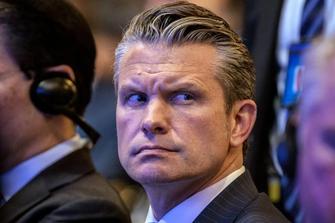
A remark by U.S. Defense Secretary Pete Hegseth accusing New Zealand of defense freeloading ignited a major political dispute in Wellington, highlighting divisions between the governing National Party’s push for higher defense spending and widespread public and Labour Party skepticism rooted in longstanding pacifist attitudes. The controversy expanded when Defense Minister Chris Penk questioned the country’s nuclear-free policy, forcing Prime Minister Christopher Luxon to reaffirm it amid public backlash. Growing regional tensions, including Chinese military activities, have intensified debate over whether New Zealand should maintain strategic independence or align more closely with the United States. The episode underscores the difficulty Indo-Pacific allies face in meeting the Trump administration’s shifting expectations without triggering domestic political ramifications.
Defense spending U.S.-New Zealand relations Indo-Pacific security Trump administration foreign policy New Zealand United States Indo-Pacific New Zealand Defence Force U.S. Department of Defense National Party of New Zealand Labour Party of New Zealand Australia-United Kingdom-United States security pact
Reporting styleBalanced

Mix of factual reporting with analytical and interpretive commentary

Political contextCentre

Analysis of defense policy debate without explicit ideological advocacy

FIFA's Expensive 2026 World Cup Betrays Soccer's Fans and Roots

Foreign Policy 11 Jun 2026 English

The 2026 World Cup is described as prohibitively expensive and emblematic of FIFA’s detachment from the sport’s egalitarian roots, with variable pricing and complex ticketing systems driving costs to historic highs. Fans worldwide express frustration over unaffordable tickets, opaque allocation processes, and commercial excess, prompting investigations by U.S. state attorneys general. Public figures including Gary Lineker and Donald Trump criticize the pricing, and polling shows Americans overwhelmingly view attendance as financially out of reach. Despite record revenue expectations, FIFA’s assurances about fan-centered policies fail to ease concerns that the tournament caters primarily to corporate interests rather than global supporters.

Sports World Cup 2026 Commercialization of sports Fan access and pricing United States Canada Mexico U.S. Department of Agriculture Ipsos U.S. Congress Gianni Infantino Donald Trump
Reporting styleInterpretive

Strongly opinionated critique of FIFA’s pricing and practices

Political contextCentre

Discusses policy impacts and public officials’ actions without strong ideological framing

How Soccer Became 'Un-American'

Foreign Policy 11 Jun 2026 English

Soccer in the United States has long reflected tensions over national identity, evolving from an immigrant sport in the early 20th century to a cultural marker associated with globalization and political polarization. Historical efforts to Americanize or marginalize the sport paralleled broader debates about who belongs in the country. The run-up to the 2026 World Cup highlights contradictions between the United States hosting the tournament and policies that restrict access for many international fans, while both cosmopolitan and immigrant soccer communities continue to have their American identity questioned. The sport’s growing popularity underscores the divide between these fan bases and the current administration, revealing soccer as a recurring site of contest over American identity.

Soccer Immigration U.S. Politics Cultural Identity United States Mexico Canada FIFA U.S. Soccer Federation North American Soccer League White House Donald Trump
Reporting styleBalanced

Mix of historical analysis with some interpretive and analytical commentary

Political contextCentre-left

Focuses on immigration barriers, cultural inclusion, and critiques of nationalist politicization of sport

Sudan's Rapid Support Forces Are Terrorists

Foreign Policy 11 Jun 2026 English

The article argues that Sudan’s Rapid Support Forces should be designated as a foreign terrorist organization due to documented genocidal violence, systematic attacks on civilians, and the consolidation of a rival governing structure that threatens Sudan’s territorial integrity. It contends that treating the RSF and Sudanese Armed Forces as equivalent undermines cease-fire efforts and risks state collapse. A designation is presented as a means to pressure the United Arab Emirates to end support for the RSF, strengthen Washington’s leverage with Sudan’s army, and reinforce international opposition to Sudan’s fragmentation. The author maintains that humanitarian concerns can be mitigated through targeted exemptions and that failing to act will prolong the war and destabilize the Red Sea region.

Sudan civil war Terrorism U.S. foreign policy Sudan United States United Arab Emirates Rapid Support Forces Sudanese Armed Forces United Nations African Union European Union Intergovernmental Authority on Development
Reporting styleInterpretive

Strongly opinionated argument advocating a specific U.S. policy action

Political contextCentre-right

Supports Trump administration’s hardline terrorism designations and advocates strong U.S. security-focused foreign policy

Iran Is Now More Dangerous Than Ever

Foreign Policy 11 Jun 2026 English

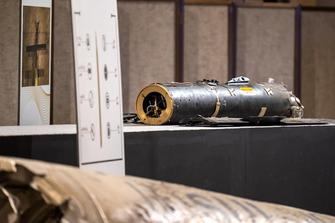
Iran has abandoned its longstanding strategy of strategic patience and is escalating its use of force across the Middle East following direct attacks by Israel and the United States. Its new leadership has adopted a more assertive and risk-tolerant posture, increasing strikes on Israel and Gulf states while reinforcing its leadership of the Axis of Resistance. U.S. efforts to compel Iran to curb its regional influence and nuclear ambitions have backfired, prompting Tehran to recalibrate its strategy and impose higher costs on its rivals. The shift has intensified regional instability and reflects Iran’s belief that it can survive high-level attacks, driving it to escalate further to deter adversaries and influence conflicts involving Hezbollah and Lebanon.

Iran war Middle East conflict U.S.-Iran relations Israel-Iran tensions Iran Israel Gulf States Iranian government U.S. government Israeli government Hezbollah Hamas
Reporting styleBalanced

Analytical assessment with some interpretive judgments

Political contextCentre

Analytical foreign-policy perspective without clear partisan stance

Trump Era Should Force U.S. Allies in Asia to Rethink Strategy

Foreign Policy 11 Jun 2026 English

U.S. policy shifts under President Trump, including potential delays to Taiwan arms sales and reductions of military assets in Europe, have heightened concerns among Asian allies about American reliability. Unlike Europe, U.S. partners in Asia lack multilateral structures to offset a U.S. pullback and face both coordination and scale disadvantages relative to China. The article argues that Asian allies must develop a Plan B by accelerating domestic defense investments, expanding joint development of military systems, strengthening minilateral security networks, and deepening industrial cooperation with Europe. These steps cannot replace the United States but can mitigate vulnerability to Chinese pressure and instability in U.S. politics.

U.S. foreign policy Asia-Pacific security U.S.-China relations Alliances and defense Asia United States China United States government NATO European Union Quad AUKUS
Reporting styleBalanced

Analytical piece with informed interpretation alongside factual reporting

Political contextCentre

Analysis of foreign policy actions without partisan advocacy

Review: Wilson's 'The Power and the Glory: The History of the World Cup'

Foreign Policy 11 Jun 2026 English

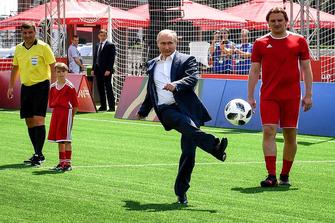
A review of Jonathan Wilson’s history of the World Cup highlights how the tournament has repeatedly endured exploitation by authoritarian leaders, from Mussolini and Argentina’s junta to Putin. Wilson’s book argues that the World Cup consistently transcends political manipulation through the brilliance of its players. The article warns that the 2026 tournament faces a new challenge from Donald Trump, whose self‑promotion and lack of genuine connection to soccer are amplified by FIFA President Gianni Infantino’s accommodating behavior. Despite concerns over corruption, political toxicity, and global tensions, the narrative concludes with cautious optimism that the sport’s players will again elevate the tournament above the egos and ambitions surrounding it.

World Cup Sports Politics Donald Trump FIFA Corruption United States Global Russia U.S. government Argentina’s military junta FIFA ICE Gianni Infantino
Reporting styleInterpretive

Highly opinionated analysis with strong subjective judgments about political figures and FIFA leadership

Political contextCentre-left

Critical of Trump, authoritarianism, and institutional corruption while supportive of internationalism and sport’s social role

In the City of Its Birth, Jews Reject Zionism

The World from PRX 19 Jun 2025 English

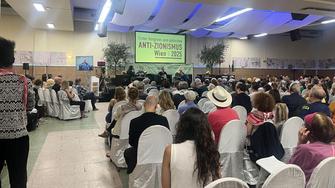
Around 500 people attended Vienna’s first Jewish Anti-Zionist Congress in June 2025, challenging the identification of Judaism with Zionism in the city associated with Theodor Herzl’s political Zionism. Historian Yavov Rabkin describes earlier religious, integrationist and class-based Jewish opposition, and says many younger Jews now reject Zionism because they associate it with apartheid, ethnic nationalism and supremacy. Organizer Dalia Sarig recounts moving from a Zionist upbringing and life in Israel to rejecting the ideology after hearing a Palestinian teacher describe his family’s expulsion. A pro-Israel counter-demonstrator argued that anti-Zionism is antisemitism, while congress participants said a Jewish state has not made Jews safe and has entailed Palestinian deaths and displacement. The gathering reflects a widening divide within Jewish communities over Israel and the idea of a Jewish state.

Jewish Anti-Zionism Zionism Jewish Identity Israel-Palestine Conflict Antisemitism Vienna, Austria Israel Palestine Jewish Anti-Zionist Congress Israeli government Likud Official Jewish community of Austria and Germany
Reporting styleBalanced

Primarily reported coverage, but includes evaluative framing and perspectives critical of Zionism alongside opposing views.

Political contextCentre-left

The report foregrounds anti-Zionist and Palestinian perspectives and criticism of Israeli policy, while also including a pro-Zionist counter-view and historical context.

In the city of its birth, Jews reject Zionism

The World 19 Jun 2025 English

In Vienna, the birthplace of Zionism, around 500 individuals gathered for the first Jewish Anti-Zionist Congress, rejecting the ideology of Zionism. The event highlighted historical and contemporary opposition to Zionism, with participants arguing that a Jewish state has not ensured safety for Jews and has led to Palestinian displacement. The congress faced potential opposition from pro-Israel groups, but the expected backlash did not materialize. The event reflects a growing divide within global Jewish communities regarding support for Israel and the concept of a Jewish state.

Zionism Jewish Anti-Zionist Congress Israel-Palestine Conflict Vienna Israel Palestine Likud party Theodor Herzl Yavov Rabkin Dalia Sarig Sophia Benjamin Netanyahu
Reporting styleInterpretive

The article presents a mix of factual reporting and subjective perspectives, particularly from individuals opposing Zionism.

Political contextLeft

The article discusses anti-Zionist perspectives and critiques of nationalism and apartheid, aligning with leftist views.

Elon Musk wades into European politics

NPR 5 Jan 2025 English

Elon Musk, a prominent U.S. billionaire, is increasingly influencing European politics, notably by supporting the far-right Alternative for Germany Party (AFD) and criticizing U.K. Prime Minister Keir Starmer. His actions have sparked significant political reactions in Germany, where the AFD is under observation for potential threats to democracy. Musk's influence is facilitated by his ownership of the social media platform X, raising concerns about foreign interference in European elections. Despite legal restrictions on foreign political contributions in Germany, Musk's personal brand and social media presence could impact the political landscape. His involvement has drawn responses from German leaders and highlights the potential sway of social media in political discourse.

Elon Musk European Politics Alternative for Germany Party Social Media Influence Germany United Kingdom United States CDU Green Party Reform U.K. Party English Defence League Donald Trump
Reporting styleBalanced

The article presents a mix of factual reporting and subjective interpretation, particularly regarding Musk's influence and intentions.

Political contextRight

The article discusses Musk's support for right-wing parties and figures in Europe.

See all 88 pieces of work with a free account

Other journalists in Bayrut

Hire Message
×

Sign up to message Rebecca

Already have an account? Log in
Looking for work? Register as a Journalist
Verify your email to complete registration
We’ve just sent an email to . Please check your inbox and click the link to verify your email address and complete your registration. If you don’t see the email, be sure to check your spam or junk folder.
Didn’t receive the email?

Sign up to unlock profiles

Already have an account? Log in
Looking for work? Register as a Journalist
Verify your email to complete registration
We’ve just sent an email to . Please check your inbox and click the link to verify your email address and complete your registration. If you don’t see the email, be sure to check your spam or junk folder.
Didn’t receive the email?