Suzan Haidamous is a journalist based in Bayrut, Lebanon.
Worked on Stories covering Lebanon, Syria and the Middle East for various international media outlets.
The Washington PostThe Salt Lake TribuneBaltimoresunNdtvChicago TribuneThe Detroit NewsAnchorage Daily NewsEast Bay TimesGulfNewsSpokesman.comThe IndependentThe Mercury NewsThe Sydney Morning HeraldNationalpostInfobaeLewiston Sun JournalNews ChiefPress HeraldThe AgeThe Daily Gazette Family of NewspapersThe New Zealand HeraldThe Seattle TimesWAtodayJapannewsDailyheraldRsnSfgateStripesThegazetteTheledgerYahooWww1
Work 71
Under Pressure, Iran Lashes Out and Ramps Up Rhetoric
The Washington Post4 Sep 2026English
Iran responded to renewed U.S. strikes and economic pressure with increasingly forceful rhetoric and an attack on U.S. forces in Kuwait, signaling a willingness to impose costs on the United States and its Gulf allies. Analysts say Tehran is trying to preserve leverage over the Strait of Hormuz and challenge the U.S. blockade, while avoiding attacks on Israel so far. U.S. and Israeli officials defend pressure and military action as necessary deterrence; Iranian officials describe U.S. attacks as crimes and demand broader regional terms for negotiations. Gulf states, especially Kuwait and Qatar, face heightened risks as the conflict escalates.
Iran-U.S. ConflictStrait of HormuzEconomic Sanctions and BlockadePersian Gulf SecurityMilitary EscalationIranPersian GulfKuwaitUnited StatesIsraelInternational Crisis GroupGulf International Forum
Reporting styleFactual
Primarily factual reporting, with analysis and attributed assessments from experts and officials.
OpinionatedFactual
Iran Fires Missiles and Drones at Kuwait as Strikes Resume in War with the U.S.
Anchorage Daily News4 Sep 2026English
Iran launched missiles and drones at U.S. forces in Kuwait as fighting with the United States resumed after a month-long lull. Analysts say Tehran is escalating attacks on Gulf allies, U.S. bases and shipping to challenge the impact of a U.S. blockade and preserve leverage over the Strait of Hormuz. President Donald Trump has alternated between military threats and economic pressure, while Israeli officials have endorsed continued pressure and threatened extensive retaliation if Iran attacks Israel. The strikes have heightened fears among Gulf states, particularly Kuwait and Qatar, while an earlier U.S. attack in southern Iran reportedly killed six people and wounded 94 at a wedding, prompting Iranian accusations of a war crime.
Iran-U.S. WarPersian Gulf SecurityStrait of HormuzEconomic Sanctions and BlockadesMilitary EscalationIranKuwaitPersian GulfUnited StatesInternational Crisis GroupIsraelU.S. Central Command
Reporting styleInformative
Primarily factual reporting based on official statements and expert analysis, with limited interpretive framing.
OpinionatedFactual
Political contextCentre
Straight news coverage presenting competing claims and expert assessments about the military escalation.
Far leftFar right
After Months on the Sidelines of Iran’s War, Yemen’s Houthis Open a Dangerous New Front
Infobae2 Aug 2026Spanish
Yemen’s Houthi movement has re-entered the wider Iran conflict after months of staying largely on the sidelines, targeting Saudi oil infrastructure and announcing a blockade of Saudi-linked shipping in the Red Sea. Saudi Arabia has responded by forming a defensive coalition to protect maritime trade and energy routes. Analysts say the Houthis are exploiting the strategic importance of the Bab el-Mandeb Strait to pressure Riyadh into easing restrictions on Yemen, exchanging prisoners and sharing oil revenues, while also demonstrating continued support for Iran. Recent attacks or suspected attacks on a Saudi tanker and Aramco facilities have raised insurance costs and slowed shipping, increasing the risk that reciprocal pressure could escalate into a broader regional confrontation.
Predominantly factual reporting supported by official statements, satellite imagery and expert analysis, with some analytical framing about escalation risks.
OpinionatedFactual
Political contextCentre
Straight news coverage that presents competing positions and relies on officials, satellite imagery and regional analysts without overt partisan advocacy.
Far leftFar right
US strikes Iran after 2 service members killed, 1 missing in attack on Jordan base
The Washington Post18 Jul 2026English
Two U.S. service members were killed and another is missing after an Iranian missile attack on Muwaffaq Salti Air Base in Jordan, bringing the U.S. military’s death toll in the conflict to 16. The United States responded with air, drone and naval strikes against Iranian surveillance, logistics, weapons-storage and maritime facilities, while Iran accused Washington of violating a ceasefire memorandum. Iranian attacks also affected infrastructure in Kuwait, Bahrain and Iran, including power and desalination facilities, raising concerns about water supplies and further regional escalation. Fighting around the Strait of Hormuz has sharply reduced commercial shipping, driven up oil and consumer prices, and weakened President Donald Trump’s approval ratings while increasing Republican concerns about electoral losses.
Iran WarU.S.-Iran ConflictMilitary StrikesStrait of HormuzEnergy and Water InfrastructureInternational ShippingIranJordanPersian GulfUnited States militaryU.S. Central CommandIslamic Revolutionary Guard Corps
Reporting styleFactual
Predominantly factual news reporting based on official statements and attributed accounts, with limited evaluative framing.
OpinionatedFactual
Rising tensions with Israel have Lebanon fearing return to all-out war
The Detroit News15 Dec 2025English
Thirteen months after a ceasefire intended to halt hostilities, Lebanon faces renewed fears of an Israeli military escalation that could undermine its fragile recovery. Lebanese officials report receiving warnings from intermediaries, including the United States, about a potential large-scale Israeli operation. The situation underscores the weaknesses of the U.S.- and French-brokered truce, which failed to restore lasting stability.
Israel-Lebanon tensionsMiddle East conflictCeasefire breakdownLebanonIsraelUnited StatesHezbollahFrance
Reporting styleFactual
Primarily factual reporting on geopolitical developments with no subjective commentary.
OpinionatedFactual
Political contextCentre
Focused on reporting geopolitical developments without ideological framing.
Far leftFar right
Lebanese army making progress in displacing Hezbollah near Israeli border
Daily Herald17 Apr 2025English
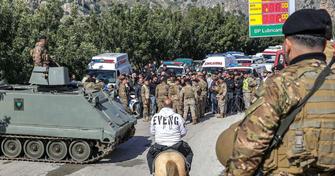
The Lebanese army has increased its presence in southern Lebanon, working to disarm Hezbollah under a U.S.-brokered ceasefire agreement with Israel. Despite progress, challenges remain due to Israeli airstrikes and Hezbollah's resistance. The Lebanese government, led by Prime Minister Nawaf Salam, aims to monopolize arms control across the country, but faces economic constraints and the need for foreign aid. The situation remains tense, with calls for a complete Israeli withdrawal and border demarcation to stabilize the region.
The article presents a mix of factual reporting and expert opinions on the situation.
OpinionatedFactual
Political contextCentre
The article discusses the political and military dynamics between Lebanon, Hezbollah, and Israel without taking a clear side.
Far leftFar right
Israel strikes Beirut suburb in first attack on capital since ceasefire
Washington Post28 Mar 2025English
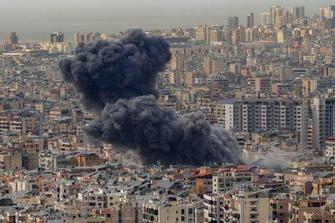
Israel conducted a military strike on a suburb of Beirut, marking the first attack on the Lebanese capital since the previous year's ceasefire with Hezbollah. This development raises concerns about the potential collapse of the ceasefire amid escalating regional conflicts. The situation underscores the fragile nature of peace in the region and the ongoing tensions between Israel and Hezbollah.
Israel-Hezbollah ConflictMiddle East TensionsBeirutIsraelLebanonHezbollah
Reporting styleBalanced
Balanced reporting with some subjective language
OpinionatedFactual
Political contextCentre
Balanced reporting on Middle East conflict
Far leftFar right
Hezbollah facing financial squeeze as supply lines from Iran are severed
The Spokesman-Review22 Feb 2025English
Hezbollah is grappling with a severe financial crisis as traditional funding routes from Iran have been disrupted due to geopolitical shifts, including the overthrow of Syrian President Bashar Assad and increased pressure from the United States and Israel. The group faces challenges in compensating constituents affected by recent conflicts and maintaining its political influence in Lebanon. Despite efforts to demonstrate strength, Hezbollah's financial sustainability is in question, with restrictions on funds and support from Iran. The Lebanese government and new Syrian authorities are taking actions that further strain Hezbollah's operations, while the group's supporters express growing desperation over insufficient aid.
HezbollahFinancial CrisisMiddle East ConflictLebanonSyriaIranUnited StatesIsraelWorld BankLebanese GovernmentSyrian GovernmentU.N. Peacekeeping
Reporting styleBalanced
The article presents a mix of factual reporting and analysis, with some subjective interpretations of Hezbollah's financial situation.
OpinionatedFactual
Political contextCentre
The article provides a balanced view of the geopolitical situation involving Hezbollah, Iran, and other regional players.
Far leftFar right
Israel’s war on Hezbollah takes terrible toll on Lebanon’s children
The Detroit News19 Nov 2024English
The ongoing conflict between Israel and Hezbollah has severely impacted Lebanon, particularly affecting children. The article highlights the devastating toll on young lives, with many children killed, injured, or displaced. The humanitarian crisis is exacerbated by Lebanon's existing economic struggles, leading to a 'lost generation' as education and basic needs are disrupted. Diplomatic efforts for a ceasefire are underway, but violence continues unabated. The article underscores the dire situation faced by Lebanese families, with personal stories illustrating the broader impact of the conflict.
War in LebanonImpact on ChildrenHumanitarian CrisisLebanonIsraelBeirutIsrael Defense ForcesHezbollahUnited NationsWhite HouseMohamadElia
Reporting styleInterpretive
The article contains subjective statements and emotional descriptions, highlighting the human impact of the conflict.
OpinionatedFactual
Political contextLeft
The article focuses on the humanitarian impact of military actions, often associated with left-leaning perspectives.
Far leftFar right
Israeli strikes in Syria kill dozens, including soldiers and Hezbollah militants
The Washington Post29 Mar 2024English
Israeli military operations continue in Gaza, with ongoing raids at al-Shifa Hospital in Gaza City. Secretary of State Antony Blinken is expected to visit Israel amid rising US-Israel tensions over Prime Minister Netanyahu's plans to invade Rafah. Tensions escalate in the Middle East as Israeli troops target the Gaza-Egypt border crossing, risking the 1979 peace treaty, while diplomatic efforts are underway to prevent war between Israel and Lebanon.
Middle East ConflictIsraeli-Gaza WarSyriaIsraelLebanonHezbollahIsraeli MilitaryAntony BlinkenBenjamin Netanyahu
Reporting styleFactual
The article reports on events and statements without apparent bias or subjective language.
We respect your privacy and use a limited number of cookies to provide essential functionality and enhance your visit. No third-party advertising cookies involved. For more details, please read our Cookie Policy.