 Jetzt engagieren
 Simon eine Nachricht senden
Sprachen
Englisch
Suaheli
Antwortet üblicherweise
Innerhalb eines Tages
Möchten Sie ein Profil wie dieses?
Schließen Sie sich Tausenden von Medienschaffenden an, die journalist.net nutzen, um ihre Arbeit zu präsentieren und von führenden Medien engagiert zu werden.
Loslegen
Sehen Sie, wie es funktioniert
Über Journalist.net in Verbindung treten
1
Verifizierte Fachleute
Jeder Journalist auf dieser Plattform wurde von unserem Londoner Team manuell verifiziert. Sie verbinden sich mit einem bestätigten Medienschaffenden.2
Geschützte Zusammenarbeit
Wir schützen die Kontaktdaten von Journalisten und bieten Versicherungsschutz für alle Buchungen. Beide Parteien arbeiten mit Zuversicht und Sicherheit.3
Sichere Zahlung
Zahlungen werden treuhänderisch gehalten und freigegeben, wenn die Arbeit geliefert wird. Journalisten ist die Zahlung garantiert; Kunden geben ihre Zustimmung, bevor die Gelder endgültig freigegeben werden.Haben Sie noch Fragen?
FAQ ansehenAbout Simon
Simon Fidelis Luyenga ist ein in Tansania geborener unabhängiger Fotojournalist und Dokumentarfotograf; seine Arbeiten wurden in Publikationen einschließlich Suddeutsche Zeitung, Mail & Guardian, Die Zeit, Rinse veröffentlicht und in Galerien ausgestellt. 2018 wurde ihm eine ehrenvolle Erwähnung beim East Africa Photography Award, vergeben vom Uganda Press Photo Award in Kampala, Uganda, zuteil. 2015 wurde er für die Ausstellung “Now you see me now you don’t” im Grand Cinema in Mannheim, Deutschland, beauftragt. 2019 beim Kigali Center for photography durch Foundry Photojournalism in Partnerschaft mit VII Academy und 2022 wurden seine Arbeiten bei Photo Basel ausgestellt.

Sein fotografischer Ansatz drückt seine tiefe Faszination für gesellschaftliche Verantwortung sowie für die Entwicklung und Verbesserung der Gesellschaft aus, insbesondere dort, wo es besonders herausfordernd ist. Sein Interesse an der Fotografie begann während seiner Arbeit in einer Galerie, bei The Goethe Institut Johannesburg’; seitdem ist er von der Rhetorik der Bilder fasziniert und nutzt seine Kreativität, um die menschliche Situation und die Welt um ihn herum zu erforschen und zu beleuchten. Dies erstreckt sich auf sein Interesse an Theorie, Dokumentarfilm und Fotojournalismus.

Luyenga absolvierte das Photojournalism and Documentary Photography Program am The Market Photo Workshop in Johannesburg. Er ist außerdem Mitglied der World Press Photo’s African Photojournalism Database (APJD) und Teilnehmer des FoundryPhoto Workshop by VIIACADEMY in Kigali. Er ist überzeugt, dass Fotografie vom Konzept und von der Leidenschaft lebt; alle seine Arbeiten haben einen Grund, sei es zu informieren, eine Ursache zu beleuchten, eine Aussage zu treffen, zu diskutieren oder zu streiten – aber stets, um eine Reaktion zu provozieren.

Luyenga lebt derzeit in Tansania: er arbeitet an unabhängigen Projekten und als Stringer-Fotograf. Sein Ziel ist es, Fotografie als Ausdrucksmedium zu nutzen, um Probleme in der Gesellschaft zu beleuchten, in der Hoffnung, dadurch sozialen Wandel herbeizuführen.
Portfolio
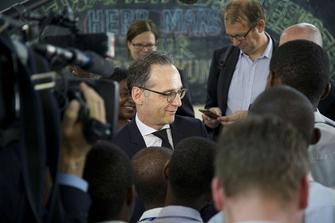
DAR ES SALAAM, Tanzania, May 4, 2018. German Foreign Minister Heiko Maas on Friday concluded a visit to Dar es Salaam, addressing students at the Dar es Salaam University College of Education (DUCE) and held to a state house where he hold a talks with Tanzanian Vice President Samia Suluhu Hassan to bolster bilateral ties.
(DPA photo by Simon Fidelis Luyenga)
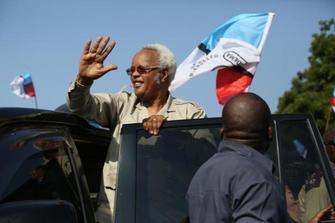
Edward Lowassa Waves to Supporters During a Campaign Rally, a former Prime Minister of Tanzania and the CHADEMA (under the UKAWA opposition coalition) presidential candidate for the 2015 Tanzanian general election, waving to supporters while emerging from a vehicle during a campaign event. Behind him, party supporters wave the official flag of CHADEMA (Chama cha Demokrasia na Maendeleo). Photo Simon Fidelis Luyenga
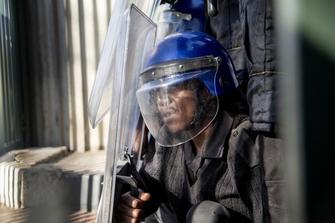
JOHANNESBURG, SOUTH AFRICA: Students from the University of Johannesburg (UJ) clash with private security personnel during a "Fees Must Fall" protest on September 21, 2016, during the 2016, Nationalwide universities protests where clashes occurred, as they marched to various universities to garner support for free higher education. Several journalists covering the demonstrations were also reportedly attacked by security forces. (M&G Photo by Simon LUYENGA.)
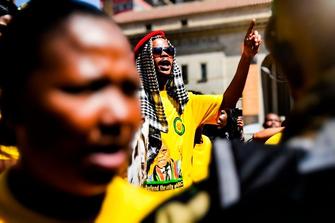
An African National Congress (ANC) supporter, wearing a T-shirt featuring a portrait of President Jacob Zuma and a red beret with a keffiyeh scarf, is seen shouting while standing in a crowd outside the party's Luthuli House headquarters in Johannesburg, South Africa on September 5, 2016. Supporters gathered there as a "defend Luthuli House" action in response to planned anti-Zuma protests. Photo: Simon Fidelis Luyenga
JOHANNESBURG, SOUTH AFRICA: Students from the University of Johannesburg (UJ) clash with private security personnel during a "Fees Must Fall" protest on September 21, 2016, during the 2016, Nationalwide universities protests where clashes occurred, as they marched to various universities to garner support for free higher education. Several journalists covering the demonstrations were also reportedly attacked by security forces. Photo by Simon LUYENGA.
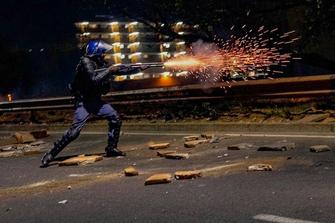
JOHANNESBURG, SOUTH AFRICA: University of Johannesburg (UJ) students clash with both South African police and private security forces during a "Fees Must Fall" demonstration on October 10, 2016, as their march to various universities to garner support for free higher education turned violent. Several journalists covering the protests were caught in the conflict and reportedly attacked by security personnel. Photo by Simon Fidelis Luyenga.
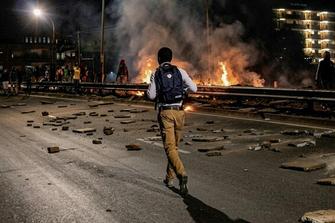
JOHANNESBURG, SOUTH AFRICA: Mcebo Dlamini, a prominent leader of the "Fees Must Fall" movement, addresses students at Solomon Mahlangu Hall at Wits University on September 26, 2016, prior to demonstrations. The nationwide student protests continued to escalate, demanding free tertiary education and opposing proposed tuition fee increases at South African higher education institutions.
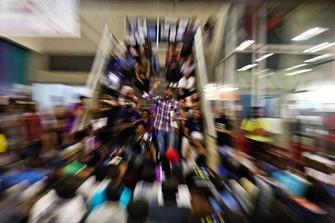
JOHANNESBURG: September 5, 2016, supporters of then-President Jacob Zuma, including members of the (ANCYL) African National Congress Youth League and the (MK) Umkhonto we Sizwe Military Veterans Association, formed a human barricade outside Luthuli House, the ANC's headquarters. Many of the protesters were dressed in military-style camouflage and vowed to protect the building from what they called "sellouts."
They were defending the president against a group of anti-Zuma protesters who accused him of being responsible for the ANC's worst electoral performance since the end of apartheid. The August municipal elections saw the party lose control of key metropolitan areas. The anti-Zuma faction cited widespread corruption scandals and a faltering economy as the reasons for their dissatisfaction.
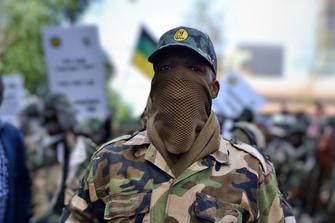
DAR ES SALAAM, Tanzania – Supporters of an opposition party gather in Mwananyamala, Dar es Salaam, in February 2018 to listen to a Member of Parliament (MP) candidate during a re-election campaign. The rally, held in the context of the Kinondoni by-election, was part of a planned march towards the offices of the National Electoral Commission (NEC). As the demonstrators proceeded, police reportedly intervened, firing stun grenades, tear gas canisters, and rubber bullets to disperse the crowd. The chaotic confrontation tragically resulted in the death of Akwilina Akwilina, a student at the National Institute of Transport (NIT), who was reportedly hit by a stray bullet while traveling in a public transport bus in the vicinity of the demonstration. Her death sparked widespread outrage and calls for investigations into police conduct.
Photo by Simon Fidelis Luyenga
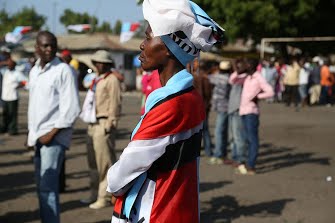
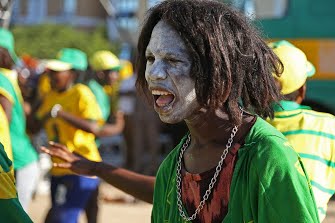
DAR ES SALAAM, Tanzania – Supporters of Tanzania's ruling Chama Cha Mapinduzi (CCM) party show their enthusiasm during a Member of Parliament (MP) re-election campaign rally in Kijitonyama, Dar es Salaam, in February 2018. The event was part of the highly contested Kinondoni constituency by-election, which saw intense campaigning from both the CCM and opposition parties. The by-election was called after the previous MP, from the opposition, lost his seat. The CCM, aiming to solidify its parliamentary majority, mobilized its base for the candidate. (Photo by Simon Fidelis Luyenga)
Sed ut perspiciatis unde omnis iste natus error sit voluptatem accusantium
doloremque laudantium,
totam rem aperiam, eaque ipsa quae ab illo inventore veritatis et quasi architecto beatae vitae dicta sunt explicabo. Nemo enim ipsam voluptatem quia voluptas sit aspernatur aut odit aut fugit, sed quia consequuntur magni dolores eos qui ratione voluptatem sequi nesciunt. Neque porro quisquam est, qui dolorem ipsum quia dolor sit amet, consectetur, adipisci velit, sed quia non numquam eius modi tempora incidunt ut labore et dolore magnam aliquam quaerat voluptatem. Ut enim ad minima veniam, quis nostrum exercitationem ullam corporis suscipit laboriosam, nisi ut aliquid ex ea commodi consequatur?
doloremque laudantium,
totam rem aperiam, eaque ipsa quae ab illo inventore veritatis et quasi architecto beatae vitae dicta sunt explicabo. Nemo enim ipsam voluptatem quia voluptas sit aspernatur aut odit aut fugit, sed quia consequuntur magni dolores eos qui ratione voluptatem sequi nesciunt. Neque porro quisquam est, qui dolorem ipsum quia dolor sit amet, consectetur, adipisci velit, sed quia non numquam eius modi tempora incidunt ut labore et dolore magnam aliquam quaerat voluptatem. Ut enim ad minima veniam, quis nostrum exercitationem ullam corporis suscipit laboriosam, nisi ut aliquid ex ea commodi consequatur?

Möchten Sie mehr Portfolio-Beispiele sehen?
Registrieren Sie sich bei journalist.net, es ist kostenlos!
Anmelden
Registrieren