Hire journalists

Publishers & Broadcasters Content Marketing Teams PR & Comms Teams Risk & Intelligence Teams Find journalists Media Monitoring Pricing

For journalists

Journalism jobs Pay rates Create your free profile

About Nathalia

Jornalismo com ênfase em Relações Internacionais, Gestão Pública, Educação, Legislação, Economia, Tecnologia e setor Marítimo geopolítico atuando como autora no jornal espanhol Naucher Global. Apaixonada por analisar dinâmicas globais e transformá-las em narrativas claras e acessíveis. Utilizo as formações técnicas e profissionais em Administração (Senac), Transformação Digital (ISTL) e Gerenciamento de projetos (Google) como aliadas para desenvolvimento dos meus compromissos profissionais e comunitários. Minha trajetória combina comunicação social, análise de cenários políticos e projetos de impacto internacional. Contribuindo ativamente com a Agenda 2030 da ONU, como Tradutora Humanitária, com participação em projeto antropológico financiado e apoiado pela Embaixada da Rússia no Brasil, ensaios analíticos certificados por universidades da Espanha e participação em seminários internacionais e como assistente virtual do Primeiro Congresso Internacional de Países Hispanistas pela Universidade de Sevilla. Atualmente, colaboro ativamente com o debate público global, acumulando publicações em veículos como Periódico Magistério (Espanha), El Periódico (Espanha), La Nueva España, Naucher global (Espanha), Euro Tribune (França) e Jornal Tribuna (Brasil). Minha experiência técnica inclui treinamento de grandes modelos de Inteligência Artificial (LLMs) em múltiplos idiomas para gigantes da tecnologia como Meta AI (Facebook e Instagram), Google AI, Gemini, Open AI, Nano Banana; além de atuação em assessoria de imprensa e cobertura política no Congresso Nacional. Buscando expandir minha história, iniciei um curso de formação em Direito à Educação para Refugiados e Migrantes através da ONU (ACNUR e OIM).

Services
Languages
Portuguese Spanish English
Seen in
Magisnet

Work 3

The Right to Reception in the Regional Maze: Schooling for Unaccompanied Minors

Magisnet 7 Oct 2026 Spanish

Unaccompanied migrant minors in Spain often face delays in entering school because of slow administrative processes, uneven regional responsibility-sharing and a shortage of suitable places, particularly in the Canary Islands and Ceuta. The piece contrasts these obstacles with Europe’s rapid schooling response for children covered by temporary protection and argues that the challenge is applying existing capacity consistently. Citing UNHCR figures showing that 44% of school-age refugee children worldwide are out of school, and Spanish data on young people with residence permits, it calls for immediate, standardized enrollment protocols, removal of prior-school-record requirements, expanded language-support classrooms, and stable funding for cultural mediators and psychological support. It presents schooling as both a legal and humanitarian obligation and an investment in social cohesion and future workforce participation.

Education of Refugees and Migrants Unaccompanied Minors Immigration and Asylum Access to Education Child Welfare Spain Canary Islands Ceuta UNHCR United Nations European Union Spanish Ministry of Inclusion, Social Security and Migration
Reporting styleInterpretive

Argues strongly for immediate, universal schooling and criticizes administrative delays and unequal treatment of unaccompanied minors.

Political contextCentre-left

Supports stronger public provision and equal access to education for migrant children, while framing the issue through humanitarian rights and social cohesion.
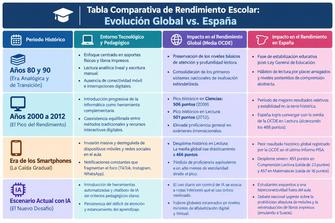
From PISA’s Decline to the EU Kids Act: Europe Curbs Excessive Virtual Use in Classrooms

Magisnet 17 Sep 2026 Spanish

The article links falling PISA performance to excessive, poorly monitored use of screens and digital tools in education. It cites global reading scores falling to 466 and Spain’s reading and mathematics scores reaching historic lows of 451 and 457, respectively, and argues that smartphone notifications and shallow digital habits undermine attention and comprehension. It also notes an association between dependent daily chatbot use and lower scores. Sweden is presented as reversing course by investing in printed textbooks, while European Commission President Ursula von der Leyen has announced the proposed EU Kids Act, which would bar social-media access for children under 13 and require parental supervision for users under 15. The article concludes that schools should use technology selectively and with clear safeguards rather than abandon it entirely.

PISA results Digital technology in education Screen time and student attention Social media regulation for minors Artificial intelligence in education Europe Spain Sweden Organisation for Economic Co-operation and Development (OECD) European Commission Swedish Ministry of Education European Union
Reporting styleInterpretive

Argues that excessive and poorly supervised classroom technology harms learning, while advocating balanced and regulated use.

naucher.com

Link Naucher

Other journalists in Brasilia

Hire Message
×

Sign up to message Nathalia

Already have an account? Log in
Looking for work? Register as a Journalist
Verify your email to complete registration
We’ve just sent an email to . Please check your inbox and click the link to verify your email address and complete your registration. If you don’t see the email, be sure to check your spam or junk folder.
Didn’t receive the email?

Sign up to unlock profiles

Already have an account? Log in
Looking for work? Register as a Journalist
Verify your email to complete registration
We’ve just sent an email to . Please check your inbox and click the link to verify your email address and complete your registration. If you don’t see the email, be sure to check your spam or junk folder.
Didn’t receive the email?