Engager des journalistes

Éditeurs et diffuseurs Équipes de marketing de contenu Équipes RP et communication Équipes risques et renseignement Trouver des journalistes Veille médias Tarifs

Pour les journalistes

Offres d'emploi en journalisme Tarifs Créez votre profil gratuit

À propos de Nathalia

Journalisme avec une emphase en Relations Internationales, Gestion Publique, Éducation, Législation, Économie, Technologie et secteur maritime géopolitique, agissant comme auteure au journal espagnol Naucher Global. Passionnée par l'analyse des dynamiques mondiales et par leur transformation en récits clairs et accessibles. J'utilise les formations techniques et professionnelles en Administração (Senac), Transformação Digital (ISTL) e Gerenciamento de projetos (Google) comme alliées pour le développement de mes engagements professionnels et communautaires. Mon parcours combine communication sociale, analyse de scénarios politiques et projets à impact international. Je contribue activement à Agenda 2030 da ONU, comme Tradutora Humanitária, avec participation à un projet anthropologique financé et soutenu par l'Ambassade de Russie au Brésil, essais analytiques certifiés par des universités d'Espagne et participation à des séminaires internationaux et comme assistante virtuelle du Primeiro Congresso Internacional de Países Hispanistas pela Universidade de Sevilla. Actuellement, je collabore activement au débat public mondial, cumulant des publications dans des médias tels que Periódico Magistério (Espagne), El Periódico (Espagne), La Nueva España, Naucher global (Espagne), Euro Tribune (France) et Jornal Tribuna (Brésil). Mon expérience technique inclut l'entraînement de grands modèles d'Intelligence Artificielle (LLMs) en plusieurs langues pour des géants de la technologie tels que Meta AI (Facebook et Instagram), Google AI, Gemini, Open AI, Nano Banana ; en outre, j'ai exercé en assessoria de imprensa et en couverture politique au Congresso Nacional. Cherchant à étendre mon parcours, j'ai commencé un cours de formation en Direito à Educação para Refugiados e Migrantes à travers l'ONU (ACNUR e OIM).

Services
Langues
portugais espagnol anglais
Vu dans
Magisnet

Travaux 3

The Right to Reception in the Regional Maze: Schooling for Unaccompanied Minors

Magisnet 7 oct. 2026 Spanish

Unaccompanied migrant minors in Spain often face delays in entering school because of slow administrative processes, uneven regional responsibility-sharing and a shortage of suitable places, particularly in the Canary Islands and Ceuta. The piece contrasts these obstacles with Europe’s rapid schooling response for children covered by temporary protection and argues that the challenge is applying existing capacity consistently. Citing UNHCR figures showing that 44% of school-age refugee children worldwide are out of school, and Spanish data on young people with residence permits, it calls for immediate, standardized enrollment protocols, removal of prior-school-record requirements, expanded language-support classrooms, and stable funding for cultural mediators and psychological support. It presents schooling as both a legal and humanitarian obligation and an investment in social cohesion and future workforce participation.

Education of Refugees and Migrants Unaccompanied Minors Immigration and Asylum Access to Education Child Welfare Spain Canary Islands Ceuta UNHCR United Nations European Union Spanish Ministry of Inclusion, Social Security and Migration
Style rédactionnelInterprétatif

Argues strongly for immediate, universal schooling and criticizes administrative delays and unequal treatment of unaccompanied minors.

Contexte politiqueCentre gauche

Supports stronger public provision and equal access to education for migrant children, while framing the issue through humanitarian rights and social cohesion.
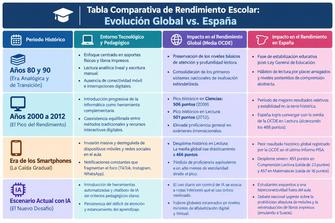
From PISA’s Decline to the EU Kids Act: Europe Curbs Excessive Virtual Use in Classrooms

Magisnet 17 sept. 2026 Spanish

The article links falling PISA performance to excessive, poorly monitored use of screens and digital tools in education. It cites global reading scores falling to 466 and Spain’s reading and mathematics scores reaching historic lows of 451 and 457, respectively, and argues that smartphone notifications and shallow digital habits undermine attention and comprehension. It also notes an association between dependent daily chatbot use and lower scores. Sweden is presented as reversing course by investing in printed textbooks, while European Commission President Ursula von der Leyen has announced the proposed EU Kids Act, which would bar social-media access for children under 13 and require parental supervision for users under 15. The article concludes that schools should use technology selectively and with clear safeguards rather than abandon it entirely.

PISA results Digital technology in education Screen time and student attention Social media regulation for minors Artificial intelligence in education Europe Spain Sweden Organisation for Economic Co-operation and Development (OECD) European Commission Swedish Ministry of Education European Union
Style rédactionnelInterprétatif

Argues that excessive and poorly supervised classroom technology harms learning, while advocating balanced and regulated use.

naucher.com

Lien Naucher

Autres journalistes à Brasilia

Recruter Message
×

Inscrivez-vous pour envoyer un message à Nathalia

Vous avez déjà un compte ? Se connecter
Vous cherchez du travail ? S'inscrire en tant que journaliste
Vérifiez votre e-mail pour finaliser l'inscription
Nous venons d'envoyer un e-mail à . Veuillez consulter votre boîte de réception et cliquer sur le lien pour vérifier votre adresse e-mail et finaliser votre inscription. Si vous ne voyez pas l'e-mail, pensez à vérifier votre dossier spam ou courrier indésirable.
Vous n'avez pas reçu l'e-mail ?

Inscrivez-vous pour débloquer les profils

Vous avez déjà un compte ? Se connecter
Vous cherchez du travail ? S'inscrire en tant que journaliste
Vérifiez votre e-mail pour finaliser l'inscription
Nous venons d'envoyer un e-mail à . Veuillez consulter votre boîte de réception et cliquer sur le lien pour vérifier votre adresse e-mail et finaliser votre inscription. Si vous ne voyez pas l'e-mail, pensez à vérifier votre dossier spam ou courrier indésirable.
Vous n'avez pas reçu l'e-mail ?